[email protected]
www.totalweightmanagement.co.uk
 Dr. Bill Sun is a pioneering researcher in the process philosophy of health and a leading voice in advancing its systematic application to weight management. He brings together academic insight and lived experience to develop evidence-based pathways for sustainable weight management and holistic metabolic health. He holds a PhD in management and professional diplomas in clinical weight loss coach and nutrition and weight consultancy in the United Kingdom. He has also completed advanced medical trainings in health, nutrition, and complementary medicine through institutions in the United States, including Harvard Medical School and the National Institutes of Health.
Q: What inspired you to write Mind Reset?
A: What initially pushed me toward this book was not theory but lived experience. For more than a decade, I watched my wife’s struggle with obesity. She tried almost every popular method: weight-loss teas, pills, herbs, juices, fasting, calorie counting, low-carb and keto diets, sugar control, gym workouts and harsh exercise. Some of the methods did not show any significant effects, while others brought only inconsistent short-term results. More often, they led to hunger, stress, exhaustion, exercise-related injuries, frustration and weight regain.
That personal experience led me to look more closely at the wider picture. As I studied the rising global obesity trend and examined mainstream weight-loss theories, I became convinced that the problem was deeper than simplistic, superficial techniques. Much of conventional weight management is still shaped by what philosophers call a substance view of health, which tends to treat weight as a fixed problem caused by isolated factors and solved by targeted interventions. While this traditional approach has achieved important successes, especially in infectious disease control, it has profound limitations when applied to complex, multifactorial, non-communicable conditions such as obesity.
My own academic work in process philosophy and systems thinking led me instead toward “a process view of health,” which sees weight as an evolving and emerging outcome shaped by the interconnection and continuous interaction of biological, psychological, behavioral and environmental factors.
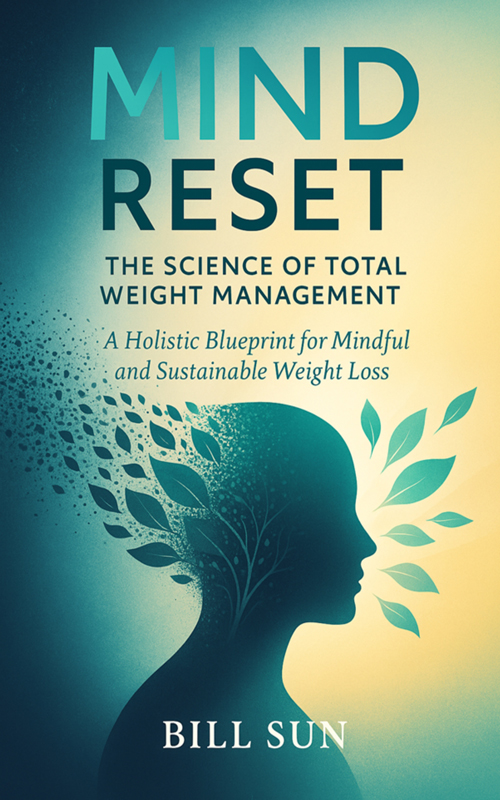
Mind Reset grew out of that philosophical contrast. It was written to offer a new scientific perspective on weight management, and a more coherent and practical alternative through the Total Weight Management framework.
Q: Why is effective weight management a challenge for many individuals?
A: Effective weight management is a challenge for many people not simply because it is technically difficult, but because the whole field is clouded by what I call a “Cognitive Deficiency” problem: misinformation, contradictory advice, misperception, prejudice, entrenched thinking, etc. The result is not clarity, but distortion and confusion. People are unsure which solution is truly effective and often feel a loss of direction.
Behind this confusion lies a deeper problem. Much of mainstream weight-management thinking is still shaped by a substance-oriented view of health, which treats weight as a fixed problem caused by isolated factors and solved by targeting one factor at a time. That is why the familiar “calories in, calories out” model remains so popular. It treats weight regulation as a simple mechanical equation and assumes that reducing calorie intake will lead to predictable results. In reality, weight is shaped by the interaction of food quality, nutrient composition, metabolism, physical activity, mental state, environment and individual variability. When these factors are ignored, weight-loss efforts are little effective in the long term.
The same weakness appears in many restrictive fad diets, including very low-carb, ketogenic, high-protein and prolonged fasting regimens. These approaches often treat one nutrient or one dietary pattern as the decisive answer, while overlooking the adaptive and context-dependent nature of human metabolism. They may produce short-term results, but they often fail over time because of physiological adaptation, poor fit with physical activity, nutritional imbalance and the psychological strain of living under extreme rules.
Another problem is that many popular methods are simply hard to sustain. Constant calorie counting, extremely unbalanced dieting, or harsh exercise may often lead to hunger, fatigue, harm, frustration and eventual weight regain. On top of that, people live in environments filled with processed foods, sedentary routines, social pressure and conflicting health messages, all of which make consistent progress harder.
So, the challenge is not just weak willpower or poor technique. Weight management is a complex, long-term process, but most people are still offered fragmented, overly simplistic, short-term solutions.
Q: What is Total Weight Management, and what are its three pillars?
A: Total Weight Management (TWM) is a holistic, process-based framework for weight management grounded on both science and process philosophy. It starts from the view that weight is not controlled by one isolated factor, but by the ongoing interaction of mind, body, behavior and environment. For that reason, TWM is not simply another diet or exercise plan. It begins with a “mind reset:” restoring cognitive clarity so that knowledge, motivation and action work together. It aims at turning weight control from a series of short-term interventions into a more natural, healthier and sustainable outcome of balanced living and sound decision-making.
TWM is built on three interdependent pillars:
1. Total Quality Nutrition (TQN): This pillar goes beyond a narrow focus on calories or macronutrient ratios. It highlights the quality and safety of food that affects weight based on both intrinsic and extrinsic impact factors. Its practical tool is the Weight-Impact Food Typology, which helps people choose foods more scientifically and mindfully in daily life.
2. Total Physical Activity (TPA): This pillar sees movement more broadly than formal exercise alone. It includes structured exercise, daily movement and non-exercise activity. It particularly stresses the importance of matching movement with diet to support better metabolic outcomes.
3. Total Mind Flow (TMF): This pillar addresses the mental and emotional side of weight management. It includes practicing Advanced Mindfulness for more effective mental training to reset the mind and regulate metabolism and applying the CMDA model to help people turn insight into consistent daily action.
The strength of TWM lies not in any one pillar on its own, but in how the three work together as one coherent system.
Q: How is Total Quality Nutrition offering a different way about dietary choices and planning?
A: Total Quality Nutrition (TQN) emphasizes both the intrinsic and extrinsic aspects of food quality and safety that significantly affect weight. This perspective has grown out of increasing evidence that diet quality often matters more than diet quantity. Highly processed, low-quality diets are consistently linked to weight gain and metabolic dysfunction, even when calorie intake is controlled.
The central contribution of TQN is the Weight-Impact Food Typology. It moves beyond calorie counting and fad diets by classifying foods according to their metabolic, hormonal and processing characteristics. Foods are rated from one to four stars, and those that do not meet the typology criteria are assigned zero stars. While four-star foods support health and long-term weight control, zero-star foods tend to undermine normal metabolic regulation and should be avoided.
In the book, I stress that food choices we make every day, whether shaped by tradition or by modern fast-food culture, influence weight regulation and overall health far more than most people realize. A systematic, science-based classification of foods makes mindful, healthy food choice possible.
Q: In what ways does Total Physical Activity differ from the traditional approach?
A: Total Physical Activity (TPA) reflects the understanding that weight management is shaped not only by formal exercise, but also by the many small and informal movements that make up daily life. Non-exercise activity thermogenesis (NEAT) contributes meaningfully to daily energy expenditure and overall health.
TPA extends conventional guidelines by:
• Encouraging physical movement to be woven naturally into everyday routines
• Aligning activity patterns with environmental cues, such as daylight exposure for circadian rhythm regulation
• More importantly, coordinating movement with dietary strategies to optimize energy balance and metabolic outcomes
This flexible and inclusive model is particularly valuable for individuals who struggle to maintain structured exercise programs, and it offers multiple practical ways to remain active.
Q: How should protein intake be tailored to physical activity?
A: Protein intake should be matched to the type and level of physical activity, not treated as a fixed rule or pushed to unnecessary extremes. If activity is light or mainly consists of routine daily movement, protein should be modest and balanced, and there is usually no need for a high protein intake. For strength training or other muscle-demanding activity, more protein is needed because the body requires greater support for repair, recovery and the maintenance of lean mass. For endurance activity, protein still matters, but it should remain in balance with wider energy and nutritional needs.
The key point is that, like other macronutrients, protein should work in synergy with movement—a central principle of TPA. It should support the body’s actual metabolic demands, not be consumed in excess. Unnecessarily high protein intake, as often promoted by high-protein diets, is not beneficial. In many cases, it creates imbalance, displaces other important nutrients, places extra strain on the body (particularly the kidneys), and may do more harm than good.
Q: What mindfulness practices do you recommend in the TWN framework?
A: In the TWM framework, I recommend mindfulness practices that go beyond Basic Mindfulness, which is mainly used for stress reduction. The aim is not simply to observe present-moment experience passively and without judgement, but to support weight management actively by strengthening clarity, self-regulation and decision-making in daily life.
The first is “Advanced Mindfulness,” which I present in two complementary forms. Advanced Mindfulness I is more restorative. It helps calm craving, stress, and mental agitation. Advanced Mindfulness II is more activating. It helps sharpen clarity, motivation and purposeful engagement.
The second is “Cognitive Mindfulness.” This focuses on seeing clearly what is happening in one’s thinking, habits and choices. It helps people notice confusion, hesitation, emotional triggers, and the everyday decisions that quietly shape weight outcomes. Here, Advanced Mindfulness I and II work together: one settles the mind and body, the other strengthens directed action.
These practices are then applied through the “CMDA model” (comprehension, motivation, determination and activation), which turns insight into practical behavior. In other words, mindfulness in TWM is not an isolated exercise. It is used to support mindful food choice, mindful food preparation, mindful physical activity, mindful outdoor engagement, mindful toxin reduction, and more consistent daily decision-making.
Q: Is there anything else you would like to add?
A: I would like to add that weight management should not be simply reduced to willpower, calorie calculation, or another short-term diet strategy. It is a much broader and more dynamic process, shaped by the interaction of food, movement, mind and environment. The general advice to “eat less and exercise more” is far less effective without a deeper understanding of what to do, how to do it well, and how to bring mind, body and behavior into better alignment.
My hope is that Mind Reset: The Science of Total Weight Management helps people move beyond confusion, blame, and extreme methods, and toward a healthier, easier, more natural and more sustainable way of managing weight and well-being.