[email protected]
www.dfitlife.com
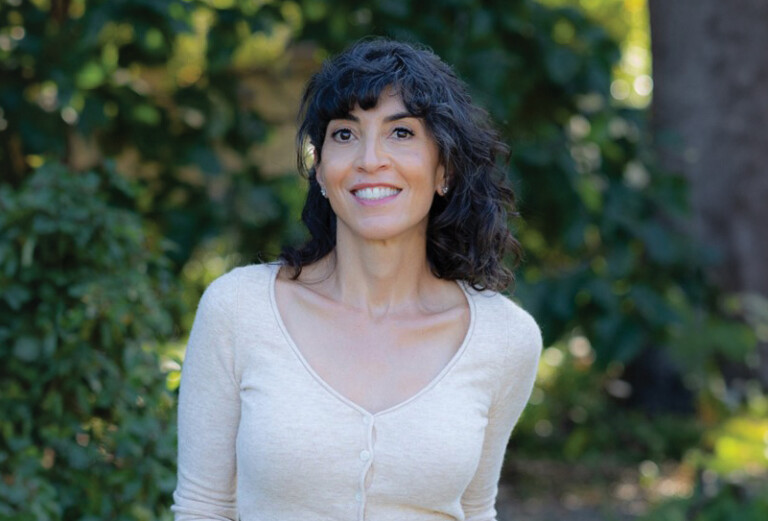
Daniella Dayoub Forrest, author of Own Your Wellness: Giving You the Tools to Break Through Your Health Plateaus, is a personal trainer and health coach who has worked in health and wellness for more than two decades, including many years in Silicon Valley. She helps clients navigate ever-changing health and wellness advice and distill it into actionable, personalized plans. She has helped people of all ages, disease states and states of mind understand that wellness strategies must constantly evolve and change. Her role as a mom, wife and entrepreneur, as well as her own battles with health issues (including an eating disorder, osteoporosis, amenorrhea, major injuries and rehabilitation), have shaped her philosophy toward health and wellness. She launched her coaching and wellness company, DFitLife, in 2007.
Q: What was your motivation behind writing Own Your Wellness?
A: While not everyone can afford a wellness coach, we all could use one! I wanted to bring my methodologies to the average person. Every day, the public is bombarded with conflicting health news, from the latest diet trends to fancy supplements. It’s overwhelming, even for the most health-conscious of people. I wrote Own Your Wellness to help readers cut through the clutter of conflicting advice and distill the information into actionable steps that would help them to feel their best.
Q: In the book, you call “mindful eating” an overused, but critical term. What steps should they take to achieve eating mindfully?
A: Being aware of what you consume is the first step. Put away your devices, turn off the TV and simply look at and appreciate your meal. When you mindlessly scroll through social media, become engrossed in the latest Netflix series, or answer emails while eating, you can easily plow through hundreds of calories without ever registering satiety. Instead, I suggest that you gather all the components of your meal onto one plate, present it nicely, maybe set the table, put on some music, or light a candle, even if just for yourself. Then, look at your meal, take three breaths or say grace. That moment of gratitude, right before you eat, will help your digestive system prepare for what it is about to receive. If you make a rule to eat every meal at a table or somewhere away from screens, you should find that you feel full more quickly and that satiety lasts much longer.
Q: When talking about diet and nutrition, you say that people should nourish themselves instead of focusing on restriction. Can you elaborate on this notion?
A: When I’m working with clients to assess their food intake, one of the easiest things they can do is to replace empty calories with foods that are much more nutrient-dense. For example, if their usual breakfast is a bowl of cornflakes or a bagel, they may feel momentarily sated, but that simple starch-laden meal will be quickly digested and leave them hungry for more. Instead, a breakfast of whole milk Greek yogurt with slivered almonds and a handful of berries or two eggs with sliced avocado provides hours of satiety for about the same amount of calories. Why? Whole milk Greek yogurt and eggs are high in protein which digests slowly. They are also not processed, which means they still have all those vitamins and minerals that Mother Nature intended. That little bit of fat allows for the fat-soluble vitamins and minerals (like calcium and vitamin D) to be assimilated and used. Combining nourishing proteins with nuts and low-sugar fruits provides lots of fiber and antioxidants. When clients opt for whole foods instead of reaching for overly processed starchy options, they are often surprised by how quickly those between-meal cravings disappear.
Q: What are the “key elements to movement”?
A: There are five simple categories that most people should incorporate into their weekly workout routine. They include: 1) get your heart rate up, 2) get and stay strong, 3) keep your balance, 4) don’t get too tight, and 5) rest and recover.
1. When I say, “get your heart rate up,” I mean exert yourself. While some low-level cardiovascular exercise a few times a week can feel good, training your heart outside your comfort zone is essential. This doesn’t necessarily mean an intense run or bike ride; walking briskly for 60 seconds can be enough to push yourself. Take an activity that you already do, like walking the dog, and then twice a week do a few intervals of hard/fast efforts for a few seconds. Then, let your breathing recover. If you do this eight times in a session, twice a week, you’ll see your energy increase exponentially.
2. Getting and staying strong should be a priority for everyone. A lifetime of strength training means you can accomplish simple activities of daily living. Gaining and maintaining strength not only increases the quality of life but it can help to increase lifespan. Strong legs keep you walking independently into your 90s. Upper body and core strength allow you to carry groceries or pick up your grandchildren. For younger people, it’s important to focus on strengthening the entire body: legs, core and upper body. It’s easy to get stuck solely working on vanity muscles, but this won’t translate to a strong and balanced body.
3. Staying balanced is its own challenge. And it’s not just a problem for older people. I see more and more people in their teens and twenties with terrible balance. Without proper balance, we lose the ability even to walk or run, and it can increase the risk of falls. The simple act of taking your shoes off and letting your feet feel the floor can make a huge difference in how well you can balance on one foot. Practicing balance exercises frequently is also important; it’s a use-it-or-lose-it situation.
4. Remember to stretch. When muscles get too tight, either from faulty positioning or overuse, that tightness can cause other movement dysfunction. Most people should focus on stretching their chest and shoulders, hips, hamstrings and the often-forgotten feet. Chronic tightness in any area of the body will pull joints around it out of alignment, which causes further dysfunction. Assess the tightest parts of your body and gently start working on opening them up.
Lastly, but most importantly, don’t neglect rest and recovery. Without sufficient rest, muscles will never grow from your workouts. Without proper recovery, your intervals will become a chronic stress on your body. I encourage people to plan out their recovery days and enjoy them!
Q: The phrase, “the only constant is change,” is throughout the book. How does this apply to health goals?
A: Having objectivity and appreciation for how bodies develop and age is not easy. Just as appearances change, health needs also change. This dynamic and evolving process must be a part of any goal-setting strategy. Why would a 60-year-old woman have the same health goals as she did in her twenties? And not all changes are incremental. A summer fitness program may differ from your winter activities, which may require tweaking your fitness plan. Your health goals should be aligned with what you are trying to achieve at that moment. Maybe it’s better balance or a more structured eating plan. Change is constant, and your health goals should evolve across your lifetime, too.
Q: In Own Your Wellness, you talk about plateaus and how to push past them. You explain that figuring your “why” allows people to truly reach their wellness goals. Can you explain this concept and why it is important?
A: It’s one thing to set a goal like losing 20 pounds or wearing a smaller size of jeans. Yes, you may feel good about yourself when you get there, but will that be enough to motivate you when things get hard? Instead, I urge people to dive deeper. Would losing 20 pounds help bring down your blood sugar and shed the diagnosis of prediabetes? What if fitting into those skinny jeans means you have more energy to spend time with your kids in the evenings? An emotionally charged motivation helps you get out the door on a day when you really don’t want to exercise. Keeping that “why” in mind can make the difference between staying at a plateau and busting through it.
Q: Is there anything else you would like to add?
A: Imagine setting your sights on a wellness goal that makes you feel like the best possible version of yourself. Imagine how well that version of you will interact with the world. You can do anything when your mind, body and soul align. As you consider changing your wellness path and setting new goals, ask yourself: “Why am I doing this?” “Why does this matter?” “How will this propel me to be that person I know is hiding within?”