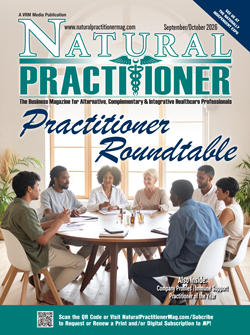
Exploring educational opportunities and post-graduation support for integrative health care practitioners.
Participants:
Annette Bernat, Vice President, Branding and Communications, American Chiropractic Association (ACA), Arlington, VA, www.acatoday.org
Susan Farley, Director Career & Alumni Services, Bastyr University, Kenmore, WA, www.bastyr.edu
Laura Farr, Executive Director, American Association of Naturopathic Physicians (AANP), Washington, D.C., www.naturopathic.org
Theresa Fleck, EdD, CFRE, CAE, CNP, Vice President of Institutional Advancement & Admissions, Logan University, Chesterfield, MO, www.logan.edu
Marcus Hanscom, Interim Director of Admissions-Recruitment, Bastyr University, Kenmore, WA, www.bastyr.edu
Randy Swenson, DC, MHPE, Vice President for Academic Services, National University of Health Sciences (NUHS), Lombard, IL, www.nuhs.edu
JoAnn Yanez, ND, MPH, CAE, Executive Director, Association of Accredited Naturopathic Medical Colleges (AANMC), Washington, D.C., https://aanmc.org
Whether you are a potential student looking for the right program for you, or a licensed practitioner in need of CME credits, our panel of experts offer their insights on the integrative health care education landscape.
NP: What factors should potential students consider when they are deciding where to enroll?
Yanez: Selecting the right naturopathic medical school is crucial for laying the groundwork for your future career as an ND (naturopathic doctor). Prospective ND students should take into account accreditation, the school’s reputation, and the curriculum offered. Aspects like geographic location, school culture and fit are also important. Familiarizing yourself early on with the coursework and clinical training requirements will help you prepare for the academic challenges.
Further, future students should consider their career goals, and find a program that best helps them fulfill their personal and professional career goals. Here is a helpful resource (https://aanmc.org/3-steps-help-plan-naturopathic-school/) that guides you through some of the steps to prepare as an applicant.
Bernat: The Association of Chiropractic Colleges (ACC) offers a wealth of information and resources about chiropractic education programs in the U.S. at www.chirocolleges.org.
Farr: Each naturopathic medical school has slightly different cultures and teaching styles. A prospective student to naturopathic medical school should consider a few factors that are more unique to naturopathic medical school programs:
1. If the naturopathic program is accredited by the Council on Naturopathic Medicine Education (CNME), which is the only programmatic accreditor recognized by the U.S. Department of Education.
2. The curriculum of all schools follows core competencies established by the CNME, but some schools offer variations to the core curriculum. For example, some schools have clinics that offer more instruction in specialty areas, such as pain. Some schools incorporate acupuncture into the curriculum, others do not. Some have associated research institutions, as just a few examples.
3. Because naturopathic doctors are only licensed in 26 jurisdictions in the U.S., one should consider if the school is located in a state that licenses naturopathic doctors, or is it in an unlicensed state. The core curriculum is still similar, but schools in a licensed vs. unlicensed state will have different learning opportunities in the teaching clinics and community clinics where students do rotations, due to the differing scopes of practice.
4. What the clinic experience will be, i.e., what kind of satellite clinics can students rotate through, and what exposure to different populations can students get through their clinic experiences. For example, some schools have partnerships with clinics working with underserved populations, or specialty clinics such as pain, mental health, etc.
Hanscom: Potential students really need to focus on finding the right fit school and select a program that aligns with their needs and goals for the future. Some students focus solely on singular factors like location, or ranking or cost. This can be short-sighted because such limited foci might not deliver their desired outcome.
Sometimes the best programs for you are not up the street or the least expensive. Remember, you’re investing for a career that will affect the rest of your life. I advise prospective students to be as open as possible, and if your circumstances allow, choose the school and program that most closely align with your vision for the future.
Students contact Bastyr University because they are considering programs in natural health. It’s critical to look for programs that not only provide the necessary clinical or research opportunities for future licensure or other required credentialing, but also produce successful graduates. Strong programs should be able to provide insights into what their graduates are doing. Potential students need to assess whether those outcomes align with their goals.
It’s important for students to keep in mind similarly named programs at different universities may vary significantly in faculty expertise or curriculum focus areas or concentrations. For example, potential students interested in practicing naturopathic medicine with children may find pediatrics is only available as a subdiscipline in certain naturopathic doctorate programs. Students should research curriculum and faculty of their intended programs before they apply.
Fleck: Deciding factors when considering a school are unique to each individual; however, if you are comparing programs across multiple schools, be sure to ask about the following:
• Board Score Pass Rates: Does the school have high rates that reflect the competency of student’s skills and abilities?
• Graduation Rates: Is the school graduating a high rate of students?
• Student Services: Does the school provide plenty of services for students, such as tutoring, academic support and career preparedness?
• Tuition and Fees: Does the school’s advertised tuition encompass everything, or are there additional fees?
• Clinical Opportunities: Does the school provide a variety of clinical environments for students to gain real-world experience?
• Student Life: Does the school have a strong community life for students through clubs, organizations and athletics?
Swenson: The program should provide what you as a potential student are seeking. How do you wish to practice? Do you want to function as a physician? Physicians are competent at making a whole-body diagnosis. NUHS provides that level of education and clinical experience to be a competent and confident diagnostician. What therapeutic skills do you want to learn and employ? NUHS provides many therapeutic skills from manipulation to functional nutrition to rehabilitation to botanicals to needling and herbs for treating the patient primarily for that diagnosis but in a holistic way.
NP: How can potential students make themselves stand out as a candidate?
Yanez: True to our principles, naturopathic medical schools utilize holistic admissions, which means that they look at each applicant as an individual. The following are some things prospective ND students should think about as they prepare their application, however, don’t feel you need to include all of these to be a strong contender. The first thing all interested students should do is connect with one or more of the admissions counselors (https://aanmc.org/school-advisors/) at the accredited ND schools to understand admissions requirements and where they should begin their journey. Some additional ideas include: earning top academic credentials including prerequisite courses, demonstrating clinical/medical exposure, involvement in integrative health care, professional research or publications, pursuing leadership positions, community involvement and securing strong and personalized letters of recommendation.
Farr: It is very important to have a good working understanding of the tenets of naturopathic medicine. The underlying principles of naturopathic medicine are one of the things that make naturopathic doctors unique and different from other health care providers, and are the foundation of how NDs practice every day. A prospective student should be able to explain how the naturopathic principles align with their own.
Candidates should also be able to share their personal journey story—how did they find their way to naturopathic medicine, and how they are going to handle the rigors of practicing—not just of being a doctor in this challenging health care environment—but especially of being a naturopathic doctor which is a profession still in development, and still fighting for recognition federally and in many states.
Lastly, they should be able to demonstrate some history of commitment to serving the public or their community. Being a naturopathic doctor is a calling that requires passion and dedication.
Hanscom: First and foremost, if potential students have done their research and they apply to the right programs, they’re far more likely to be admitted. Faculty want to see applicants who are adequately prepared, have interests and career objectives that align with the program, and demonstrate a clear interest in their school and program. Faculty and staff notice when prospective students are engaged—these students attend admissions events, ask thoughtful questions of admissions officers, students, or faculty, adhere to deadlines and follow instructions.
At Bastyr University, faculty looks for candidates who are a strong fit for their programs. I strongly encourage prospective students to talk openly with admissions staff before they apply to ensure their academic and/or professional background aligns with program requirements. With strong self-awareness and clear expectations, prospective students can significantly improve their chances of being admitted to their target programs.
Fleck: Making sure you have a strong academic background is important to standing out among applicants. While all chiropractic programs require students to have at least 90 semester hours of undergraduate coursework, you can help distinguish yourself with a 3.0 cumulative GPA or higher, participation in extracurricular activities and serve in leadership positions.
Most schools do not require you to shadow a chiropractor before applying, but you should demonstrate that you are familiar with chiropractic in some capacity, as a current or past patient, the completion of an internship or even part-time or volunteer work in an office.
In your essay, be sure to discuss your personal motivation for becoming a chiropractor.
Swenson: Express your desire to help people and provide evidence, provide evidence of the ability for critical thinking plus high grades in the courses/disciplines that are germane to health care.
NP: Are there certain accreditations they should look for?
Yanez: Accreditation is crucial for naturopathic medical school applicant consideration as it ensures a high-quality education through standardized curricula and qualified faculty. Accreditation is essential for licensure, allowing graduates to practice legally and meet state and provincial requirements. Accreditation also provides access to financial aid and scholarships, facilitates credit transfer and supports further education. It enhances professional credibility and reputation, ensuring employer and patient trust. Additionally, accreditation promotes continuous improvement at the institution, and adherence to ethical and legal standards, guaranteeing that institutions operate reliably, ethically and effectively.
The Council on Naturopathic Medical Education (CNME) is the programmatic accreditor for ND programs in the U.S. and Canada and manages a list of past and current accredited programs.
Bernat: The Council on Chiropractic Education (CCE), which operates under the aegis of the U.S. Department of Education, accredits chiropractic education programs. Learn more about CCE and its accreditation process at www.cce-usa.org and see a listing of accredited schools.
Farr: It is absolutely necessary to make sure the school is accredited by the Council on Naturopathic Medical Education (CNME). This is the only accrediting body recognized by the U.S. Department of Education for naturopathic medicine curriculum.
Hanscom: Regional accreditation, as defined by the Council for Higher Education Accreditation (CHEA), is viewed as the gold standard for educational quality in the United States. However, this accreditation evaluates the institution as a whole and not individual disciplines. In most cases, students should seek schools that possess regional accreditation at a minimum, while also researching any accreditation that may be necessary to work or practice in their intended discipline.
If potential students intend on serving clients in the health professions, some form of license or certification is commonly required. Licensure requirements are often set by individual U.S. states, frequently with varying requirements, though some disciplines have national credentialing available. These requirements may stipulate that students graduate from programs that possess a specific accreditation. Students should become familiar with the licensure requirements in their intended discipline and ensure that any potential programs or schools meet those requirements. Naturopathic doctorate students, for example, should select a school that is accredited by the Council on Naturopathic Medical Education (CNME) to ensure they can sit for board exams.
Fleck: It’s important the college or university under consideration is accredited by both the Higher Learning Commission as well as the Council on Chiropractic Education.
Swenson: The institution should be accredited by an Institutional accreditor previously known as a regional accreditor, such as the Higher Learning Commission. Each program should also be accredited by a programmatic accreditor such as the Commission on Chiropractic Education or the Council on Naturopathic Medical Education or the Accreditation Commission on Acupuncture and Herbal Medicine.
NP: What types of support do you offer students once they graduate?
Yanez: Graduating from a naturopathic medical school marks the beginning of a rewarding career in holistic health and healing, supported by a robust post-graduation infrastructure. To ensure a smooth transition into professional roles, graduates receive extensive assistance in licensing examination preparation, including access to study materials, review courses and guidance through the licensure application process. The majority of naturopathic schools offer residency programs that provide hands-on clinical experience under the supervision of experienced naturopathic doctors, along with mentorship and networking opportunities. Additionally, career services departments assist with job placement, resume crafting and interview preparation, ensuring graduates are well-prepared to enter the workforce.
Ongoing professional development is encouraged through workshops, seminars, certifications, and specializations in various areas of naturopathic medicine. Graduates are also urged to join professional associations like the American Association of Naturopathic Physicians (AANP) and Canadian Association of Naturopathic Doctors (CAND), which provide networking, advocacy and continuous education opportunities. Alumni networks and mentorship programs offer peer support and guidance, while practice management resources and workshops help graduates establish and manage their own practices. For those interested in academia or research, opportunities for collaboration and teaching are available. To ensure mental health and well-being, some institutions provide counseling services and resources focused on work-life balance and self-care. Together, these support mechanisms equip naturopathic graduates with the tools needed to succeed and make a positive impact in their field.
Bernat: The American Chiropractic Association (ACA) provides a range of benefits for new graduates from chiropractic doctoral programs as part of its NextGen membership category, created for those who are in the first five years of practice. These members form a cohort composed of individuals with similar challenges and opportunities, and therefore ACA gives them their very own exclusive online forum, MyNextGen, where they can share information and advice with one another. As a NextGen member, doctors also can attend monthly meetings focusing on topics such as student loan repayment, coding and documentation, and the do’s and don’ts of social media marketing. In addition, ACA maintains a “Professional Development Hub” online where it curates education programs and other resources to help new graduates find and succeed in their first position. Being a part of NextGen also exposes members to volunteer opportunities that can help them to develop as leaders in their communities and advocates for the chiropractic profession.
Farr: The American Association of Naturopathic Physicians provides clinical and business content, resources, research and diagnostic databases, and business management discounts to support graduate success, such as UpToDate, free and discounted continuing education, and timely legal or regulatory changes and alerts that you need to know. Additionally, AANP offers a Career Center that aggregates job opportunities from a variety of online sites.
We also have a Professional Affairs Committee that is exclusively dedicated to developing resources to support your career path as an ND. They produce the Thrive Toolkit for Graduate Success which houses strategies for starting your own clinic, first-hand interviews such as working in a cash-based vs. insurance-based model, templates, and content such as how to build a patient base, how to market your practice, leveraging social media and risk management. There are also interviews of successful NDs who have followed a variety of different career paths in research, manufacturing and more. The Professional Affairs Committee also produces ND Career Success Webinars and bootcamps that offer pro tips, best practices and examples you can use immediately. The resources and content library grows every month!
Farley: The Bastyr University Office of Career and Alumni Services serves alumni and current students. Some of the more popular offerings for alumni include:
• Career counseling or coaching. Alumni can access one-on-one appointments with a career coach. The career coach supports alumni with professional direction, perspective about hiring dynamics, and provides insights for alumni about best professional fit based on skill set and personality traits. • Tuition discounts are available to alumni for a limited number of credits each year, and for continuing education programs and instruction.
• Bastyr University Career Services Office hosts several events and presentations that align with career tracks for alumni. Bastyr University also hosts get togethers at industry events and trade show so that alumni can connect with each other and pursue collaborative opportunities.
• Bastyr University’s library is an important resource for many alumni. The Bastyr University Library owns many hard-to-find books and subscribes to publications focused on the natural health arts and sciences. Alumni are welcome to access the library.
• Bastyr University alumni can sign up for the “Find a Practitioner” tool on the Bastyr University website. “Find a Practitioner” helps potential patients and clients find a Bastyr-trained care provider in their area.
• Bastyr University alumni receive a newsletter which contains information about natural health conferences and programs. Bastyr University is frequently able to secure discounts for its alumni to natural health conferences, and with Bastyr University partners.
Fleck: Logan University believes that, even after you graduate, you are an important member of the lifelong Logan family. We offer many ways to stay connected and continue to grow in knowledge and skill.
Here are some of the ways we support our graduates:
• Access to ongoing education: Our Department of Continuing Education offers year-around education opportunities through in-person and hybrid seminars as well as online and on-demand webinars. Our signature event—Symposium—is held every spring and features more than 40 speakers and topics. We also hold a Women’s Health Symposium in the fall.
• Access to research: Logan University’s Visiting Scholars Program hosts research seminars that are provided by eminent clinical and scientific scholars from institutions around the U.S. including NIH (National Institutes of Health), Harvard Medical School and Stanford University School of Medicine. Not only are these open to our students and faculty, but also to Logan alumni. For the past 16 years, Logan’s Department of Radiology has also held the Annual Joseph W. Howe Oration in Diagnostic Imaging. Every year, eminent speakers are selected to deliver the Oration from the fields of radiology, clinical practice, education and research, reflecting the extraordinarily wide scope of intellectual interest and contributions in the career of Dr. Joseph Howe.
• Services to support your practice: With the rising cost of medical equipment, the financial impact of purchasing and maintaining diagnostic tools can be significant. The Norman W. Kettner, DC Imaging Center within Logan’s Montgomery Health Center offers a variety of diagnostic imaging services available to chiropractors. These services, including radiography, diagnostic ultrasound and bone density and body mass index, are performed and reviewed by Residents and Fellows in Logan’s Department of Radiology and interpreted by Diplomates in Radiology.
• Career services + alumni support: Logan’s Career Services offers a robust range of career training and transition services for new graduates and practicing alumni, including resume and interview preparation, networking events and curated online job listings and resources. Graduates can stay connected to alumni through our Alumni Relations Department which organizes events and visits throughout the year.
• Access to facilities: Alumni receive a discount on facility rentals on Logan’s campus. Additionally, they are welcome to bring colleagues or patients on our Tour of the Body program, which offers an inside look at our state-of-the-art human cadaver lab. The tour is free of charge.
Swenson: Graduates are supported by the Alumni Association with information and student success opportunities.
NP: What are some ways for licensed practitioners continue their education?
Yanez: Licensed NDs are mandated to continue their education as a provision of their naturopathic license.
Licensed naturopathic doctors (NDs) continue their professional development through a variety of means to ensure they remain current with advancements in medical knowledge and practices. Continuing education is a critical component, and NDs often participate in accredited courses, workshops and seminars. These educational opportunities cover a wide range of topics, including new treatment modalities, advancements in naturopathic research, updates in pharmacology and innovations in integrative medicine. Many states require NDs to complete a certain number of continuing education credits annually as part of their licensure renewal process.
Professional organizations such as the AANP and CAND, and state and provincial-level associations provide numerous resources for ongoing learning. These organizations host annual conferences, webinars and regional meetings where NDs can learn from experts, share knowledge with peers and stay informed about legislative changes affecting their practice. Additionally, many NDs engage in research and contribute to peer-reviewed journals, enhancing their understanding and contributing to the body of naturopathic knowledge.
Mentorship and peer support play a significant role in professional development. Experienced NDs often mentor newer practitioners, providing guidance and sharing best practices. Participation in professional networks and online forums allows NDs to discuss clinical cases, seek advice, and stay connected with the naturopathic community. Furthermore, specialized certifications and advanced training in areas such as acupuncture, homeopathy or functional medicine allow NDs to deepen their expertise and offer a broader range of services to their patients. Overall, the commitment to lifelong learning ensures that licensed naturopathic doctors continue to provide high-quality, evidence-based care throughout their careers.
Farr: In this information era, there is no shortage of resources to obtain continuing education. The AANP alone produces more than 70 hours of CE per year, 14 of which are free to members through various webinar offerings. In addition, the AANP approves more than 600 hours of CE accepted by almost every regulatory body in the U.S., offering evidence-informed learning opportunities hosted by other entities across a broad range of categories.
Farley: Bastyr alumni can take a few credits per year at Bastyr at a discounted cost. This is a great way to update your knowledge in a formal way, as scientific findings and consensus evolves. Alumni can access discounts through Bastyr University’s College of Continuing Education and Simkin Center for Allied Birth Vocations.
Fleck: Logan provides year-round continuing education credits for our graduates through L4, which stands for Logan Life-Long Learning, as well as through partnerships with other state associations and accrediting bodies. Continuing education is offered in a variety of different formats, both online and in-person throughout the year.
Swenson: NUHS provides the opportunity to take a second (or a third) professional degree to augment your diagnostic skills and expand your therapeutic options. NUHS also offers a full range of postgraduate seminars typically held on the weekends.
NP: Associations, what types of educational opportunities/events do you offer your members?
Yanez: AANMC offers extensive benefits to its members, including advocacy and representation at state and federal levels, regulatory support and policy advocacy to promote naturopathic medical education. AANMC aids in curriculum and faculty development, fosters research collaboration opportunities, and drives the strategic direction for naturopathic medical education in the U.S. and Canada. Members benefit from professional networking, community engagement and marketing support for student recruitment. AANMC also assists with residency placement, career services and representation in broader health care initiatives, ensuring high-quality education and continuous improvement. These comprehensive benefits collectively enhance the success of member institutions and support students and graduates in their professional journeys.
Bernat: ACA offers both in-person and online learning experiences through its Learn ACA platform. Live webinars are hosted throughout the year, where participants can gain practical knowledge and interact with thought leaders and clinical experts from across the profession. Learn ACA also features more than 130 recorded programs that can be accessed 24/7 at the convenience of the platform’s users. Many of the programs (both live and recorded) offer continuing education (CE) credits that are accepted in many states. Members have free access to all Learn ACA webinars, and non-members and other practitioners can participate in programs for a fee. At the association’s annual meeting, ACA Engage, doctors of chiropractic can attend live presentations and discussion panels for CE credit, as well.
Farr: As one component of the CE mentioned above, the AANP hosts an annual convention in July, offered both as an in-person and online hybrid event. The in-person convention offers a trade show with exhibitors and suppliers commonly used in naturopathic practices, and three days of lectures, networking opportunities and social events to bring the community together. The AANP’s 2024 Convention is in Chicago, IL, July 11-13, 2024, and offers 34.5 CE for virtual attendees, and 47.5 CE for in-person attendees, who have additional CE opportunities to attend hands-on training sessions on a variety of manual therapies and skill building workshops.
Farley: Bastyr does not have a formal alumni association. If there is a career event for students that would strongly apply to certain groups of alumni the Bastyr University Office of Career and Alumni Services invites the alumni to the career event. Bastyr University hosts “Pathways to Success” events each year in Washington and California. Recent alumni are invited to come, network and connect with potential employers.
Swenson: Each profession has professional associations which offer opportunities for professional leadership roles and learning opportunities.
NP: As the integrative health care field grows and expands, what types of opportunities would you like to see in the future?
Yanez: I would like to see a wider range of opportunities that emphasize interdisciplinary collaboration and innovation. This could include more federally funded integrative clinics where practitioners from various health disciplines work together to provide comprehensive care, as well as increased funding for research that explores the efficacy of integrative treatments. I also envision enhanced educational programs and continuing professional development that incorporate the latest advancements in integrative health practices. Additionally, I hope for expanded access to integrative health care services in underserved communities, ensuring that all individuals have the opportunity to benefit from holistic and patient-centered approaches to health and wellness.
Bernat: ACA’s mission is to help our members elevate the health of their communities. To this end, we promote excellence in patient-centered, evidence-based care; serving our patients in the interest of public health; and participating in the health care community through collaboration and integration. Specifically, doctors of chiropractic are currently serving in more than 100 Department of Veterans Affairs (VA) facilities nationwide, working alongside other providers to care for our veterans. Chiropractors are also serving patients in community health centers across the country, many in rural areas, where essential health services are often lacking.
To further serve our aging population, we are working to create more access to chiropractic services in the Medicare program—where beneficiaries have had limited access to the services of doctors of chiropractic for more than 50 years. Particularly in the wake of the opioid crisis in the U.S., we believe seniors and other beneficiaries should be able to choose non-drug approaches for the treatment of common musculoskeletal conditions and injuries, and they should have the option to receive that care from the provider of their choice, including their chiropractor (provided the service is covered by Medicare and within the doctor’s licensure). You can learn more about ACA’s efforts at www.acatoday.org/advocacy.
Farr: More collaboration between health care disciplines! It is widely accepted that offering people choices in health care and better collaboration between different health care providers improves patient outcomes. The growing fields of integrative medicine, functional medicine and whole health medicine are all encouraging signs that a new health care paradigm is upon us—one that is deeply rooted in the prevention principles of naturopathic medicine. Many of these conventional MDs and DOs have been trained by naturopathic doctors, hire naturopathic doctors in their clinics and refer patients to one another regularly—true collaboration in action.
Fortunately, this “in real life” collaboration is happening despite the antiquated actions and messages of the American Medical Association, which spends millions of dollars annually fighting against the AANP to block legislation that would regulate or expand patient access to NDs and other qualified, educated and trained health care professions. The AANP would welcome the AMA to engage in a healthy, factual discussion regarding opportunities to expand access to qualified health care practitioners in the U.S. instead of their “just say no.” We are facing a health care crisis of unprecedented proportions—one that will not be solved by one approach, or one provider type. Through collaboration, our collective talents and resources could conceivably solve the health care provider shortage, physician burnout and address the high costs of health care for U.S. citizens and patients.
Farley: Many health care networks include acupuncture, psychology and counseling, and nutrition in their care models. We continue to see demand for these professions grow and anticipate the demand for Bastyr alumni to be strong for years to come.
As more states expand licensing for naturopathic doctors, and more consumers turn toward natural medicine in their desire for integrated care, we expect the demand trend for naturopathic doctors to grow steadily. The outlook for private practice, integrated naturopathic doctors is favorable.
There are several less obvious professional paths our graduates pursue with great satisfaction. Supplement companies actively recruit Bastyr University graduates. As more research dollars become available for natural health studies, we are seeing a number of graduates, from multiple programs, find fulfilling careers in research. In the past year, Bastyr University has grown its partnerships with public health organizations and care clinics with high levels of interest in work force development with Bastyr University graduates.
Fleck: We would love to see more institutions working together to grow the number of chiropractic professionals in the world, to increase awareness of the benefits of natural and whole health care and to improve access to chiropractic care. We believe this is possible through education and collaboration among our peers as well as individuals and organizations who align with our mission and vision.
Swenson: The opportunity to move from a service-based system of payment to health care professionals to a care-based system with expectations of patient well-being.
NP: Is there anything else you would like to add?
Yanez: AANMC hosts free monthly events (https://aanmc.org/events/) for prospective ND students and maintains a website full of resources for students considering a career as an ND. You can sign up for our newsletter at https://aanmc.org/email-sign-up/.
There are some common myths and misconceptions about naturopathic medicine. We address them at https://aanmc.org/featured-articles/10-common-myths-about-naturopathic-medicine/, including one of the more common questions we receive, “Can I complete my ND online?”
Farr: The AANP invites anyone interested in finding a naturopathic doctor, or curious about our convention, Thrive Toolkit for graduate success, and other member benefits, to visit naturopathic.org.