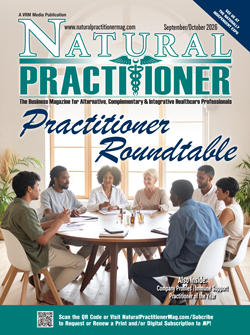
In the September/October 2026 print issue of Natural Practitioner (NP), an expert panel of practitioners talked trends they are noticing, technology, patient- and self-care, as well as the future of complementary and integrative health. Here is a continuation of what they had to say.
Participants:
Rudrani Banik, MD, IFMCP, Double Board-certified Neuro-Ophthalmologist and Functional Medicine Physician, Associate Professor of Ophthalmology, Icahn School of Medicine at Mount Sinai, Co-director of the Neuro-Ophthalmology Service, New York Eye and Ear Infirmary of Mount Sinai, New York, NY, www.drranibanik.com
Serena Goldstein, ND, Delray Beach, FL, www.drserenagoldstein.com
Holly Lucille, ND, RN, Naturopathic Doctor, Educator and Natural Products Consultant, www.drhollylucille.com
Jessica Maloh, ND, San Jose, CA, www.decode-me.com
Allie Buttarazzi, MD dipABLM, CHWC, Brunswick, ME, www.mainestreetmedical.com; www.alliemd.com
Heather Gosnell, MD, Pediatrician, Plant-based Health Coach, and Founder of Eat Plants MD Coach, Phoenix, AZ, www.eatplantsmdcoach.com
Amy Koch, DC, Clinician, Viscerosomatic Center, Logan University, Chesterfield, MO, www.logan.edu
Dr. Rosia Parrish, Boulder, CO (also licensed in California and Washington), www.nawellness-boulder.com
NP: Who or what was your inspiration for wanting to become a natural practitioner?
Dr. Banik: Personal experience healing my chronic migraine (that had been daily for over four years and refractory to traditional medical therapies) through dietary and lifestyle changes, along with targeted supplementation, made me realize what was missing in my medical and ophthalmologic training- these types of complementary approaches. This inspired me to get trained and certified in functional medicine through IFM (The Institute for Functional Medicine). This training enabled me to identify and treat the root causes of ocular diseases using the principles of nutrition, lifestyle and supplements.
Dr. Goldstein: My original path was when I was a teenager I saw a therapist who changed my life, and I wanted to do the same for others. She was a PhD, so I wanted to become a PhD. In college, I began as a psychology major and Japanese minor (I tested into Japanese 2 after taking it in high school) and when Japanese didn’t work out, a close friend who was pre-med at the time at another university suggested I “do more” for people, and to go pre-med. Psychiatry never felt right (too rigid), though when the learning community I joined to begin pre-med classes took us to a naturopathic school (in Arizona – was SCNM), I got wide-eyed and fascinated there was a medicine where I could learn conventional medicine, spend time with patients, and utilize natural therapies, as my formative years were active, and full of home-cooked healthful meals. I fell in love, and went right to naturopathic school after college (NUNM).
Dr. Lucille: I grew up in the Midwest as the daughter of two pharmacists, so I was very familiar with the conventional approach to medicine. Even as a child, I was the one constantly asking, “Why?” Is there something we could do differently? Is there something we could eat? Are there side effects? What is actually causing the problem?
My professional journey began in nursing because I wanted to help people. I later pursued holistic nursing, where I found a philosophy that treated the whole person rather than only the diagnosis, symptom or laboratory result. After seven years in nursing, becoming a naturopathic doctor felt like the natural next step.
I wanted to practice a form of medicine that explored root causes, respected the healing capacity of the body, emphasized prevention, educated and empowered patients, and used the least invasive effective intervention. I often describe it as comprehensive, common-sense medicine.
Dr. Maloh: I’ve always been fascinated by understanding why we develop certain conditions and how we can use science to find better ways to support our health.
During my training and preceptorship hours in naturopathic medical school, I had the opportunity to learn alongside dermatologists, where I saw that skin conditions can have a profound impact on quality of life, and can be influenced by factors beyond the skin itself.
As I learned more about nutrition, the microbiome and immune health, I became interested in how evidence-based integrative therapies could complement conventional dermatology approaches. That curiosity ultimately led me into clinical research, where I now have the opportunity to design clinical trials and contribute to the scientific literature, with the hope that this research can help strengthen the evidence base for integrative medicine and, ultimately, improve patient outcomes.
Dr. Buttarazzi: My shift toward lifestyle medicine was deeply personal. Managing my own celiac disease diagnosis showed me firsthand the transformative power of nutrition and environment on healing, which fundamentally shifted how I view patient care. As a Western-trained physician, I began recognizing the limits of relying solely on pharmaceuticals for chronic disease management.
Today, my work bridges conventional medicine with root-cause lifestyle interventions. My philosophy is habits, mindset and targeted support first; medication when necessary. By addressing nutrition, movement, sleep and stress, we can often achieve profound health outcomes before turning to pharmaceuticals that carry side effect risks.
Dr. Gosnell: I switched to a whole food, plant-based diet nine years ago, and the changes I saw in my own health were eye-opening. The more I learned, the more I wanted to share it, which is what led me to become a certified plant-based health coach for adults in 2023. I wanted a way to guide people toward this lifestyle beyond what I could do in a 15-minute pediatric visit.
Dr. Koch: My inspiration came from a desire to help people achieve true wellness by addressing the underlying causes of illness rather than focusing solely on symptoms. I was drawn to a model of care that looks at the whole person, including physical, emotional and lifestyle factors. Seeing the positive impact that nutrition, lifestyle changes, and holistic approaches can have on health reinforced my passion for this field.
Dr. Parrish: My inspiration for becoming a naturopathic doctor was deeply personal and began with my own experience of chronic illness. Before attending naturopathic medical school, I had psoriasis. Conventional medicine could diagnose it and offer ways to suppress the symptoms, but I still wanted to understand why it was happening. The book Healing Psoriasis introduced me to a more comprehensive way of thinking about the relationships among the skin, digestive system, immune function, inflammation, nutrition and stress. Through that approach, I was able to heal my psoriasis. That experience showed me what can happen when we look beyond the diagnosis and ask what may be driving or perpetuating it. It ultimately inspired me to pursue my doctorate in naturopathic medicine at Bastyr University.
My reproductive health became another important part of that journey. Following an eating disorder and a prolonged period of significant physiological and emotional stress, I experienced secondary amenorrhea for almost 10 years. I was also diagnosed with PCOS, now called PMOS. My menstrual cycles were so irregular that I had only a few periods each year. The cumulative stress had affected my hypothalamic-pituitary-adrenal, or HPA, stress-response system and suppressed the hypothalamic-pituitary-ovarian axis that regulates reproductive hormones and ovulation.
While I was in naturopathic medical school, I worked with a naturopathic doctor and a women’s health acupuncturist to address the underlying factors affecting my hormones, metabolism, nutrition, nervous system and overall health. Over time, I reversed many of the features of PMOS and secondary amenorrhea and began ovulating again. That experience reinforced what I was learning at Bastyr: the body’s systems are interconnected, and meaningful healing often requires understanding the whole person rather than treating each symptom in isolation.
My pregnancies occurred after I graduated from naturopathic medical school. Although my cycles remained long and unpredictable, I conceived both of my children without fertility treatment. I ovulated remarkably late, at approximately cycle day 52 with one pregnancy and cycle day 60 with the other. I had two advanced-maternal-age pregnancies, giving birth to my first child at 36 and becoming pregnant with my second as I approached 40. My experience taught me firsthand that an irregular cycle does not always mean ovulation is absent and that understanding a woman’s individual physiology can make all the difference.
My path toward specializing fully in fertility was shaped by profound loss. One year after I graduated from naturopathic medical school, when I was 35 and three months pregnant with my daughter, my mother died suddenly. At my mother’s memorial service, her mother, my grandmother, suffered a stroke and died. In an extraordinarily short period, I had lost my entire matriline while preparing to become a mother myself.
My experience of pregnancy was therefore unlike that of most people around me. I was carrying new life while grieving the sudden loss of the two women who had come before me. That convergence of fertility, pregnancy, motherhood and grief changed me personally and professionally. It helped me understand how medically, emotionally, and generationally complex the reproductive journey can be, even when conception occurs without assistance and getting pregnancy appears medically uncomplicated.
That experience ultimately led me to focus my practice on infertility and reproductive health. I wanted to become the type of practitioner I had needed throughout my own journey: someone who could understand the science of hormones, ovulation, fertility, pregnancy and pregnancy loss while also recognizing the emotional and deeply human experience of trying to create a family.
Today, that is what I try to offer my patients. I combine naturopathic and functional medicine with conventional fertility evaluation and collaborative care. My own experiences taught me never to reduce a patient to a diagnosis, laboratory value, menstrual cycle or reproductive outcome. Fertility exists within the health and story of the whole person, and patients deserve care that honors both.
NP: How have you embraced technology/AI within your practice? Do you use a patient portal, offer virtual visits, created an app for patients, etc.?
Dr. Banik: I offer HIPAA-secure virtual consultations and use digital platforms to educate the public on a large scale through online programs, webinars, social media, The Eye-Q Podcast and The Eye Summit.
AI is also transforming ophthalmology by analyzing fundus photographs and OCT images using learning models trained to detect eye disease early and remotely. AI gives us the potential to identify patterns associated with systemic issues as well, such as cardiovascular, metabolic, kidney and neurological health, including neurodegenerative diseases like Alzheimer’s and Parkinson’s.
Dr. Goldstein: Yes, I have. I have been utilizing AI from a more business aspect, especially when it comes to organizing different pillars of business, and streamlining tasks. I do have a patient portal, and offer virtual visits (though neither are AI based).
Dr. Lucille: My practice is currently telehealth-based, which allows me to work with patients virtually and provide continuity without geography being the primary limitation. I use secure digital systems for appointments, records, laboratory results, communication and treatment planning.
I also use AI as a support tool for organizing information, reviewing and synthesizing research, developing patient education, and making certain administrative and creative processes more efficient. However, AI is a tool, not a clinician. Anything it generates must be reviewed, corrected, contextualized, and personalized. It cannot replace clinical judgment, patient history, or the relationship between practitioner and patient.
Used responsibly, technology can give practitioners more time to listen, think, teach and care. That should always be the goal.
Dr. Maloh: Yes. I offer virtual visits for patients through DECODE—a telehealth platform that is focused on providing integrative care for dermatological concerns.
Dr. Buttarazzi: Technology is central to both of my practices. Across both my Direct Primary Care (DPC) and coaching models, I offer virtual visits to lower barriers to access. In our DPC practice, patients use a dedicated portal and secure messaging app for direct communication with our care team. We have also integrated AI ambient dictation tools, which significantly streamline clinical documentation and allow me to be fully present with my patients during appointments.
Dr. Gosnell: My adult coaching practice runs on a client portal and virtual visits, which means I can work with people anywhere in the country, not just in my local area. It’s opened up who I’m able to help.
Dr. Koch: Technology has become an important tool for improving patient care and accessibility. Electronic health records are used to streamline care. AI-assisted tools can help with creating patient education resources.
Dr. Parrish: I have embraced technology thoughtfully because, when it is used well, it can improve access to specialized fertility care, reduce administrative burden, and allow me to spend more time thinking about the patient rather than managing paperwork.
My practice uses a secure patient portal where patients can complete intake forms, upload medical records, review laboratory results, receive treatment plans, access visit summaries, and communicate with my office. Fertility cases often involve years of records, multiple specialists, cycle data, laboratory trends, imaging, semen analyses and previous treatment attempts. Keeping that information organized in one secure location helps me see patterns over time and gives patients continued access to their care.
I also offer virtual visits. Telehealth is especially valuable in fertility care because many patients do not have access to a naturopathic doctor or functional medicine practitioner who specializes in infertility, recurrent pregnancy loss, fertility preservation and oncofertility. Virtual care removes geographic and logistical barriers for patients in locations where I am authorized to practice. It also reduces travel, missed work, and childcare challenges during a process that already requires many appointments. I have not created a separate app because I do not believe patients need another platform to download and manage unless it provides a clear benefit. Technology should reduce friction, not create more of it.
I have also embraced selected aspects of artificial intelligence, although I use it as a support tool rather than a replacement for clinical judgment. One of my favorite resources is OpenEvidence, an AI-powered medical knowledge platform designed for health care professionals. It allows me to ask medically specific questions, review source-linked answers, and quickly identify relevant research. I especially appreciate that eligible clinical questions can generate continuing medical education or continuing education credit. It turns the questions that arise naturally in practice into documented professional learning while helping me remain current in rapidly changing areas such as reproductive immunology, male-factor infertility, recurrent pregnancy loss, fertility preservation and fertility technology.
I have used Claude as a research assistant to help organize complex information, compare ideas, summarize de-identified material, and develop clearer patient education and professional communications. It can be a valuable thinking partner, particularly when I am working through a large amount of information.
I have also used Freed, an AI medical scribe that can convert a patient conversation into a structured draft note. Documentation is one of the greatest contributors to clinician depression, burnout, and suicide, and often continues long after the workday ends. An AI scribe can allow the practitioner to be more present, maintain eye contact, and listen closely instead of dividing attention between the patient and the computer. The generated note still requires clinician review, correction, and approval, but it can provide a strong starting point and reduce hours of after-visit documentation.
For me, the purpose of technology is not to make care less personal. It is to remove the repetitive work that competes with patient care. When technology helps me review evidence more efficiently, organize complex records, simplify administrative tasks, document accurately, and make specialty care more accessible, it creates more space for the part of medicine that cannot be automated: listening, clinical reasoning, empathy and the therapeutic relationship.
NP: Do you work with testing labs? If so what types of tests do you use and how do you choose which labs to partner with?
Dr. Banik: Depending on the patient, I may evaluate metabolic health (HgbA1C, lipid panel, LPa), inflammation (ESR, CRP), thyroid function with thyroid autoimmune markers, omega-3 and 6 status, nutrients (such as B vitamins, vitamin D, magnesium and iron), and systemic and neurologic autoimmune markers.
In addition, I may order specific lab panels through Vibrant Wellness, depending on what is needed for each patient. This may include their Gut Zoomer, Nutrient Zoomer, Toxin Zoomer, Cellular Zoomer, and/or Antioxidant Genetics.
Dr. Goldstein: Yes, I often use Rupa Health, common brands include ZRT and DUTCH as I work with mostly hormone and weight concerns. I choose labs often by colleague recommendations, ones I’ve tried, the ease of reading their results page, and how easy it is to book a consult with their professional staff.
Dr. Lucille: Yes. Depending on the patient, I may use conventional blood chemistry, cardiometabolic markers, nutrient testing, hormone testing, gastrointestinal and stool testing, microbiome assessment, and other specialized evaluations.
I choose testing based on clinical utility. The result should answer a meaningful question, affect the treatment plan, or help us monitor progress. I do not believe in ordering every available test simply because we can.
When evaluating a laboratory, I look at the quality and validation of its methodology, transparency, reproducibility, practitioner support, educational resources, and whether the results can be responsibly interpreted. A sophisticated-looking report is not helpful if the underlying testing is poorly validated or the findings do not lead to an appropriate clinical action.
Dr. Buttarazzi: In our Direct Primary Care practice, we partner with Quest and Labcorp to order expanded diagnostic panels beyond standard screening protocols. We strictly follow evidence-based guidelines, utilizing advanced testing for metabolic health, cardiovascular risk, systemic inflammation and micronutrient deficiencies. We only order panels that provide actionable data we feel fully confident interpreting and translating into practical steps for the patient.
Dr. Gosnell: I don’t partner with any labs directly, but I do help my clients understand and interpret lab results they already have, so they know what the numbers actually mean for their health.
Dr. Koch: Yes, I work with laboratory partners when testing can provide meaningful, cost effective information to guide patient care. Depending on the patient’s needs, testing may include standard blood work, nutrient assessments, hormone testing, food sensitivity testing, or microbiome analysis. I choose labs based on their scientific rigor as well as labs that are reasonably affordable for my patients.
Dr. Parrish: Laboratory testing is a pivotal part of my practice. I am known for taking a comprehensive, functional-medicine-based approach to fertility, and that begins with understanding the health of both partners. Fertility is not an isolated function of the ovaries or sperm. It reflects hormonal, metabolic, nutritional, immune, inflammatory and overall health.
For the female partner, I typically order comprehensive fasting bloodwork in addition to cycle-specific testing. Fasting testing may include blood counts, liver and kidney function, glucose, insulin, hemoglobin A1c, lipids, iron status, vitamin D and other nutrients, inflammatory markers, thyroid function and thyroid antibodies. Depending on the patient, I may also evaluate androgen levels, autoimmune markers, infections and other factors that could affect ovulation, implantation or pregnancy.
Cycle-day-three testing provides another important layer. This commonly includes FSH, LH and estradiol, along with ovarian reserve testing such as AMH. I may also assess prolactin and other hormones based on the clinical picture. Later in the cycle, properly timed progesterone testing can help confirm ovulation and evaluate luteal function. I emphasize correct timing because reproductive hormone results can be difficult to interpret when they are collected on an arbitrary cycle day.
For recurrent pregnancy loss, the evaluation may expand to antiphospholipid antibodies, parental chromosome analysis, genetic carrier screening and genetic testing of pregnancy tissue when available. The exact workup is individualized based on the patient’s history, prior pregnancies, fertility treatments and existing records.
I take the partner’s health just as seriously. I order comprehensive fasting bloodwork to evaluate metabolic, hormonal, nutritional and inflammatory health rather than looking only at sperm. This may include thyroid testing, glucose and insulin markers, lipids, testosterone and related hormones, nutrient levels and other testing guided by symptoms and medical history.
I also require a truly comprehensive semen analysis, not a basic screening that reports only count, motility and morphology. I want to see semen volume, concentration, total sperm count, progressive and total motility, strict morphology, vitality, liquefaction, viscosity, pH, agglutination and the presence of round cells or white blood cells. Each of these findings can provide clues about sperm production, oxidative stress, inflammation, obstruction or infection.
I consider sperm DNA-fragmentation testing a mandatory addition to the semen analysis. A sperm cell can appear normal under a microscope while carrying significant DNA damage. DNA fragmentation may affect fertilization, embryo development, implantation and pregnancy viability, and it can be especially relevant in recurrent pregnancy loss, unexplained infertility, poor embryo development or unsuccessful fertility treatment. In my experience, evaluating sperm without assessing DNA integrity leaves an important part of the picture unanswered.
I am also testing more often for possible testicular and genitourinary infections, particularly when semen testing shows white blood cells, agglutination, poor motility, abnormal viscosity or unexplained DNA fragmentation. Chronic infections may be asymptomatic, yet they can contribute to inflammation and oxidative stress within the male reproductive tract. Depending on the case, I may use urine, semen or molecular testing to look for bacterial pathogens and organisms such as Ureaplasma or Mycoplasma. When results warrant treatment, I collaborate with reproductive urologists and prescribing clinicians.
When clinically appropriate, I also work with specialty laboratories for vaginal or endometrial microbiome testing, comprehensive stool analysis, dried-urine hormone testing, chronic infections and environmental exposures such as mycotoxins, heavy metals and other toxicants. These tests are selected based on the patient’s history rather than ordered as the same standard panel for everyone.
I choose laboratory partners based on analytical quality, clinical usefulness and patient accessibility. I look for appropriate certification, validated methodology, reproducible results, transparent reporting, reliable reference ranges and responsive clinical support. I also consider cost, insurance coverage, turnaround time, specimen stability, privacy protections and how easy the test is for the patient to complete.
My approach is comprehensive, but it is not indiscriminate. Every test should answer a meaningful clinical question or influence the treatment plan. The goal is not to order the largest number of tests. It is to develop the clearest possible understanding of why a couple may be struggling and what modifiable factors we can address.
NP: Do you carry (or recommend) supplements in your practice? If so, how do you vet the companies you work with?
Dr. Banik: I recommend targeted supplements for vision health and migraine when appropriate, based on a patient’s diet, health history, risk factors and laboratory findings. I have developed OpticaMD, a physician-formulated line focused on vision, brain health and healthy aging. I evaluate ingredient quality, dosing, scientific evidence, manufacturing standards, purity testing, transparency and potential medication interactions.
Dr. Goldstein: I utilize Fullscript attached to my EHR. Often these are companies I worked with during school, and/or used myself via curiosity or my own ND’s recommendations. I vet the companies on their values, research, as well as clinical outcomes (as sometimes research doesn’t always link to clinical outcomes).
Dr. Lucille: I recommend dietary supplements when they are appropriate, but I never want the supplement to become the hero of the treatment plan. The match is the hero. The right product for the wrong person, wrong reason, wrong dose, or wrong time is not good care.
I look carefully at ingredient identity, sourcing, standardization, dosage, delivery system, manufacturing practices, testing for potency and contaminants, supply-chain control, and the company’s willingness to provide meaningful documentation. I also consider whether the product contains the form used in the research and whether the dose is clinically relevant.
I want transparency around testing for heavy metals, microbes, solvents, adulterants and other potential contaminants. I also look at drug, nutrient and disease interactions, as well as whether the company makes responsible claims. A beautiful label and an impressive marketing campaign are not substitutes for quality.
Dr. Maloh: Yes, I recommend supplements when I feel there is a clear clinical rationale for their use.
With supplements, I look at the ingredients and their dosages, and the company’s manufacturing standards, ensuring that they follow current good manufacturing practices. I also look for companies that invest in third-party testing and research.
I look for companies that provide evidence behind the actual finished product formulation, not just the individual ingredients.
Dr. Buttarazzi: We don’t maintain an in-office supplement inventory, but when I recommend supplements, I exclusively select brands that undergo rigorous third-party testing and verification for purity and potency. I also meet patients where they are financially, helping them prioritize high-yield, cost-effective options that align with their personal budgets.
Dr. Gosnell: I don’t carry supplements. When patients or clients ask, I point them toward third-party tested products, like USP verification, so they know what’s actually in the bottle matches the label.
Dr. Koch: Yes, I may recommend supplements to complement the patient’s wellness plan. I carefully evaluate companies based on ingredient quality and scientific support for their products. My goal is always to recommend products that are safe, effective and appropriate for the individual’s needs.
Dr. Parrish: Yes. I recommend supplements frequently, but I do not maintain any retail inventory because my fertility practice is 100 percent telehealth. I primarily use Fullscript, which allows patients to order professional-quality products through one organized platform and have them shipped directly to their homes. It also allows me to create individualized plans, monitor adherence and update recommendations as a patient moves through preconception, fertility treatment, pregnancy or postpartum care.
I also work with Uriel Pharmacy for selected anthroposophic and homeopathic medicines, established professional homeopathic companies and several compounding pharmacies when a patient requires a customized prescription, preparation or dosage. I do not limit myself to one company because the best product depends on the individual, the clinical goal, the formulation and where the patient is in the fertility journey.
Quality is nonnegotiable. I look for manufacturers that uphold current good manufacturing practices and can document their quality-control processes. I want to know that the company verifies the identity of its raw materials before production and tests for purity, potency and contamination. Raw-material testing is essential because a finished product cannot be high quality if the ingredients entering the manufacturing process have not been properly identified and screened.
I also prioritize companies that perform finished-product and batch testing. The amount listed on the label should be present in the product throughout its shelf life, and every lot should be traceable. Depending on the ingredient, testing may include heavy metals, pesticides, residual solvents, microbes, mold, yeast, allergens and other possible contaminants. When available, I look for independent third-party verification and access to lot-specific Certificates of Analysis rather than relying only on a company’s marketing language.
Fullscript provides an additional level of oversight through its manufacturer-vetting and quality-testing programs. I find that valuable, but I still evaluate each manufacturer and formulation myself. A product’s presence on a professional platform does not automatically mean it is appropriate or safe for every patient.
For homeopathic and anthroposophic medicines, I look for experienced manufacturers with transparent sourcing, consistent preparation methods, clear potency and dilution labeling, lot traceability and appropriate manufacturing standards. When selecting a compounding pharmacy, I consider state licensure, quality systems, pharmacist accessibility and adherence to applicable USP standards. PCAB accreditation is another important quality indicator when applicable.
I also vet the clinical formulation, not only the company. I evaluate the form and dosage of each nutrient, bioavailability, excipients, allergens and evidence supporting its intended use. I consider possible interactions with prescriptions, fertility medications or other supplements and whether the product remains appropriate during ovarian stimulation, after ovulation, during embryo transfers, during pregnancy or while breastfeeding.
“Natural” does not automatically mean safe, effective or well manufactured. I recommend a product only when I trust both the formulation and the company behind it and when it has a clear purpose within the patient’s overall care plan.
NP: Is there anything else you would like to add?
Dr. Banik: The eye is often called the window to the soul, but it is, in fact, the window to our overall health. Through a dilated eye exam, we can directly view retinal blood vessels inside the eye, and the optic nerve is an extension of the brain. Over 200 medical conditions can be picked up via a dilated eye exam.
In addition, by protecting our vision through nutrition, healthy lifestyle choices, appropriate supplements, and regular eye examinations, we may also support the health of the brain and the entire body.
Dr. Lucille: Knowledge is power, but understanding is the real superpower.
Our role is not to make patients dependent on us or afraid of their own bodies. It is to help them understand what may be happening, participate meaningfully in their care, and make informed choices that support their health.
The best medicine is not always the newest, most expensive, or most complicated intervention. Often, it is the right intervention, for the right person, at the right time, delivered with curiosity, compassion, and care.
The inspiration answer is drawn from your own published account of growing up as the daughter of two pharmacists, beginning in nursing, and continually asking “why” until naturopathic medicine became the natural next step.
Dr. Buttarazzi: Thank you for highlighting this evolving landscape! A growing number of Western-trained physicians are expanding their toolkits to include integrative and lifestyle-first strategies, proving that conventional rigor and holistic care can coexist beautifully.
Dr. Gosnell: I think we sometimes overcomplicate health. Patients often expect a complicated fix, but so much of what determines how we feel and how we age comes down to the simple, unglamorous stuff: what’s on our plate, whether we move our bodies, how we manage stress. My goal, whether I’m in the exam room or coaching a client, is to help people see that those small daily choices are the medicine.
Dr. Koch: At its core, health care is about helping people live healthier, fuller lives. Integrative health offers an opportunity to combine the best of modern medicine with lifestyle, nutrition and mind-body approaches that support long-term wellness. It’s an exciting time to be in this field, and I am optimistic about the growing focus on prevention, personalization, and whole-person care. Ultimately, the goal is not just to help people live longer, but to help them live better.