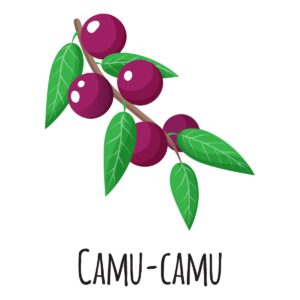
 A research team from Université Laval (Canada) has shown the benefits of camu-camu on non-alcoholic fatty liver disease, which affects over seven million people in Canada. This exotic fruit may help reduce liver fat levels.
Over 12 weeks, 30 participants took either camu-camu extract or a placebo at different times in this randomized clinical trial. Participants underwent magnetic resonance imaging (MRI) to determine fat levels in the liver. Scientists observed a 7.43 percent reduction in liver lipids when study participants took camu-camu extract. With the placebo, they noted an 8.42 percent increase in liver fat.
“That’s a significant 15.85 percent difference,” said André Marette, a professor in the Faculty of Medicine and researcher at the Institut universitaire de cardiologie et de pneumologie de Québec—Université Laval (IUCPQ-ULaval), who led the study.
This effect stems from the polyphenols contained in camu-camu and their relationship with the intestinal microbiota. “The microbiota metabolizes the large polyphenol molecules that cannot be absorbed by the intestine, transforming them into smaller molecules that the body can assimilate to decrease liver fat,” explained Marette.
His team has identified two potential mechanisms of action for these small polyphenols.
“They could reduce lipogenesis, i.e., the formation of lipid droplets in the liver. They could also stimulate lipid degradation by oxidation. A combination of the two mechanisms probably explains the high efficacy of the extract, as we’re playing on both sides of the coin,” reported Marette, who collaborated with scientists at the Institute of Nutrition and Functional Foods (INAF).
However, the team noted a wide variability in response to camu-camu.
“We hypothesize that the initial intestinal microbiota influences the response to polyphenols. If we find the factors involved, we may be able to modify the microbiota and increase the extract efficacy,” said Marette.
For more information, visit www.ulaval.ca/en.