cardiovascular disease
Joseph Keenan, MD
Professor Emeritus, University of Minnesota Department of Family Practice and Community Health Associate Professor, University of Minnesota Department of Food Science and Nutrition Former Director of the Family Practice Residency Program and the University of Minnesota Geriatrics Fellowship Program. Dr. Joe Keenan has been doing research, focusing primarily on preventive cardiology, for more than 35 ...

Activity Patterns and Sleep Cycles Could Influence Risk of Type 2 Diabetes and Heart Disease
Are you an early bird or a night owl? Our activity patterns and sleep cycles could influence our risk of diseases, such as type 2 diabetes and heart disease. New research published in Experimental Physiology found wake/sleep cycles cause metabolic differences and alter our body’s preference for energy sources. The researchers found that those who stay ...

Naturopathic Medical Organizations Jointly Issue White Paper on Whole-person Care
Against the backdrop of the International Day of Natural Medicine, the Institute for Natural Medicine (INM) and the American Association of Naturopathic Physicians (AANP) have announced the joint publication of a white paper designed to raise awareness of the principles of naturopathic medicine and reaffirm the profession’s commitment to a collaborative model of clinical care. The paper, “Naturopathic Physicians as ...

ACLM Announces Online CME “Food as Medicine: Nutrition for Treatment” Course
The American College of Lifestyle Medicine (ACLM), the medical professional society that has championed food as medicine since its inception in 2004, has announced the availability of the second installment of its “Food as Medicine” course, titled “Nutrition for Treatment and Risk Reduction.” The entire CME- and CE-accredited course is designed around the belief that ...

Accelerating Gains in Abdominal Fat During Menopause Tied to Heart Disease Risk
Women who experience an accelerated accumulation of abdominal fat during menopause are at greater risk of heart disease, even if their weight stays steady, according to a University of Pittsburgh Graduate School of Public Health (Pitt Public Health)-led analysis published today in the journal Menopause. The study—based on a quarter century of data collected on hundreds ...

Defining Healthy Aging
Every patient/client can benefit now—and later—by being coached to take their unique aging concerns into account. Here’s a conundrum: when it comes to healthy aging, what is the more accurate description—slowing down or speeding up? Slowing down infers biological systems becoming sluggish and winking out, while speeding up infers hastening life to its end. So, ...
Women, Exercise and Longevity
Women who can exercise vigorously are at significantly lower risk of dying from heart disease, cancer and other causes. The research is presented at EuroEcho 2019, a scientific congress of the European Society of Cardiology (ESC). Study author Dr. Jesús Peteiro, of University Hospital A Coruña, Spain advised women: “Exercise as much as you can. ...
Any Amount of Running Linked to Significantly Lower Risk of Early Death
Any amount of running is linked to a significantly lower risk of death from any cause, finds a pooled analysis of the available evidence, published online in the British Journal of Sports Medicine. If more people took up running—and they wouldn’t have to run far or fast—there would likely be substantial improvements in population health and ...
Twin Study Shows What’s Good For the Heart is Good For the Brain
Emory University researchers are giving us double the reasons to pay attention to our cardiovascular health—showing in a recently published study in the Journal of Alzheimer’s Disease that good heart health can equal good brain health. The American Heart Association defines ideal cardiovascular health (CVH) across seven modifiable risk factors (blood sugar, serum cholesterol, blood pressure, body ...

Metabolic Syndrome Patients Need More Vitamin C to Break Cycle of Antioxidant Depletion
A higher intake of vitamin C is crucial for metabolic syndrome patients trying to halt a potentially deadly cycle of antioxidant disruption and health-related problems, an Oregon State University (OSU) researcher says. That’s important news for the estimated 35 percent of the U.S. adult population that suffers from the syndrome. “What these findings are really ...
Don't Miss Out!

Industry Professionals
Stay Informed!
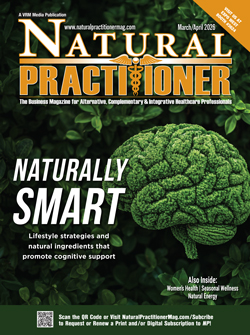
Stay informed about the latest health, nutrition, and wellness developments by signing up for a FREE subscription to Natural Practitioner magazine and digital newsletter.
Once subscribed, you will receive industry insights, product trends, and important news directly to your doorstep and inbox.