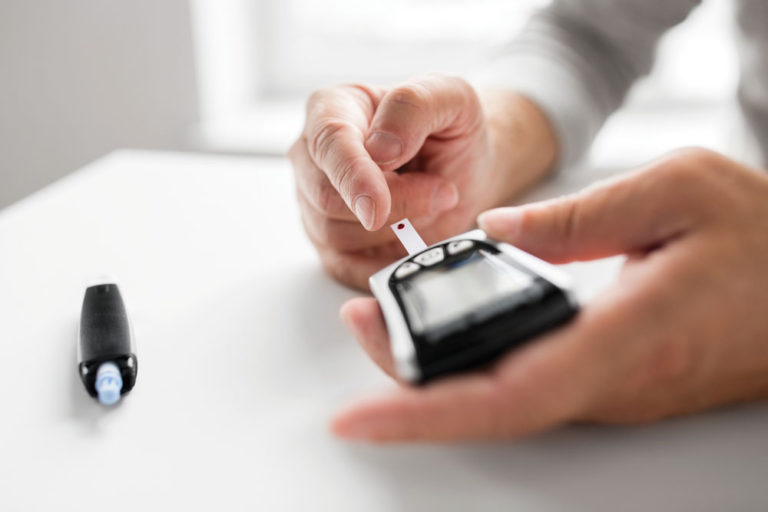
Reducing high blood sugar is likely a need for many of your patients/clients. Here are some suggestions.
Diabetes is Optional, is the name of a best-selling book by medical expert Jacob Teitelbaum, MD. The crux? Developing type 2 diabetes is indeed set in motion by dietary choices. Even after blood sugar numbers begin to creep up, choices can still be made to halt that process and even set it in reverse.
But comfort foods that by and large generate the inclining numbers are just too plentiful and too tempting especially in times of great duress, strife and stress, and especially in angst-ridden middle-agers. “Current estimates are that one third of adults will develop diabetes, metabolic syndrome or other severe manifestations of insulin resistance during their lifetime,” said Dr. Teitelbaum.
Scarlett Leung, co-founder & CEO, Sugarbreak, New York, noted that in the past 100 years, annual sugar consumption in the U.S. went from 178.5 pounds per person in 1915 to 150 pounds per person in 2011. “A record-setting 86 percent of Americans are actively trying to reduce their sugar intake, so we knew that we had to create a product that would also help address sugar consumption, as part of our core line. It is no secret that diabetes is a chronic disease that is still seen as shameful, so we wanted to create a brand that would destigmatize that and make customers feel like they are empowered to take care of their own health,” she commented.
According to Jay Wilkins, ND, chief formulator, South Carolina-based Bionox, millions of Americans deal with blood sugar challenges. “From high blood sugar, low blood sugar, dysglycemia, metabolic syndrome (MetS), insulin resistance and ‘diabesity’ to name but a few,” he stated. More people are experiencing signs of worsening blood sugar status—such as weight gain, memory loss/brain fog, sugar cravings, numbness/tingling, low energy, high cholesterol, vision issues and digestive disturbances.
Obesity is obviously an open door to elevated blood sugar and potential development of type 2 diabetes. Brittany Tedesco of Echosens, Massachusetts, explained that the impact of obesity on vital organs can be devastating, especially in the liver, increasing insulin resistance that leads to buildup of blood sugar and increases the amount of free fatty acids circulating in the blood and inside the liver cells. Fat buildup is very common in those with type 2 diabetes, and increases the risk of liver fibrosis, cirrhosis, liver cancer and death. Studies have shown that people with type 2 diabetes and non-alcoholic fatty liver disease (NAFLD) have twice the all-cause mortality than people with type 2 diabetes alone. NAFLD affects approximately 85 million Americans, costing the U.S. healthcare system approximately $100 billion annually.
Steps and Solutions
When working with a lifestyle-generated health condition, such as type 2 diabetes, taking steps to amend the lifestyle is a critical component to a successful long-term solution.
According to Dr. Wilkins, there are three significant areas to support with supplementation and nutrition/lifestyle guidance:
1. Supporting the pancreas and its ability to make insulin
2. Supporting the ability for insulin to be fluidly shuttled into the cells where it belongs, encouraging the cells to become more insulin sensitive
3. Supporting lost nitric oxide (NO) levels to deter damage to the arteries, kidneys and other parts of the body
Dr. Teitelbaum strongly suggests decreasing sugar intake (being especially watchful of fruit juices) while increasing fiber intake. In addition, for patients who are concerned about elevated blood sugar/insulin resistance, he recommends they start or increase an exercise routine and lose weight. He believes that vitamin D and magnesium are “critical” nutrients in this case as well as Hintonia latiflora (available as Sucontral D) is shown in research to decrease glycosylated hemoglobin by about 1percent after six to 12 months. “For many people, such as those going from a 7.5 to 6.5 percent glycosylated hemoglobin, this is the difference between being diabetic and not,” he said.
“I also put my diabetics on berberine (500 mg TID), which has been shown to improve the manifestations of insulin resistance including high blood sugar and high cholesterol,” he added.
A practice that has gained tremendous media coverage, a following of devotees and a significant success rate in lowering both weight and blood sugar numbers is intermittent fasting (IF).
Joy Stephenson-Laws, president and founder, California-based Proactive Health Labs (pH Labs) noted that there is evidence that IF can “literally stop in its tracks the chain reaction of higher glucose levels triggering higher insulin levels creating higher insulin resistance. This, in turn, can help the body get back into a healthier insulin-glucose balance.”
In between meals, the body does not receive signals to make and release insulin into the bloodstream. Therefore, insulin levels drop, triggering fat cells to release some of their stored glucose. This release serves to both fuel the body’s cells while also causing weight loss—the goal of IF is to lose weight by burning fat, which occurs when insulin levels are low for a long enough duration. One study (Sutton, Cell Metabolism 2018) she mentioned showed that participants engaging in IF had up to a 6 percent decrease in blood sugar and lowered insulin by up to 31 percent.
“Another study compared the results of a group of obese men with prediabetes (insulin resistance is a key element of prediabetes). In it, one group of men followed what is called “early time-restricted feeding,” which limited the feeding window to an eight-hour period from 7 a.m. to 3 p.m. The other group had a 12-hour window from 7 a.m. to 7 p.m. While neither group reported any weight changes, after five weeks the eight-hour group had dramatically lower insulin levels and significantly improved insulin sensitivity (and lower blood pressure as a bonus),” she reported. “Other researchers, however, believe that there is no one ‘best’ IF for improving insulin sensitivity to better manage glucose levels. Their view is whichever one a person can follow over the longer-term is best. In fact, one study from 2018 comparing a variety of IF eating regimens showed that all resulted in improvements in insulin sensitivity.”
Considering recommending a client follows IF to reduce insulin sensitivity and to lose fat, Dr. Stephenson-Laws suggested offering clients a comprehensive nutrient test to first ensure there are no nutritional deficiencies or imbalances. Identifying nutritional imbalances is one of the first steps we should take to address our cravings and start on the path of lowering blood sugar levels. Low levels and intake of chromium, magnesium and zinc often creates sugar cravings.
Supplement solutions include Bionox’s SB3 Ultimate Blood Sugar Support (formerly Sugar Balance Botanical Blend+) containing more than 20 ingredients that assist the liver and pancreas in stabilizing blood sugar, according to Dr. Wilkins. Bionox’s M3 Ultimate Nitric Oxide Nutrition is an adjunct to SB3 to support waning NO levels in clients/patients with blood sugar issues. These individuals should focus on increasing their NO as all diabetics are deficient in NO, Dr. Wilkins noted, as doing so reduces their risks of dangerous health complications. Consuming NO precursors L-arginine, L-citrulline, beets and watermelon help build up nitric oxide. The formula also includes antioxidants vitamins C, D, E and antioxidant-dense botanicals.
“One diabetic specialist used to send 250 patients a year to cardiologists. Since using L- arginine, L-citrulline, antioxidants and vitamin D with his patients he sends maybe one per year,” Dr. Wilkins related. “He has been using NO-supporting supplements with his diabetic patients for over 20 years.”
Practitioners should recommend two capsules, one to three times per day of the Bionox’s SB3 Ultimate Blood Sugar Support and one to two scoops twice daily of M3 Ultimate Nitric Oxide Nutrition.
SugarSolvePro, from New York-based American BioSciences-Rx, is an extract of the banaba plant (Lagerstroemia speciosa L.) standardized to 2 percent corosolic acid. According to Katharine Wales, medical division sales manager, each capsule has 16.5 mg of banaba extract, providing 330 mcg of the active fraction corosolic acid. “This dose provides over 35 percent more active ingredient daily than our previous formula, more than the daily amount of corosolic acid used in most human studies,” she said. Several human studies have shown banaba-sourced corosolic acid reduces the level of both fasting and post-prandial blood glucose in humans. The reduction is reported to typically range from 10 to 15 percent, although one study reported a 30 percent reduction.
Corosolic acid works to support healthy blood sugar in two ways, Wales explained. It has been shown to inhibit the hydrolysis of sucrose in the small intestine. Inhibiting the hydrolysis of sucrose reduces the absorption of glucose and fructose. And corosolic acid increases the transport of glucose into cells. “This occurs when glucose transport molecules are activated, navigating from the inner part of the cell to the outer cell membrane. GLUT4, one of these transporters, allows glucose to cross the cell membrane of certain muscle cells. In an animal study, corosolic acid increased the content of the GLUT4 transporter in cells, with more of the GLUT4 located near the cell membrane,” she explained.
Sugarbreak provides an eponymous suite of three supplements—Resist, Stabilize and Reduce—launched in September, according to Leung. Resist is a pack of 20 dissolvable plant-based natural spearmint-flavored strips that immediately block the taste of sugar in all foods, curbing sugar cravings immediately due to gymnemic acid, peppermint and brown seaweed. “In addition to blocking the taste of sugar for up to an hour, Resist disrupts the mind’s reward mechanism suppressing the desire for sugar up to an hour,” she explained.
Stabilize, is formulated to lower post-prandial blood sugar spikes and crashes. In ingredient studies, the post-meal blood sugar spike is minimized by up to 42 percent, Leung reported. It is formulated with ingredients that block the absorption of sugars and carbs, white mulberry leaf, chromium picolinate and banana leaf extract. “White mulberry leaf resembles the molecular makeup of complex sugars and digestive enzymes attach themselves to it while the carbohydrates pass through undigested and out of the bloodstream,” she described.
Sugarbreak Reduce helps maintain blood sugar at a healthy and contains Gymnema sylvestre, which mimics the makeup of sugar molecules and blocks sugars from reaching the sugar receptors in the intestine; fenugreek seed extract, banana leaf extract and green tea.
Glycemic Guard from Florida-based Life Extension, contains Delphinol, an extract of maqui berry (Aristotelia chilensis) high in anthocyanins and delphinidins, and Clovinol, an extract of clove buds (Syzygium aromaticum).
According to Dayna Dye, educational content producer, Delphinol slows food transit from the stomach to the small intestine, which reduces spikes in glucose and insulin. In a small double-blind, placebo-controlled, crossover study of participants with moderate glucose intolerance, supplementing with Delphinol prior to eating was associated with post-prandial lower glucose and insulin compared to a placebo. A four-month murine study showed that Delphinol exerted a decrease in fasting blood glucose that reached values similar to those of healthy nondiabetic rats. “The researchers attributed their findings to an inhibitory effect of Delphinol against a sodium glucose cotransporter (SGLT) in the small intestine,” she said.
Modulation of post-prandial blood glucose is an important factor in the support of healthy levels of hemoglobin A1c (HbA1c). Glycemic Guard’s Delphinol was associated with average decreases in HbA1c from 5.65 to 5.5 after one month, 5.39 after two months and 5.35 after three months of supplementation among subjects with recently diagnosed moderate glucose intolerance, she reported. Delphinol has been shown to stimulate glucagon-like peptide-1 (GLP-1), which delays stomach emptying so that the glucose contained in a meal reaches the small intestine later and in a lower amount than it normally would.
Meanwhile, Clovinol, an extract of clove buds (Syzygium aromaticum), is said by Dye to inhibit glycogen phosphorylase, an enzyme utilized in the breakdown of glycogen, the form glucose takes when is stored in the liver, from which it is released as glucose into the bloodstream. It helps support a healthy level of glucose in the blood. “When an extract of clove was evaluated in seven participants with pre-meal glucose levels of 100 milligrams per deciliter (mg/dL) or lower and six participants with pre-meal levels of 101 to 125 mg/dL, glucose levels following a meal were lower in both groups on days 12, 24 and 30 during 30 days of supplementation, with significant reductions in the second group at 24 and 30 days,” she reported.
Another liver angle to providing blood sugar health is a tool from Echosen called FibroScan, which, noted, Tedesco, is FDA (U.S. Food and Drug Adminsitration)-cleared as an aid for diagnosing and monitoring adults with chronic liver disease, and supported by more than 2,500 peer-reviewed publications. It provides consistent measurements of liver fat and liver stiffness. “The output supports the use of standardized scoring algorithms for longitudinal monitoring of liver health and for populating patient care plans by practitioners in real-time,” he described.
You will likely continue to see a steady flow of clients/patients who exhibit signs of inclining blood sugar numbers signifying insulin resistance and the need to overhaul his/her lifestyle. The great news is that you can partner with his or her for a healthy, vibrant outcome that does not put pharmaceuticals at the forefront of stabilization.
Healthy Take Aways
• One third of adults will develop diabetes, metabolic syndrome or other severe manifestations of insulin resistance during their lifetime.
• A record-setting 86 percent of Americans are actively trying to reduce their sugar intake.
• Fat buildup is very common in those with type 2 diabetes, and increases the risk of liver fibrosis, cirrhosis, liver cancer and death.
• Berberine has been shown to improve the manifestations of insulin resistance including high blood sugar and high cholesterol.
For More Information:
American BioSciences-Rx, www.abs-rx.com
Bionox, www.bionoxusa.com
Echosens, https://echosens.us
Life Extension, www.lifeextension.com
Proactive Health Labs, www.phlabs.com
Sugarbreak, www.sugarbreak.com