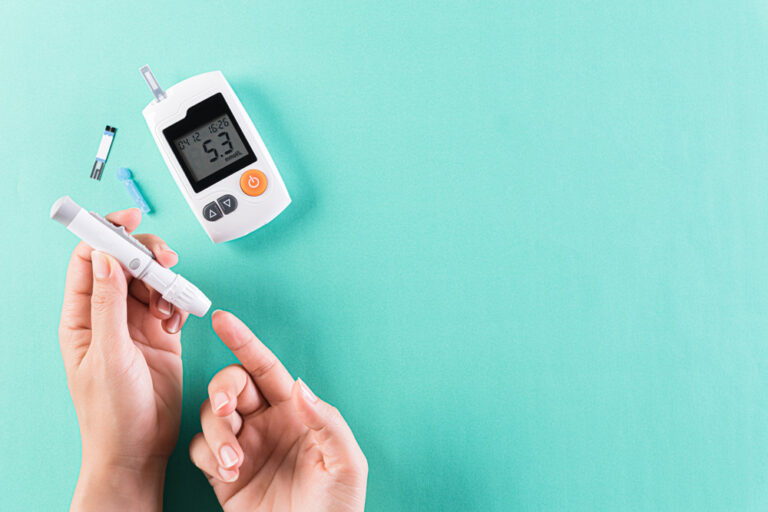
What if you could simply and naturally lower most people’s diabetes HgBA1C test results by 2-3 percent? For example, from 8.7 percent (poorly controlled diabetes) to under 6.5 percent (not diabetic).
You can, and this article will show you how.
Some Historical Background
Medical anthropologists tell us that adult diabetes used to be quite rare. Before the high sugar and low fiber Western diet was introduced. Then, as they followed the introduction of this diet worldwide, diabetes and numerous other illnesses of Western civilization skyrocketed about 20 years later.1
The good news? This suggests that diabetes is quite optional.
Certainly, we are all aware of the importance of lifestyle changes in helping prevent and treat diabetes, including low sugar and high fiber diets, weight loss, exercise and even sunshine. But what do we do when people have trouble following these or need more help?
The standard medical answer? Of course, physicians are pummeled with recommendations to use the newest and most expensive diabetes medications, which in my 50 years in medicine has followed a disturbing pattern in recent decades:
1. Aggressively promote the new expensive (i.e.- patentable), miracle diabetes medications.
2. Suppress the reporting of any worrisome toxicities until the patent on the medication expires.
3. As the patent expires then the next generation of new patentable, very expensive diabetes medications is released. Coincidentally it seems, along with the research showing that the (now cheap and generic) old diabetes medicines are toxic and should be abandoned. Clearing the way for the new expensive medications.
As the old saying goes, “Wash, rinse, repeat…”
But what if there are simple natural tools, beyond the lifestyle areas noted above, that can powerfully lower blood sugar?
Basic Epidemiology
Adult diabetes has gone from being rare to epidemic. The estimated lifetime risk of developing diabetes for individuals born in 2000 is 32.8 percent for males and 38.5 percent for females.2 This is often accompanied by insulin resistance and metabolic syndrome, with its associated elevated cholesterol, blood pressure and waist size. It is also one more reason for the obesity epidemic.
A Simple Diabetes Protocol
Let’s look at what the research shows.
A Simple Natural Way to Drop Glycosylated Hemoglobin (HgBA1C) 2.3 percent.
1. Hintonia latiflora bark extract (Available as Sucontral D): 100 mg 2x day. A dozen studies now show it helps. It starts showing benefits by three to four months, increasing over one year. At which time the average HgBA1C drop is 0.8 percent.3
2. Berberine Ultra Absorption: 250 mg 2x day (or regular berberine 500 mg 2-3x day). A meta-analysis of 37 studies showed that in those with an initial glycosylated hemoglobin over 9 percent berberine lowers it an average of 0.79 percent.4 The main problems are that the higher dose can have compliance issues and problems with gastric upset. These can be avoided by the high absorption form.
3. Melatonin: A meta-analysis of 16 studies showed a mean drop in HgBA1C of -0.38 percent.5 My recommendation is to use a 10 mg sustained release tablet at bedtime.
4. Magnesium: 150-250 mg in a high absorption chelate form. Magnesium itself results in a 0.36 percent drop in HgBA1C.6
I give it as part of a multivitamin offering overall nutritional support for diabetes. My preference? I recommend the Essential Multivitamin, which also contains 125 µg of vitamin B12. Enough to prevent the B12 deficiency routinely caused by metformin. This can often prevent nerve pain and other symptoms of B12 deficiency, which are often incorrectly attributed to being diabetic neuropathy.
These treatments begin working by three months but take about a year to see the full effect. So it is important to let the person being treated know this, so they give the protocol time to work properly.
Assessing New Treatments
In assessing new treatments, what I look for is:
1. Is it effective? What does both the research and clinical experience show?
2. Is it safe?
3. Is it affordable?
4. Is it accessible? (Available? Reasonable from a compliance standpoint? Etc.)
One of the wonderful things about natural medicine is that unlike prescriptions, which have a wide array of side effects, natural treatments often have “side benefits” instead.
This protocol passes all these criteria.
The Importance of Optimizing Absorption
Note: For much of my half-century in medicine, it was frustrating that some herbals had large amounts of research showing them to be dramatically effective. But because of poor absorption, it was only at doses so high that it was difficult to give in real life. For example, curcumin and ginseng.
But the discovery of ways to powerfully enhance absorption safely and naturally (e.g. with turmeric oil or gamma cyclodextrin) dramatically increases our ability to help people. This is again seen with the Berberine Ultra Absorption above.
Let’s Look at These Simple Treatments
Most of you are quite familiar with melatonin and magnesium. I will focus on the two herbals in the protocol:
1. Hintonia latiflora (Sucontral-D): One twice a day.
Background: From the high mountains of Central and South America, this remarkable botanical is an extract of the bark of a shrubby tree that grows in the Sonoran Desert. It’s been studied in detail for its ability to reverse high blood sugars for more than 60 years. It has only recently become available to the North American public in a product called Sucontral D by EuroMedica.
There have been more than a dozen studies showing how powerfully effective hintonia is! Practitioners can email me at [email protected] for a list of these references or for general questions you may have.
Mechanism: First, it is a rich source of a special family of flavonoids, called Coutareagenin. This polyphenol nutrient found in bark extracts unique to hintonia and appears to be responsible for many of its blood-sugar controlling benefits.
Mexican researchers also found that plant is an inhibitor of the enzyme alpha-glucosidase, which then slows the breakdown of carbohydrates in the food, mimicking the effect of a high-fiber diet.
Effect: Numerous studies show that not only can hintonia help control blood sugar and overcome insulin resistance, but also enhances the effectiveness of diabetes medications if needed, which they often are not with this protocol. Why?
Hintonia latiflora significantly lowered HgBA1C values 0.8 percent. Fasting and post-meal blood sugars improved by an impressive 23 percent and 24 percent respectively with hintonia.3
This means many people went from being diabetic to no longer being diabetic. Impressively, by the end of the study 39 percent of those using anti-diabetes drugs could reduce their medication levels. Some were able to stop their medication entirely.3
Side Benefits: It also eliminated many of the symptoms of diabetes an impressive 73 percent over time. This is a massive change that can dramatically increase quality of life and well-being. Participants also saw improvements in blood pressure, lipids and liver values. It also helps keep blood sugars steady throughout the day and night, making life easier and contributing to long-term better glucose control.
The president of the International Diabetes Foundation was the lead author on another study that strongly recommended the use of this unique herb in treating and preventing type 2 diabetes. Not only because of improved blood sugar control, but also because of its effectiveness in lowering cholesterol and other elements of metabolic syndrome that can lead to type 2 diabetes.7,8
2. Berberine Ultra Absorption: 250 mg twice daily (or 500 mg three times a day of regular berberine).
Background: Berberine, a natural plant alkaloid isolated from the Chinese herb, Coptis chinensis has been a part of Chinese and ayurvedic medicine for millennia. For excellent reason. It has significant activity against the number of unhealthy infectious organisms. And it helps metabolic syndrome and diabetes.
Mechanism: Although it has numerous mechanisms of action, especially pertinent for diabetes is that berberine can inhibit the voltage-gated k+ channels of pancreatic β cell membrane. This enhances insulin secretion but does so without causing low blood sugar. Why? Because this mechanism only kicks in when blood sugars are elevated.
So, when this herb is combined with diabetes medicines, the amount of medication side effects actually decrease.9 It also decreases insulin resistance by activating the AMPK pathway.10
Effect: In a meta-analysis of 37 studies with 3,048 patients, berberine reduced HgBA1c 0.63 percent. This effect increased as blood sugar rose. Dropping an average of 0.79 percent in those with an initial glycosylated hemoglobin over 9 percent.4
Side Effect: The main side effect is stomach upset as the dose goes higher, which can be avoided with the ultra-absorption form. Also, compliance can be improved with a twice a day dosing.
Side Benefits: Other benefits from berberine are quite marked. Just a few examples? A meta-analysis showed “berberine significantly affects blood glucose levels, insulin resistance, blood lipids, body parameters and composition, inflammatory markers, colorectal adenomas and Helicobacter pylori infections as compared to controls.”11
This represents just a small portion of the benefits.
The Bottom Line
As natural practitioners, we now have the tools to make diabetes optional. Naturally.
References:
1 Western Diseases-Their Emergence and Prevention.Edited by H. C. Trowell and D. P. Burkitt www.hup.harvard.edu/books/9780674950207.
2 https://pubmed.ncbi.nlm.nih.gov/14532317/.
3 Schmidt M, Hladikova M. Hintonia concentrate – for the dietary treatment of increased blood sugar values: Results of a multicentric, prospective, non-interventional study with a defined dry concentrate of Hintonia latiflora. Naturheilpraxis mit Naturmedizin. February 2014.
4 https://pubmed.ncbi.nlm.nih.gov/36467075/.
5 https://pubmed.ncbi.nlm.nih.gov/34229264/.
6 www.ncbi.nlm.nih.gov/pmc/articles/PMC6356710/.
7 Korecova M, Hladikova M. Treatment of mild and moderate type-2 diabetes: open prospective trial with Hintonia latiflora extract. European Journal of Medical Research. 2014;19(1):16.
8 Korecova M, Hladicova M, Korec R. Hintonia latiflora bei Typ-2-Diabetes. Zeitschrift für Phytotherapie. 2006;27:272-278.
9 https://pubmed.ncbi.nlm.nih.gov/36467075/.
10 www.ncbi.nlm.nih.gov/pmc/articles/PMC10376565/.
11 https://pubmed.ncbi.nlm.nih.gov/36999891/.
A recognized authority on chronic fatigue syndrome (CFS) and fibromyalgia, Dr. Jacob Teitelbaum is medical director of the Fibromyalgia and Fatigue Centers nationally, and does phone consultations with CFS/fibromyalgia patients worldwide. He is the author of the popular iPhone application “Cures A-Z,” and author of the best-selling books From Fatigued to Fantastic! (4th revised edition, Avery/Penguin Group) and Pain Free 1-2-3—A Proven Program for Eliminating Chronic Pain Now (McGraw-Hill). His newest book is Beat Sugar Addiction NOW! (Fairwinds Press; 2010). Dr. Teitelbaum does frequent media appearances, including Good Morning America, CNN, Fox News Channel, the Dr. Oz Show and Oprah & Friends.