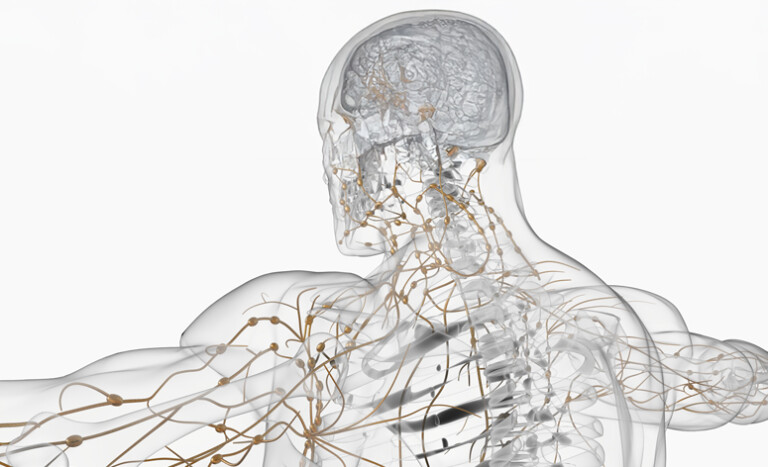
The best ways to support a healthy nervous system in a time fraught with worries.
From 2001 to 2003, the national average of American adults dealing with any anxiety disorder was 19.1 percent. More females (over 23 percent) than males (just over 14 percent), struggled with anxiety disorders. The National Institute of Mental Health (NIMH) estimated that approximately 31.1 percent of U.S. adults experience a disorder related to anxiety at some point in their lives.1 Since the time of these statistics being gathered, Americans and the rest of the world have gone through a global pandemic and all the upheaval it brought.
An overtaxed nervous system may respond with anxiety. But this intricate system is responsible for far more. The nervous system is responsible for brain growth and development, thoughts and emotions, mental processing, learning, memory, sleep and healing. And those are just a handful of the many important roles it plays. Thankfully, there are proactive steps one can take that might help support the nervous system. Lifestyle changes, supplements and both new and “tried-and-true” ingredients may also help to maintain and/or improve the state of one’s nervous system.
Lifestyle Tips to Best Support the Nervous System
Jennifer Nicole Bianchini, MS, RD, IFNCP, RYT is a functional dietician and mind-body wellness expert who practices at Body to Soul Health, a virtual practice. She recommends practicing simple mindfulness for big results by incorporating quick and easy mindfulness moments throughout one’s day.
“This doesn’t need to be another task on your to-do list. In fact, it’s often about doing less, not more.” A few deep breaths before brushing one’s teeth, turning on the car, or beginning a meeting are simple ways to start practicing mindfulness. “These micro-moments of presence shift your body out of ‘fight or flight’ and into ‘rest, digest and healing mode,” Bianchini said.
Adding other mindful activities—such as yoga, walking, spending time in nature and stretching—can also help to relieve an overtaxed nervous system. “These practices help regulate cortisol levels and bring the body out of a state of chronic stress and into a more relaxed and calming state,” she noted. “Journaling, singing, coloring and humming are also beneficial because they stimulate the vagus nerve and promote a sense of calm.”
Josie Warren is an emotional medicine practitioner at Anew Life Center in Colorado. Warren, who herself went through a powerful emotional transformation in her twenties, stated that when looking at an overtaxed nervous system, one first has to look at the emotional state that caused it. This, she stated, is often a result of how one responds to the stressors of life. “When we have an overtaxed nervous system, we have adopted the lifestyle habit of running on an empty emotional gas tank,” Warren said.
She noted this often happens when an individual puts themselves and their needs last, is on a hamster wheel of activity, and rarely takes time to refill their tank. “The goal in life is to be resilient, which is the ability to be adaptive and bounce back quickly in times of stress. When we live with an emotionally empty gas tank, we never learn to be resilient: we can’t be resilient.” To become so, Warren said, individuals must put themselves first by adding activities and hobbies they once enjoyed back into their lives. Arts, crafts, gardening, reading, drawing or playing a sport—all help to refill one’s tank. “To become resilient, we must adopt the lifestyle habit of putting ourselves first, so we have a full emotional gas tank.”
Trends in Nervous System Support
Ashok Gupta is the founder of the Gupta Program in England, which focuses on brain retraining. Gupta stated that nervous system support has become a hot topic in recent years. This is especially true online where trends quickly sprout and fade. “We’ve seen growing interest in things like ‘vagus nerve activation,’ and ‘cold plunges.’ While these concepts all have value, it’s important to look beyond the trends and understand what truly creates lasting change,” he said.
Gupta points to the most well-researched and effective way to support and rewire the nervous system—through neuroplasticity, a term that defines the brain’s ability to change form new pathways over time, he clarified. “This is where brain retraining comes in. It’s not a quick fix, and it takes consistent practice, but it offers the potential for deep and lasting transformation. Trends may come and go—but when it comes to true nervous system healing, it’s the deeper, science-based approaches like brain retraining that make the biggest impact,” Gupta stated.
Standard Process is a manufacturer located in Wisconsin. There, Mimi Hernandez, MS, RH(AHG) is the company’s clinical herbalist, herbal therapy liaison and clinical educator. She shared that the company has seen a big shift in the way that consumers want to support their nervous systems, changing from a quick-fix mentality toward whole-system, long-term core support of the nervous system. “One major trend is the growing spotlight on neuroinflammation. Once primarily associated with musculoskeletal issues, inflammation is now recognized as a central factor in mood disorders, cognitive decline and mental fatigue,” Hernandez explained. “This deeper understanding has sparked interest in addressing inflammation within the brain itself as a foundation for sustainable nervous system health.”
“In parallel, there is rising focus on neuroplasticity, the brain’s ability to adapt, rewire and grow. Supporting plasticity is now considered key to maintaining emotional flexibility, learning and long-term neurological wellness,” said Hernandez. “Together, these trends reflect a more holistic and proactive approach to nervous system care aimed not just at quick fixes, but at restoring the system’s innate ability to regulate, recover and thrive.”
Chief of Scientific Affairs and Education at Wisconsin-based EuroMedica, Inc., Cheryl Myers, noted some important trends in the nervous system support market. “In all areas of support, I’ve noticed a greater emphasis on nutrient absorption and delivery. Responsible nutraceutical companies know that in order for any vitamin, botanical, mineral or combination thereof must be bioavailable to be effective,” Myers noted. “I think we’re seeing greater acknowledgment of the importance of these delivery factors.” Myers also believes that newer delivery systems, whether as drink mixes, chewable tablets or sublingual forms, are on an upward trend, becoming more common every year. These, she stated are “more recommended and accepted by both practitioners and patients.”
Myers stated that EuroMedica, Inc., is pushing forward on research along with new combinations of nutrients and exclusive formulations which she finds exciting. “We are continually reviewing leading-edge studies and deepening our understanding of how one nutrient known for relieving inflammation and pain—like the BCM-95 curcumin in our CuraPro for instance—can also be applied to other areas of support, like liver detoxification, vision health, and of course, nervous system concerns.”
Key Ingredients Which May Support a Healthy Nervous System
Gad M. Gilad, PhD, co-founder and CEO of Gilad&Gilad in Nevada, stated that the nervous system—compared to other tissues—is unique in its neurotransmission functions. “The tissue structures underlying these functions include exceptionally high metabolic rate but lack of glycogen reserves and extreme dependence on oxygen supply for energy production and hence increased requirement for antioxidants (e.g., glutathione, N-acetyl cysteine, CoQ10, vitamin C),” he said.
At Life Extension, a manufacturer in Florida, Dayna Dye the education content writer, shared the company’s list of important ingredients for better nervous system health. “Nutrients that are made in the body or are essential for the manufacture of the body’s own proteins—including neurotransmitters—are key to nervous system health,” she noted. These include B complex (vitamins B6, B3, B12 and folate), choline, magnesium, the phospholipid phosphatidylserine and omega-3 fatty acids.2,3 “These nutrients support the health of the entire nervous system, including the brain,” said Dye.
Céline Torres-Moon, senior scientist at Illinois-based Protocol For Life Balance, stated, “For nutrients, magnesium threonate, phosphatidyl serine, alpha-lipoic acid, B-complex vitamins, alpha-glycerylphosphorylcholine (alpha-GPC), choline, DHA, acetyl-l-carnitine, GABA, tryptophan, 5-HTP, Myo-inositol, SAMe are what’s most important now in the nervous system support market.”
While The Gupta Program recommends the following supplements—vitamin D, omega-3 fatty acids (particularly EPA and DHA), magnesium and B-complex vitamins—Gupta stated that true nervous system regulation doesn’t come from supplementation alone. “It comes from addressing the root cause of a dysregulated nervous system, through practices like brain retraining, somatic techniques, meditation and mindfulness,” he said. “These tools help calm key areas of the brain involved in stress—such as the amygdala and insula—shifting the body out of ‘survival mode’ and into a state of healing.”
The Current Market for Nervous System Products
Stephanie Nishek, ND, an industry advisor at Wise Woman Herbals in Oregon, stated that there has recently been a “catalyst effect” due to social media trends which has generated a significant interest in and around herbs and herbal blends. This has been particularly true, she noted, about blends for nervous system support and those with neuroprotective effects. “From healthy aging to high performance to mental health and to supporting the neurodiverse community, there are ever-growing applications,” said Dr. Nishek. “It is our job to ensure that long-standing brands with research awareness, practitioner/expert input, and consistent industry presence are at the top of the list(s) that consumers are coming upon when learning about supplemental and botanical supports for these health issues.”
At Life Extension, Dye noted that magnesium and B-complex continue to grow in sales. “Some growth in nervous system support is due to an aging population that may be managing conditions that can affect the nerves, including diabetes or viral conditions,” said Dye. “Brain health and discomfort management are also nervous system-related concerns of older individuals who are motivated to seek nonpharmaceutical support.”
Torres-Moon said, “The market is stable in general except for ashwagandha, which has been a top seller over the past three to five years.” She also noted that the company has noticed another trend. “Developing products to effectively manage stress and support relaxation without drowsiness and risk of addiction are what is exciting in this field.”
Hernandez added that, “The market for nervous system support is driven by a cultural shift toward mental wellness, cognitive longevity and emotional resilience. As stress-related disorders, burnout and cognitive concerns become more common, consumers are increasingly seeking formulations that do more than sedate or stimulate,” said Hernandez. “People want products that restore and protect, supporting long-term clarity, and emotional balance.”
Erin Stokes, ND, medical director at WishGarden Herbs in Colorado, weighed in on the current market for nervous system support products. “Currently, there is positive momentum around mental health education and awareness,” she said. “With the increased conversation around the importance of mental and emotional wellness, now is an opportune time to support people holistically with the lifestyle, nutrition and supplement tools that make their nervous system health and well-being a top priority.”
Key Supplements to Promote a Healthy Nervous System
Torres-Moon stated that for botanicals and their derivatives, KSM-66 Ashwagandha, Longvida curcumin, Ginkgo biloba, Mucuna extract, theanine, Zembrin are top hitters.
Bianchini noted that while she always begins with lifestyle changes and behavioral practices—like deep breathing and other mindful techniques—there are some supplements that she often recommends to her clients. These include Cortisol Manager by Integrative Therapeutics, Rhodiola rosea, magnesium—usually she recommends magnesium glycinate—and Truvaga vagus nerve stimulator. “Of course, every person is different and I always individualize recommendations based on specific health concerns, especially for women navigating hormone shifts, gut issues or metabolic dysfunction,” said Bianchini. “There’s no one-size-fits-all when it comes to nervous system health.”
Agmatine is an ingredient that Dr. Gilad favors, noting, “Gilad&Gilad’s discovery of the neuroprotective properties of agmatine4 was substantiated by worldwide scientific research5 and clinical trials focusing on neuropathies have shown the effectiveness of G-Agmatine.” He stated that this was “the best brand of premium grade agmatine” in accelerating nerve pain recovery and improving health-related quality of life in lumbar disc-associated radiculopathy (sciatica).”6 It is also effective in “small fiber neuropathy underlying diabetic neuropathy and idiopathic neuropathy,”7 he noted. “According to the Foundation for Peripheral Neuropathy (FoundationForPN.org), about 30 million people in the United States alone suffer from neuropathies,” said Dr. Gilad.
Dr. Nishek stated that there are several botanicals she’s fond of when it comes to a healthy nervous system. “Botanicals that promote healthy cerebral blood flow, along with those that offer enhanced cognitive function and relief from impacts of chronic stress,” are high on her list. “Healthy cerebral blood flow is essential for the delivery of oxygen and nutrients, along with the removal of metabolic waste products,” Dr. Nishek noted. “A favorite botanical for this purpose is Ginkgo biloba, a powerhouse, highly researched herb in the cerebroprotective category.”
“Nervous system trophorestoratives—like Avena sativa and Scuttelaria lateriflora—and nervines—like Melissa off. and kava kava—to promote cognitive performance and enhance one’s sense of calm and recovery from extensive periods of high stress,” are other she’d recommend.
Dr. Stokes noted that, “The nervous system is the command center of our bodies and impacts everything from our stress response to sleep quality.” She stated that one of the most important ways to support a healthy nervous system is through the use of relaxing botanical nervines such as passionflower and motherwort. “For longer-term support, trophorestorative herbs support the nervous system over time. A premier trophorestorative is milky oats, which has a long history of use,” Dr. Stokes said. “It was utilized by the Eclectic physicians in the mid to late 1800s for sleep support and nervous exhaustion. It is literally considered a food and a tonic for the nervous system.”
Looking Forward
The intricate nervous system plays an extremely important role in the body. Maintaining it and providing the best support possible is now more accessible and easier for most individuals than ever before. As new research continues to emerge even more proactive steps can be taken to help support and nourish this essential bodily system. Improving the state of one’s nervous system has never been easier.
References:
1 “Any Anxiety Disorder,” National Institute of Mental Health, retrieved 05/28/25, www.nimh.nih.gov/health/statistics/any-anxiety-disorder.
2 Mazza M, Pomponi M, Janiri L, et al. Omega-3 fatty acids and antioxidants in neurological and psychiatric diseases: An overview. Prog Neuropsychopharmacol Biol Psychiatry. 2007 Jan 30;31(1):12-26. doi: 10.1016/j.pnpbp.2006.07.010.
3 Varrassi G, Rekatsina M, Leoni MLG, et al. A Decades-Long Journey of Palmitoylethanolamide (PEA) for Chronic Neuropathic Pain Management: A Comprehensive Narrative Review. Pain Ther. 2025 Feb;14(1):81-101. doi: 10.1007/s40122-024-00685-4.
4 G.M. Gilad, K. Salame, J.M. Rabey, V.H. Gilad, Agmatine treatment is neuroprotective in rodent brain injury models, Life Sci. 58 (1996) PL41-PL46.
5 J.E. Piletz, F. Aricioglu, J.-T. Cheng, C.A. Fairbanks, V.H. Gilad, B. Haenisch, A. Halaris, S. Hong, J.E. Lee, J. Li, P. Liu, G.J. Molderings, A.L.S. Rodrigues, J. Satriano, G.J. Seong, G. Wilcox, N. Wu, 4) G.M. Gilad, Agmatine – clinical applications after 100 years in translation, Drug Discovery Today 18 (17-18) (2013) 880-893. DOI: 10.1016/j.drudis.2013.05.017.
6 O. Kynan, Y. Mirovsky, S. Dekel, V.H. Gilad, G.M. Gilad, Safety and efficacy of dietary agmatine sulfate in lumbar disc-associated radiculopathy. an open-label, dose-escalating study followed by a randomized, double-blind, placebo-controlled trial, Pain Med. 11 (2010) 356-368.
7 M.L. Rosenberg, V. Tohidi, K. Sherwood, S. Gayen, R. Medel, G.M. Gilad, Evidence for Dietary Agmatine Sulfate Effectiveness in Neuropathies Associated with Painful Small Fiber Neuropathy. A Pilot Open-Label Consecutive Case Series Study. Nutrients (Clinical Nutrition), 12 (2) (2020) 576. Special Issue: Diet and Nutrition in Neuropathic Pain and Headache. DOI: 10.3390/nu12020576.
Healthy Take Aways
• Relaxation and regulation are incredibly important to the nervous system.
• Deep breathing, grounding and mindfulness practices may help to better support a stressed and overtaxed nervous system. These practices can also be preventative in nature when practiced regularly, and may help the nervous system to stay more balanced.
• B vitamins, magnesium, omega-3s and other “old standbys” in this space are continued to be believed to promote healthier nervous systems.
• The brain has the ability to adapt, rewire and grow—this is called neuroplasticity.
For More Information:
EuroMedica, Inc, www.euromedicausa.com
Gilad&Gilad, https://fornervehealth.com
Gupta Program, www.guptaprogram.com
Life Extension, www.lifeextension.com
Protocol for Life Balance, www.protocolforlife.com
Standard Process, www.standardprocess.com
Wise Woman Herbals, www.wisewomanherbals.com
WishGarden Herbs, www.wishgardenherbs.com