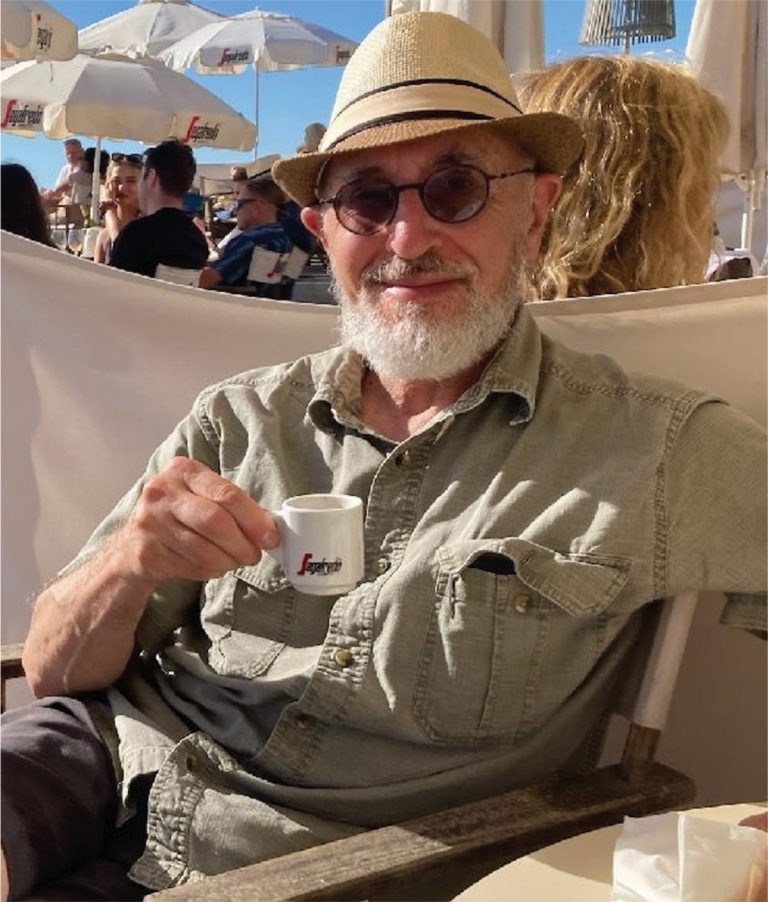
Jerry M. Kantor is the author of The Emotional Roots of Chronic Illness, Homeopathy for Existential Stress; Sane Asylums, the Success of Homeopathy Before Psychiatry Lost Its Mind; Interpreting Chronic Illness, the Convergence of Traditional Chinese Medicine, Homeopathy and Biomedicine; The Toxic Relationship Cure, Curing Traumatic Damage from a boss, parent, lover or friend with natural, drug-free remedies and; Autism Reversal Toolbox.
Under the pseudonym Chaim Yankel he has written Heymischer Homeopathy, the Schmendrick’s Guide to Remedying Yiddish Kvetches. He has written a monograph, Advanced Academic Curriculum for Homeopathic Research Studies, is a faculty member for the Ontario College of Homeopathic Medicine and is currently lecturing on chronic illness for Karen Allen’s Health Hub. His publishing website is www.rightwhalepress.com.
A graduate of the Advanced International Course on Acupuncture and Moxibustion, Nanjing College of Traditional Medicine, Nanjing, People’s Republic of China, Kantor began practicing acupuncture in 1978. Following a foundational course in homeopathy at the New England School of Homeopathy he committed to the full-time practice of homeopathy in the mid-1990s.
Q: What inspired you to write The Emotional Roots of Chronic Illness?
A: It’s a sequel to my first book, Interpreting Chronic Illness that offered a synthesis of three major medical systems, homeopathy, traditional Chinese medicine and modern medicine (that I refer to as bio-medicine). What went missing in that synthesis and I was now able to provide was homeopath’s five major miasms—and the in-depth existential questions underlying them.
Q: What is existentialism? What are some examples of existential questions?
A: A branch of modern philosophy, existentialism is about more than an “OMG! We’re all gonna die” sense of doom as in the fear of climate change or the likelihood of a nuclear war. Existential questions are unique in that despite having a definite answer they retain a powerful emotional charge.
The existentialist perspective emphasizes search for meaning in the most chaotic and dire circumstances. Well-known existential questions include: “What is the purpose of life?” “What does my life mean if there is no God?” “Is there anything to learn from meaningless suffering?” Existentialist philosophy overflows into a clinical area, existential psychology that means to help individuals overcome their depression and anxiety by directing to them find meaning in life. By grounding existential philosophy in homeopathy existential psychology’s purview can extend beyond psychological conditions and increase its relevance. Five existential questions are introduced, each of which imbeds a philosophical quandary. If not diffused (or “resolved”) the quandaries prompt susceptibility to miasmatic disease.
Q: What are miasms and are they related to existential illness?
A: The five miasms and their related existential questions are:
• Tuberculosis: “Am I in synchrony with nature and with others?”
• Psora (which may be chlamydia): “Is my existence on earth sustainable?”
• Gonorrhea (known as sycosis): “Am I oriented in time and space, and who am in that regard?”
• Syphillis: “Can the boundary between life and death be abided?”
• Cancer: “Will the insurrection of my birth prove fruitful?”
Q: How are homeopathic remedies and existential stress related?
A: The answer to this question fills the entire content of this book. It presents homeopathic remedies whose themes are a perfect match for subcategories of the five major quandary classifications.
Q: What advice would you give to practitioners looking to explore this area of study?
A: Be encouraged that the body is far more than a mechanical object. The symptoms of our illnesses express existential struggles. So when taking someone’s case endeavor to understand the theme underlying your client’s troubles and their somatic expression. After identifying the remedy that is a match for the issue do share it with your client. This demystifies his or her health issue, releases them from fear and lend meaning to their life.
Q: Is there anything else you would like to add?
A: Go beyond just finding a good remedy. Make every effort to understand its existential meaning and communicate that. Study materia medica and your client’s dilemmas closely.