Let’s start with a little puzzle! What has been around for decades, exists in every household and every aspect of our lives, is practically unavoidable, appears very durable and long-lasting, and now can be found in Antarctic ice and every tissue of our bodies including our brains?
The title gave it away. However, many people either do not understand the long-term impacts plastics are having on global planetary and human health, or they are trying to ignore it. Plastics have been sneaking into our bodies as micro and nano particles, riding on lipids across the blood brain barrier, and many of us still want to avoid the conversation about all the ways we are each contributing to the problem. Perhaps this is because we have felt helpless and without actionable solutions?
When Did It All Begin?
Plastics were first developed in the 1930s as a byproduct of the refining of oil for energy needs, and it ultimately led to a revolution of convenience and “throwaway living” that exploded in the 1950s. By the 1960s, reports were coming in of plastic waste accumulating in lakes, rivers, oceans and beaches. That was already 60 years ago, so we can easily imagine the scale of the problem today. Disposable medical plastics, food storage and distribution, at home conveniences, today we are absolutely dependent upon all manner of disposable or short-term plastics. They are used globally, and very few municipalities actually have the infrastructure in place to recycle, even if they are capturing some plastics from waste collection.
What Exactly Are They?
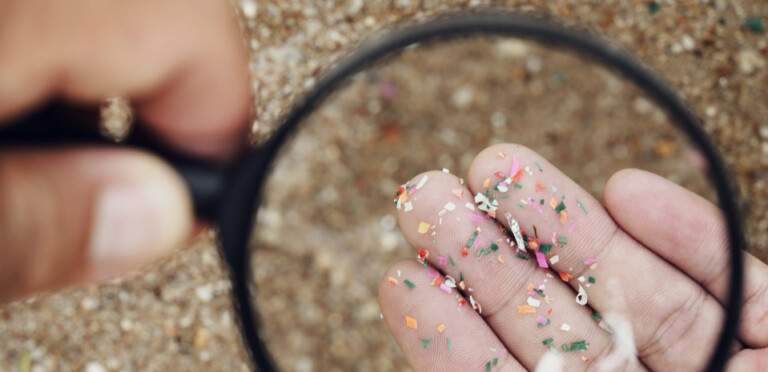
Escaped plastics begin to weather in the environment due to UV and oxygen exposure, but they do not break down in such a way that they are decomposable by microorganisms under normal environmental conditions. Instead, they fracture into ever smaller pieces, forming what are termed microplastics if 5 mm or less, and nanoplastics if 1 μm (micrometer) or less. These enter animals and humans from food and water, air and dust, and even through our skin.
Even worse, if only because they are more invisible and insidious, are those that enter our bodies due to direct contact with heated or frozen food containers, beverage containers, cosmetics and body-care products, and plastics-based clothing. Polyester fabric was developed in the 1930s! Now all manner of disposable fashion, high fashion, casual wear and performance fabrics from gym gear to surf gear are sending nanoplastics through our skin when we wear them, and into our wastewater every time we launder them, contributing greatly to the overall contamination. Also, when plastics break down and fracture over and over again, additives used to improve plastic performance are released, including some very familiar culprits like BPA, BPS, BPF and phthalates.
Some of the worst environmental contributors through our wastewater systems are plastic-based paints (acrylic) and our laundered performance fabrics; yes even yoga clothes. Many people do not realize that our tires are made of plasticizers and heavy metals in addition to rubber. Tire residue from vehicular traffic contaminates runoff and winds up in soil, air and waterways. This can easily enter our farmland and our food supply. Wastewater and treated solid waste is allowed for agricultural uses in many parts of the world, and micro and nanoplastics will enter the food supply this way as well.
How Much Could We Possibly Be Taking In?
Some estimates say we can take in 5 g of microplastics daily, that is a whole teaspoon! In the oceans, it is estimated that we can find 75-199 million tons of plastic waste, of which at least half is already microplastics that can wind up in seafood we may eat, in addition to affecting the health of all ocean organisms. Another way these plastics enter our food supply is very close to my heart. Agricultural microplastic pollution is modeled to be the fastest growing contributor, set to increase 66 percent over the next 15 years. Even in USDA (U.S. Department of Agriculture) Organic agriculture and produce distribution, plastics are widely used and allowed. Short-term plastics are used to cover the soil to mitigate weeds and improve seed germination in colder climates, to reduce the use of herbicides and insecticides, to transport soil and soil amendments like compost and manure, and to transport animal feed and produce destined for the market. Microplastic contamination of the soil disrupts the soil microbiome, ultimately affecting plant health and nutrient density, and the health of all the animals and humans that eat them.
More Elephants In the Room…
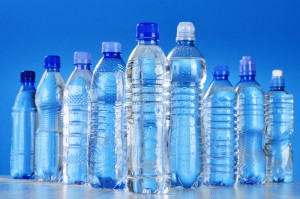
Pollution from plastic packaging is set to double in the next 15 years. This includes the following, and the acronym is legally required to be visible on the plastic container: PET, PP, PE, HDPE, LDPE, LLDPE and PVC. Currently, 85 percent of global packaging is collected by waste management, good news right? Unfortunately, only 21 percent of that goes on to be recycled. Why? Either there is no available facility, or the waste separation is too labor intensive. Low-density polyethylene, linear low-density polyethylene and polypropylene are the most commonly used types of plastics that do not get recycled much because of their complex layered and flexible nature. Many of these are food or cosmetics and body care containers. The other 80 percent of collected plastics that are not recycled either end up in landfills or incinerators. We could feel relieved that landfills are “contained” but that may not be the case everywhere on the globe. Incinerators vary in quality and countries vary in mandates, so the “smoke” of plastics combustion may enter the upper atmosphere and travel with the wind around the entire planet, only to fall to the earth again as rain or snow. This has been well demonstrated in Arctic and Antarctic ice samples. Bottled waters easily contain thousands of microplastic particles. Even glass bottled waters are contaminated from the plastic lining in the caps.
What Does This Mean for Human Health?
We find micro and nanoplastics in our urine and feces, and in the kidneys and liver of course. But we also find them in the testes, ovaries, placenta and in a newborn’s first bowel movement. We find them in the arterial lining and plaques removed from clogged arteries, and we find them in the brain tissue. We are seeing microbiome disruption at a minimum, and we are also seeing a significant increase in the risk of metabolic disorders, cardiovascular disease, stroke and dementia. By default, and by measurements, this means there is also an increase in overall systemic inflammation. It’s not that micro and nanoplastics are the sole cause of any particular disease, but they potentiate already existing factors. We can certainly say without a doubt that where micro and nanoplastics are present, we see higher proclivities for the aforementioned health concerns.
What Can We Possibly Do About It?
There are a number of ways to reduce personal intake of and personal contribution to microplastic pollution. Limit the use of:
• Plastic blenders and grinders
• Single-use plastics
• Microwaveable plastics
• Frozen plastics
• Plastic film to wrap food—use glass containers
• Toiletries or cosmetics with microbeads and other plastics
• Plastic landscape fabric or mulch in your garden—choose burlap or natural mulch
• Plastic-based clothing—choose natural fibers instead
• Be sure to recycle whenever possible
Probiotics that may degrade micro and nanoplastics:
• Bacillus subtilis and other species help in the soil and in us.
• Lactiplantibacillus plantarum DT88 and Lacticaseibacillus paracasei DT66 are nanoplastic degraders found in kimchi and proven in mouse models, and they seem to mitigate intestinal inflammation.
• Bacillus pumilus is a BPA degrader also found in kimchi.
• Several other genera such as Pseudomonas, Escherichia also exhibit great degradation capacity in environmental conditions outside of the human body. And microorganisms isolated from the soil with the biodegradation potential of BPA, BPF and BPS include the genera Pseudomonas, Sphingomonas, Bacillus and Sphingobium
Humic Substances:
Humin, humic, and fulvic constitute humic substances that should be a part of healthy and vibrant soil. They all play an important role in the sequestration of toxins that can impede microbiome health and plant well-being. Regenerative agriculture focuses on techniques that increase humic substances in the soil, resulting in a healthier biome and more nutrient delivery to plants. Humic especially supports the types of microbes that can degrade plastics under certain pH conditions. Humic is a soluble component of the soil that can also be helpful in animals and humans, and has been demonstrated to adsorb onto nanoplastics, form a corona, and keep them from interfering with cellular health and function.
A Final Word and a Call to Action
What if the plastic containers used for all the supplements and medications we recommend to patients and clients would never leave microplastics behind even if they escaped recycling? This is actually possible, but only a few pioneering companies have adopted this technology.
BioBottles and BioCaps are made by the inclusion of an enzyme mixed into the plastic resin before it is blown into a mold for a container or a cap, or a label for that matter. This enzyme will be dormant under conditions of normal use and a shelf life of five-plus years is guaranteed. But if that protein container or multivitamin bottle escapes the recycling stream and becomes litter on land or in water, the enzyme will eventually activate from UV rays, oxygen exposure and exposure to microorganisms like bacteria and fungi. Once activated the plastic will enter an irreversible process of degradation that reduces the carbon chains to a molecular weight that is degradable by microbial enzymes in the natural environment; something that cannot happen with untreated plastics. It can still be returned to the recycling stream should it be later collected. But if it remains in the open environment, it has been scientifically proven to degrade to non-toxic biomass 90 times faster than untreated plastics. This can be used in virgin PP, HDPE, PE and also in post consumer recycled plastics, and only adds a few pennies to the cost of the bottle and cap. Until we reach a global consensus for solutions to this plastic pollution, we the people must push for change in the products we use regularly. What is the point of recommending a cleaner diet to our patients and clients, or a supplement regimen to fill gaps, if it is all delivered in plastics that eventually find their way back into our bodies to cause disease? There is a certain cognitive dissonance to that reality, no?
We are at a tipping point. Let’s reduce our exposures where we can and continue to push for overall reduced use of plastics. But for those plastics we do purchase, let us encourage the use of BioBottles and BioCaps with PlasticIQ technology, the only real solution at this moment in rigid durable plastics.
References:
https://gogreenfrog.com/biobottles-zero-bottles/.
www.pew.org/en/research-and-analysis/reports/2025/12/breaking-the-plastic-wave-2025#:~:text=nine%20key%20findings:-,1.,stage%20of%20its%20life%20cycle.
https://news.stanford.edu/stories/2025/09/microplastics-environment-human-health-impacts-research.
https://phys.org/news/2026-03-kimchi-derived-probiotic-excretion-intestinal.html.
https://pmc.ncbi.nlm.nih.gov/articles/PMC10386651/.
www.sciencedirect.com/science/article/abs/pii/S0048969723015280.
www.frontiersin.org/journals/microbiology/articles/10.3389/fmicb.2024.1522794/full.
www.mdpi.com/1996-1944/16/19/6500.
https://link.springer.com/article/10.1007/BF02685937.
https://pubs.rsc.org/en/content/articlelanding/2019/en/c8en01457d.
Amber Lynn Vitale, CN, ACC is Board Certified in Holistic Nutrition® and is a Certified Dietary Supplement Professional™ under the oversight of the National Association of Nutrition Professionals. She is also an Ayurvedic Clinical Consultant and has produced an online course in Traditional Ayurvedic Medicine for the Wild Rose College of Herbal Medicine. Much of her nutrition practice has been in collaboration with Functional Medicine doctors and other Integrative Practitioners. By 2012, she had realized that raw materials sourcing, labeling transparency, legitimate certifications, and educational support were the criteria that would set quality natural products brands apart from the rest; and she made it her mission to educate both the practitioner and public about the standards that ensure a reliable product. She continues to write, lecture and produce online content on health and wellness topics important to the brand and the consumer alike.