Natural remedies and lifestyle changes can alleviate the impact of seasonal allergies and respiratory issues.
Spring is here, and for the 25 percent of Americans with seasonal allergies1 and further 14 percent of Americans with chronic lung disease,2 that means coughing, sneezing, watery eyes, shortness of breath, and other allergy and respiratory symptoms. Seasonal allergies may not be life-threatening, but they do cause substantial irritation for patients. Furthermore, patients with respiratory issues often constitute a substantial disease burden on the health care system; whether it’s an asthma attack or a COPD flare-up, severe respiratory episodes often require immediate medical intervention. Natural health practitioners are uniquely positioned to help reduce the disease burden on respiratory and allergy patients (and on the health care system) by providing patients with complementary therapies that work. Here are just some of the natural and lifestyle remedies for seasonal allergies and respiratory issues that have been validated through clinical science.
Natural Remedies for Seasonal Allergies
Seasonal allergy remedies generally aim to alleviate allergy symptoms. These remedies come in a variety of shapes and forms, from probiotics, to raw honey, to herbals, to supplements and more. Vanessa Pavey, ND, education scientist with Life Extension in Fort Lauderdale, FL noted that probiotics are known to have an impact on the immune system that could help allergy sufferers. Allergies, she explained, may be the result of an overproduction of T lymphocyte immune cells, which may generate IgE antibodies against certain foods and environmental substances like pollen.
“IgE signals allergic mediators, like histamine, to be released, leading to symptoms commonly associated with allergies,” Dr. Pavey noted. “B. longum strain BB536 seems to suppress Th2 activation, suggesting it may be helpful in blunting the IgE-mediated responses.”
Dr. Pavey pointed to the results of a 28-week clinical trial in which B. longum BB536 modulated intestinal flora and reduced the burden of allergens in subjects with cedar pollen allergies. In this trial, researchers investigated fecal microbiota to examine whether any changes occurred during the pollen season and whether BB536 had an influence on microbiota. This study found that BB536 intake helps maintain normal microbiota in allergy sufferers while also helping reduce allergy burden.3
Other supplements may also support seasonal allergy reduction. Chris Terrell, ND, scientific advisor with Natural Path Silver Wings in Nashville, TN explained that for seasonal allergy support, he often recommends supplements containing a mixture of nettles, bromelain, quercetin, NAC, and mullein. Dr. Terrell noted that silver-based nasal sprays, like those made by Natural Path Silver Wings, may also provide sinus relief.
“Natural Path Silver Wings also makes a sinus relief nasal spray, available in both 50 ppm and a stronger 250 ppm,” Dr. Terrell said. “It cleanses the nasal passage from aerial irritants, relieves sinus congestion by thinning the mucus in the nose, and improves air flow for clearer breathing.”
In addition to supplements, practitioners noted that dietary changes can often help to relieve allergy symptoms. Pamela Cho, MS, CNS, is an integrative clinical nutritionist and the owner of Connections Nutrition & Wellness in Mountain View, CA. In addition, she is a clinical education intern at Designs for Health in Palm Coast, FL. Cho explained that people with seasonal allergies can easily incorporate local honey into their diet in order to reduce allergy symptoms; she said that a teaspoon of local raw honey daily gives the body a microdose of local pollens, which may help the body to build up a tolerance and reduce symptoms over time.
“Honey is also helpful with reducing coughing,” Cho explained. “When taken just before bed, the anti-inflammatory properties of honey help reduce the inflammation and irritation in the throat, easing the need to cough.”
Cho said that eating a diet rich in colorful fruits and vegetables is also a great way to reduce the inflammation in the body that contributes to allergy symptoms; she noted that foods high in omega-3 fatty acids and vitamins C and E can help reduce inflammation, support a healthy immune system, and decrease histamine response.
Several experts have explained that nasal irrigation is a powerful remedy for seasonal allergies. Marge Roberts, president and CEO of homeopathic remedy retailer Newton Homeopathics in Conyers, GA, noted that saline nasal irrigation using a neti pot or nasal syringe can flush out the offending pollen, helping to reduce allergy symptoms. However, Roberts cautioned that nasal irrigation alone may not be sufficient.
“Making sure you are adequately hydrated and adding turmeric and vitamin C during the allergy season may help with both inflammation and the immune response,” Roberts said. “The ideal remedy, in my opinion, is a homeopathic complex. While conventional treatments like antihistamines and corticosteroids are commonly used, many individuals seek alternative approaches.”
There are also several different herbal remedies that allergy sufferers may use to reduce their symptoms. Nichole Shiffler, NMD, a naturopathic medicine physician at Be Well Primary Care, a naturopathic primary care clinic in Chandler, AZ, explained that herbal treatments can be an effective natural solution for seasonal allergies, with nettle leaf, in particular, serving as a top herb that reduces histamine production.
“Scutellaria baicalensis, colloquially known as Chinese skullcap, helps reduce histamine release by stabilizing mast cells,” Dr. Shiffler noted. “Elderberry leaf and boswellia also have anti-inflammatory properties.”
Other herbs that can help reduce seasonal allergy symptoms include butterbur and eyebright. Stephanie Nishek, ND, is a naturopathic physician with Holistic ND in Bismarck, ND, and a consulting expert with Wise Woman Herbals in Cresswell, OR. Dr. Nishek explained that butterbur has been shown in clinical trials to be comparable in efficacy and tolerability to the allergy medication cetirizine in controlling allergic rhinitis symptoms.4 Meanwhile, she noted that eyebright contains polyphenols like caffeic acid that have demonstrated anti-inflammatory effects.
Finally, lesser-known herbs for allergy support include yerba santa and nettles. Erin Stokes, ND, a medical director for WishGarden Herbs in Louisville, CO explained that nettles and yerba santa both support a healthy histamine response; she also pointed to echinacea for supporting a balanced immune response.
Natural Remedies for Respiratory Issues
Respiratory issues can range from asthma to COPD, cystic fibrosis, sleep apnea and more. During different seasons, these problems can become more pronounced; allergies, according to Roberts, can often increase the risk of respiratory problems for people with chronic lung conditions. Roberts noted that prioritizing immune support is critical for people with respiratory issues, especially during peak allergy season.
Dr. Shiffler explained that vitamin D supplements are key in supporting immune function and reducing inflammation in the airways; she also noted that mullein is a gentle expectorant that can soothe respiratory symptoms.
“Lobelia relaxes bronchial muscles and opens airways,” Dr. Shiffler noted. “Meanwhile, yerba santa and grindella clear congestion and support healthy bronchial function.”
Dr. Terrell noted that the inclusion of osha and wild cherry bark supplements can also help support peak respiratory function during allergy season. Meanwhile, Dr. Nishek said that herbs like ginger have been found to be as effective as Claritin in those with allergy-mediated nasal symptoms. Dr. Nishek also recommends licorice for use during higher-risk months, although she noted that licorice should be used with caution in patients with high or borderline-high blood pressure.
Dr. Pavey said that nasal congestion from allergies can potentially lead to a secondary upper respiratory tract infection, which is why upper respiratory tract support supplements can make a difference. She added that enhancing the immune defenses in the upper respiratory tract should be a priority during allergy season, with probiotics like L. rhamnosus CRL1505 having been shown to help boost secretory IgA levels.
“In addition, a specialized dried yeast fermentate from S. cerevisiae also bolstered secretory IgA and NK (natural killer) cell activity,” Dr. Pavey noted. “One study found that taking 500 mg per day of the yeast fermentate for eight weeks increased secretory IgA, and another study found that a single 500 mg dose increased natural killer cell activity. Boosting these immune defenses translated to respiratory protection.”
Lifestyle Changes That Support Allergy Reduction
Patients can take several lifestyle changes to reduce the symptom burden of their seasonal allergies. Roberts noted that according to the principles of clinical homeopathy, the rise of allergies in the United States may be linked to the consumption of genetically modified foods, food additives, pesticides and other environmental pollutants. Roberts explained that eating organic food and minimizing exposure to toxins can help strengthen the immune system in preparation for allergy season.
Dr. Shiffler explained that reducing allergy symptoms comes down to controlling one’s environment; she said that removing allergens from the air can reduce symptoms. To that end, Dr. Shiffler recommended that consumers vacuum their homes regularly with a HEPA-filtered vacuum and also install HEPA filters in their air vents.
Dr. Terrell, meanwhile, recommends ensuring a minimum of seven hours of sleep every night, eating well, and drinking ample quantities of water. Finally, Dr. Terrell said that getting exercise most days of the week can assist with allergy symptom reduction.
Dr. Nishek pointed to the importance of the gut microbiome in reducing allergy symptoms; she said that many daily health habits like avoiding alcohol and managing stress levels can help to promote a healthy microbiome. A healthy microbiome, she said, means a healthy immune response—which means fewer allergic symptoms.
Dayna Dye, education content writer at Life Extension, noted that people with allergy symptoms should be evaluated by an allergy specialist. Dye explained that allergy testing can confirm suspected seasonal allergies to various types of pollen, or to specific mold spores.
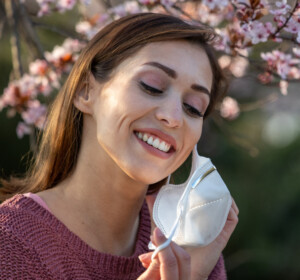
“Once specific allergies have been confirmed, people can attempt to avoid the allergens,” Dye said. “The Weather Channel and other sources such as pollen.com provide daily reports concerning pollen levels in numerous areas of the United States. Wearing a mask can also help filter allergens, although they may not offer complete protection; N95 masks may be more effective than others.”
Lifestyle Changes for Respiratory Support
Patients with respiratory issues can make a variety of lifestyle changes in order to support a healthy respiratory system. Roberts noted that patients can build respiratory strength and enhance overall well-being by incorporating breathing exercises, meditation and regular physical activity into their routines.
Meanwhile, Dr. Nishek noted that respiratory protection starts in the home. She explained that prioritizing a healthy indoor home environment by using HEPA air purifiers and maintaining appropriate humidity levels can help to reduce respiratory symptoms. A HEPA air purifier is able to capture at least 90 percent of all particles that are 0.3 microns or larger in diameter, including allergen particles.
For Cho, though, one of the most important respiratory protective tools may have come as a result of the COVID-19 pandemic:
“Wearing an N95 or similar mask outdoors can help filter pollen and keep it from entering the nasal passages, which reduces or prevents symptoms,” Cho said. “Showering at the end of the day can also remove allergens from the body, and the steam from the shower can help relieve congestion.”
For Dye, the relationship between respiratory and allergy problems is a close one:
“A history of allergies is a strong risk factor for developing asthma,” Dye said. “Some individuals may experience allergic asthma, in which exposure to an allergen brings on their asthma symptoms. This can worsen during allergy season.”
Dye said that while exercise is a major contributor to health and longevity, individuals who have been diagnosed with asthma should consult their physician concerning their exercise regimen; she noted that avoiding smoking should go without saying.
“Avoiding environments in which other people smoke may also benefit people with respiratory issues,” Dye said. “The same goes for environments in proximity to wildfires, factory emissions or heavy automobile traffic.”
Dye noted that a Western diet characterized by a greater consumption of red and processed meat, saturated fat and refined grains has been associated with a more rapid decline of lung function in people with COPD; she said that a Mediterranean-style diet high in fruits and vegetables appears to be protective.5
Allergy & Respiratory Products Diversify
Natural allergy support and respiratory health products are gaining popularity among natural health practitioners as consumers seek out clinically validated complementary and alternative solutions to allergy and respiratory medications. Natural remedies for seasonal allergies aim to reduce histamine production, mediate the antibody response, and clear out the sinuses. Meanwhile, practitioners have recommended a variety of lifestyle changes that consumers can take to reduce the impact of their allergy symptoms, from using HEPA air filters at home to wearing an N95 mask during peak allergy season. For respiratory support, experts have recommended supplements like vitamin D and wild cherry bark to help reduce respiratory symptoms, as well as lifestyle changes like avoiding areas with smoke and eating a Mediterranean-style diet. These and other measures can help patients reduce their symptom burden during peak allergy and respiratory season, resulting in fewer patient visits and better overall health outcomes.
References:
1 Centers for Disease Control National Center for Health Statistics. “More than a quarter of U.S. adults and children have at least one allergy.” Published online January 26, 2023.
2 American Lung Association. “Estimated prevalence and incidence of lung disease: Methodology.” Published online June 14, 2023.
3 Odamaki T et al. “Influence of Bifidobacterium longum BB536 intake on faecal microbiota in individuals with Japanese cedar pollinosis during the pollen season.” Journal of Medical Microbiology, vol. 56 no. 10 (October 2007): 1301-1308.
4 Schapowal A et al. “Randomised controlled trial of butterbur and cetirizine for treating seasonal allergic rhinitis.” BMJ, vol. 324 no. 7330 (2002): 144.
5 Van Iersel LE et al. “Nutrition as a modifiable factor in the onset and progression of pulmonary function impairment in COPD: A systematic review.” Nutrition Reviews, vol. 80 no. 6 (June 2022): 1434-1444.
Healthy Take Aways
• Twenty-five percent of Americans experience seasonal allergies.
• Fourteen percent of Americans have chronic lung disease.
• Allergy symptoms may be a result of an overproduction of T lymphocyte immune cells.
• A diet rich in colorful fruits and vegetables appears to be protective against allergies and respiratory issues.
• Wearing an N95 mask outdoors may help to reduce allergies and respiratory symptoms.
For More Information:
Designs for Health, www.designsforhealth.com
Life Extension, www.lifeextension.com
Natural Path Silver Wings, https://npswsilver.com
Newton Homeopathics, www.newtonlabs.net
Wise Woman Herbals, https://wisewomanherbals.com
WishGarden Herbs, www.wishgardenherbs.com