Conceiving a child has become a monumental task for many couples today. Over the last 25-30 years women have changed their focus from starting a family to completing their education, having careers and pursuing their hobbies. For many women, it is not until they are in their mid to late 30s that conceiving children becomes a priority. At this time a woman’s fertility is starting to wind down hormonally. Factors such as daily stress, overuse of antibiotics, NSAIDs (non-steroidal anti-inflammatory drugs), or antihistamines and environmental pollutants can also imbalance hormone levels. Procreation is one of the natural needs of human beings, and infertility is one of the important factors associated with the quality of life for many couples. Couples may experience emotional problems because of pregnancy failure that can lead to social dysfunction, anxiety and depression.
Infertility can be a complexity of various medical conditions that affect men and women either physically, hormonally or both. Some of the causes of female infertility are menstrual abnormalities, endometriosis, pelvic adhesion, ovulatory disorders, tubal blockage, hyperprolactinemia and uterine abnormalities. Male infertility can be caused by such issues as infections, erectile dysfunction, low sperm motility, morphology or quantity as well as vein blockages of the scrotum known as varicocile. Men and women may have hormone imbalances of estrogen, progesterone, testosterone or thyroid stimulating hormone. Many men are also delaying in having a family. Men can have their sperm tested for count, motility (movement of sperm), morphology (shape of sperm), and DNA fragmentation. Acupuncture and Chinese herbal therapy can increase sperm count, motility and improve morphology, while decreasing DNA fragmentation. Men can be treated weekly with acupuncture and supplemented with an herbal formula and/or supplements.
Environmental factors such as pollution, chemicals and hormones in foods have effects on male sperm count as well. The average male sperm count dropped 45 percent from 113 million per ml in 1940 to 66 million per ml in 1990.1 Other factors that affect fertility are alcohol and/or drug abuse, smoking, renal disease and thyroid disorders.
Acupuncture and Chinese herbal formulas help a woman to 1) improve egg quality, 2) increase the flow of blood and lining of the uterus, and 3) regulate hormones by increasing fertilization and implantation of the egg. In addition, acupuncture and herbs can regulate the nervous system to decrease anxiety and depression. Chinese medicine can also regulate menses and prevent recurrent miscarriages. Traditional Chinese medicine (TCM) provides a natural approach to gently nourish and encourage the body towards conception. The first step in knowing what is occurring in a woman’s cycle is to ask her to take her temperature daily and chart it along with changes in vaginal mucus. There are many apps today that can track the menstrual cycle as well as ovulation such as Flo and Ovia. Weekly acupuncture treatments will be given with various herbal formulas to coincide with the menstrual cycle. In Chinese medicine we believe the menses should be a time of free coursing blood without cramping, pain, bloating, headaches, mood changes or any other signs of discomfort. Acupuncture and herbs can help to regulate hormones so there is a smooth transition into and out of the menstrual cycle.
In Chinese medicine one’s essence is created from your mother and father’s genes, as well as how you treat your body through your lifetime. Essence is also called Jing which is directly tied to the kidneys and reproduction. Jing or essence is the material basis of qi and blood which is needed to support the whole body. Jing is an important component to health and longevity in TCM. We are born with a finite amount of prenatal Jing. Our postnatal or acquired Jing (essence) can be refined through internal martial art disciplines such as Tai Chi, Qi Gong and meditation. The Jing can be replenished and nourished through diet, nutrition and essence-building herbs. Implementing Chinese medicine concepts of tonifying qi and blood, decreasing damp and phlegm, coursing stagnant blood and much more can be achieved with acupuncture and herbal therapy over time. The main basis of TCM comes from more than 3,000 years of written texts describing the use of acupuncture and herbs for various ailments. One of the most famous texts is The Huang Di Nei Jing (The Canon of Internal Medicine) written in approximately 2600 B.C. by the emperor Huang Di.
In more recent history many studies have been done on the efficacy of both acupuncture and Chinese herbs. A population-based study in Taiwan was conducted using the National Health Insurance Research database. It found that women with infertility who received TCM treatment had a 48 percent higher likelihood of successful pregnancy compared to those who did not use TCM. There were specific herbal formulas that were tracked such as Si Wu Tang (Four Substance Decoction), Gui Zhi Fu Ling Wan (Cinnamon & Poria Pills), and Jia Wei Xiao Yao San (Free & Easy Wanderer Pills) that were most strongly associated with improved fertility outcomes. These formulas provide increased nutrients to the blood, balance hormones, and move stagnant blood and energy respectively.
TCM can be used as sole therapy for infertility or as an adjunct to ART (assisted reproductive technology). ART involves being under the care of a reproductive endocrinologist (RE). An RE uses Western medical techniques such as hormonal therapy, IUI (intrauterine insemination) or IVF (in-vitro fertilization). Many REs work with Chinese medicine practitioners to assist with increasing implantation and conception rates. There can be as much as a 10 percent increase in conception when used adjunctively with acupuncture.
A conception rate with IVF of 25-35 percent can jump to 35-45 percent with acupuncture depending partly on the woman’s age and other factors. The earliest and perhaps most well-known study was done in Germany in 2002 by Dr. Wolfgang E. Paulus. The pregnancy rates of two groups of women undergoing IVF were compared. The group receiving acupuncture 25 minutes before, and 25 minutes after embryo transfer had a pregnancy rate of 42.5 percent compared to 26 percent for the non-acupuncture group. In another study, Dr. Stefan Dieterle, evaluated the effect of real acupuncture vs. sham acupuncture. The real acupuncture group had significantly higher ongoing pregnancy rates: 28.4 percent vs. 13.8 percent. In addition, treatment with Chinese herbs can enhance fertility with another 10 percent increase. A meta-analysis of randomized controlled trials suggested a 3.5 greater likelihood of achieving a pregnancy with herbal therapy over a four-month period compared with Western drug therapy alone.2
The total cost of TCM treatment is much less than the cost of Western medical treatment. The cost of an acupuncture session can range from $60-$150 per session. Most practitioners will request that the woman or man work with them for a minimum of three cycles to improve their ability of conceiving. In my practice, I provide different acupuncture treatment packages to accommodate women going through the fertility process as well as in pregnancy and post-partum. Some insurances cover acupuncture services, but none cover herbal therapy. Acupuncture treatments are weekly with biweekly treatments around retrieval and transfer times. Often a longer amount of time may be needed. The cost of Chinese herbal formulas for infertility can range from $30-$100 per month, depending on the make up of the herbal formulas and duration of the treatment. Herbal remedies have been found to regulate the menstrual cycle, support hormone balance, and improve egg quality.
In comparison, the average cost of one cycle of IVF in the United States is $15,000-$20,000. The average IVF pregnancy rate using frozen embryo transfers increased from around 7 percent in the 1990s to 36 percent in 2021. Technology has greatly improved allowing greater viability of blastocytes to become embryos. When using frozen embryo transfer data, pregnancy and birth rates are largely dependent on the age of the patient at embryo freezing rather than age at embryo transfer.3 Note, many clinics will provide conception rates which are different from live birth rates. Women seeking IVF treatment tend to be over the age of 35 and therefore statistically will experience higher miscarriage rates.
One of the beauties of Chinese medicine is that many health factors can be addressed at one time. TCM takes a holistic approach and is person centered rather than disease centered as in allopathic medicine. A Chinese medicine practitioner will do a lengthy intake of medical history and review of body systems and emotions. The practitioner will feel pulses at each wrist and look at the tongue to help identify which meridians are in an excess or deficiency pattern. A Chinese medicine diagnosis based on all diagnostic tools, including Western medical information will be made after the initial consultation. The initial consultation is often combined with an acupuncture treatment. TCM is a highly effective tool for increasing a couple’s chances for conception. To facilitate the most optimal conditions for conception, couples should expect at least three to six months of treatment. In some situations, couples may need as much as a year of treatment. Men and woman need time to get their bodies hormonally in balance and to change dietary and lifestyle habits. It can be most beneficial to use both Eastern and Western medicine to increase one’s chances for conception. My hope for all couples is to continue your love, strength and empowerment in seeking to grow your family no matter what form that may take!
References:
1 Treatment of Infertility with Chinese Medicine, Jane, Lyttleton, Churchill Livingstone 2004.
2 Ried K., Stuart K., Efficacy of Traditional Chinese Herbal Medicine in the management of female infertility: a systematic review, Complement Ther Med. 2011 Dec.
3 Human Fertilisation and Embryology Authority UK, “Fertility Treatment 2021: preliminary trends and figures.”
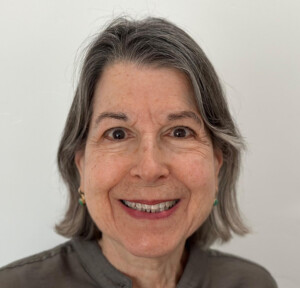
Sharon McDermott, MS, LAc, CBD received a Master’s of Science in Traditional Oriental Medicine from Pacific College of Health and Sciences, magna cum laude. She received her Bachelor’s degree (BA) from Hunter College, magna cum laude. McDermott is board certified in acupuncture and Chinese herbology and licensed in the State of New York. McDermott’s practice, Healthy Healing focuses on women’s health, fertility, stress and pain reduction. McDermott is a certified birth doula and recent author of Unleash Your Inner Goddess: How to Experience an Empowering Pregnancy, Labor, and Birth. McDermott has been in private practice for 19 years. She worked for eight years at New York Spine Institute in Westbury affiliated with the Hospital for Joint Diseases/NYU. In addition, she has worked in urban clinics and hospital settings at the Hospital for Joint Diseases, NYC, Grand Meridian Clinic, NYC and Pacific College Acupuncture Clinic, NYC. McDermott enjoys speaking to the public about the benefits of Chinese Medicine. She teaches continuing education courses and guest speaks in the Women & Gender Studies Department at Nassau Community College on Long Island.