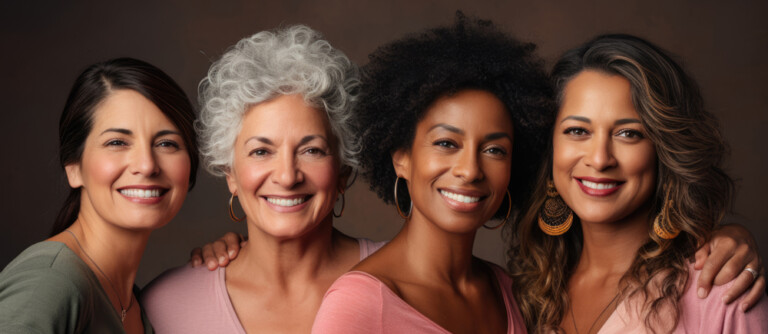
Management of women’s hormonal health issues should involve a holistic, layered approach.
As perimenopause and menopause approach, many women experience hormonal-related changes to their bodies. Traditionally, this has been a time that women dread but there are many hopeful reasons to be positive about this time of life, from natural treatments and supplements to continued research in this area. Unfortunately, as many industry insiders have pointed out, women’s research has been underfunded in the past, but there has been somewhat of an upswing in studies pertaining to women’s health as of late. What has been particularly noteworthy is that more women are becoming more comfortable speaking up about hormonal changes; this type of open communication, with practitioners really listening to women, is leading to better results.
Top Women’s Health Concerns
Hormonal changes can affect sleep, mood, energy, cognition or really almost any aspect of a woman’s well-being. “These hormonal fluctuations can influence neurotransmitters, cortisol rhythms, insulin sensitivity and gut function,” said Malisa Carullo, ND, senior manager of medical information and safety, and naturopath with the California-based manufacturer, Metagenics. The problem, she added, is that many women do not connect these symptoms to underlying hormonal shift, causing them to be normalized or unsupported.
Melissa Zissou, co-founder and CMO of Opal & Joy, a manufacturer based in Colorado, agreed that the symptoms that women experience while navigating perimenopause are interconnected, as hormonal shifts can affect the nervous system, affecting sleep. Poor sleep, in turn, can affect cardiovascular health, metabolic health and weight regulation, mood, cognitive function, immune function and biological aging. “When women improve sleep quality, they often see improvements in mood, energy, metabolic health and overall quality of life. Supporting midlife women to improve their sleep may be one of the highest-impact interventions,” said Zissou.
These hormonal changes do not occur in a vacuum, and according to Meagan Purdy, ND, educator at Fairhaven Health and Vital Nutrients, part of Blueroot Health, a manufacturer based in Washington State, these issues are appearing earlier in life. “Women in their 20s and 30s are experiencing symptoms that were once associated with later life stages, including difficulty regulating cycles and concerns about future fertility,” she said, adding that the reasons are rooted in the realities of modern life.
“Women are navigating higher levels of environmental toxins, constant digital stimulation and nonstop demands on their time and energy. At the same time, true rest, community and unstructured downtime have become rare. This chronic state of stress can disrupt hormones, impair sleep, drain key nutrients, and affect every system in the body. Over time, busy lifestyles and limited recovery create a foundation where symptoms are more likely to emerge and persist,” added Dr. Purdy.
Other concerns for aging women concern issues pertaining to sexual health, from recurrent UTIs (urinary tract infections), vaginal dryness and discomfort during intimacy. “For genitourinary health, when estrogen levels drop, vaginal tissues become thinner and drier, pelvic floor muscles may weaken, and the vaginal flora shifts. This creates an environment that is more susceptible to irritation and infection, particularly UTIs,” said Terri Wade, CEO and co-founder of Solv Wellness, a manufacturer headquartered in Georgia. She said that 50 percent of all women will experience a UTI in their lifetime, while 10 percent of women over 65 experiences at least one per year.
Another health issue more common during menopausal years, due to declining estrogen, is the disruption of the vaginal and gut microbiomes. “This can lead to intimate health concerns, including vaginal and urinary discomfort, pH imbalance and recurrent infections; these are also common yet frequently underdiscussed due to stigma,” said Deeannah Seymour, CEO and co-founder of ph-D Feminine Health, a manufacturer based in Tennessee. “Evidence suggests that the incidence of vaginal odor in women is on the rise. Part of this may be due to the increased awareness of this condition. This may be attributed to the fact that women are finally having conversations around vaginal health. While previously these topics were considered to be taboo. As a brand, we have worked to normalize these conversations and attempt to equip women with information so they can better care for their bodies, realizing none of these issues are something of which to be ashamed,” she added.
Jessica Stefanski, NMD, LAc, FABNE, clinical education manager with the Wisconsin-based manufacturer, Standard Process, said, “Women today face a complex array of health challenges, with menstrual irregularities, metabolic health challenges and menopause-related symptoms, ranking among the most prevalent issues. Hormonal imbalances often stem from the intricate interplay of endocrine function, with the ovaries, thyroid, adrenal glands and pituitary working in concert to maintain hormonal equilibrium. When this delicate balance is disrupted through stress, diet, environmental factors or natural life transitions, women may experience symptoms ranging from irregular cycles and PMS to hot flashes, mood changes and fatigue.”
“Perimenopause is shaping the way a lot of women are looking at their health. For women approaching their 40s and beyond, the body undergoes a significant hormonal shift, changing its predominant form of estrogen from estradiol (reproductive years) to estrone (more stable long-term),” said Brian Zapp, director of education and insights at Applied Food Sciences, a Texas-based functional ingredients supplier. “However, for many women, this transition does not feel as graceful as it should. This is largely related to a condition called ‘estrogen dominance,’ where excess levels of estradiol create an imbalance that can noticeably impact a woman’s health,” Emily Lesiak, director of sales—B2B with Earth Lab Holdings: Wise Women Herbals, Superior Labs and Earth Lab Botanicals, an Oregon-based manufacturer, added that not only do some women struggle with hot flashes and chronic pelvic pain from but many also suffer from iron deficiency, contributing to fatigue and diminished quality of life. “Most of the women’s health challenges we see are not driven by a single cause. They’re usually the result of overlapping hormonal, metabolic, inflammatory and lifestyle factors that build over time.”
Traditional vs. Natural Approaches
Lack of information has been a problem when women enter the perimenopausal and menopausal years. “Many women reach perimenopause without clear information about what to expect or how to support themselves through this transition. Symptoms are often treated in isolation rather than understood as part of a broader physiological shift, which can delay effective, integrative support. Many women still feel under-prepared and under-supported during perimenopause, often reassured that their symptoms are ‘normal’ without being offered practical, integrative ways to feel better. Women need to be heard and seen,” said Zissou.
That being said, there is still a place for, and a need for, traditional medicine to address some of the health concerns women have as they age, though some practitioners believe traditional medicine can exist alongside more natural approaches.
“Traditional treatments for women’s hormonal health have historically centered on oral contraceptives for cycle regulation, and pharmaceutical interventions for specific symptoms like antidepressants for mood changes or sleep aids for insomnia. While these approaches remain valuable tools in certain clinical situations, many women have grown concerned about potential side effects. This has led to a significant shift toward natural approaches that work in harmony with the body’s existing systems rather than overriding them,” said Dr. Stefanski.
Often, treatment centers around managing life’s daily stressors, as well as getting appropriate rest, nourishment and exercise. But even with lifestyle changes, or conventional treatments, a gap may remain, requiring additional support.
Many women are turning toward more natural approaches, such as dietary changes, lifestyle modifications, stress management techniques or supplements. “This paradigm shift reflects a broader cultural movement toward preventive, root-cause medicine that empowers women to take an active role in their health through informed choices about what they put into their bodies,” said Dr. Stefanski.
Dr. Carullo said that traditional treatments to address hormonal changes include contraceptives, antidepressants, sleep medications or hormone related therapy. “These approaches remain valuable and appropriate for many women, especially when symptoms are severe or significantly impact quality of life,” she said. However, many symptoms are complex and interconnected.
It is important, continued Dr. Carullo, to support women at every stage of the life cycle, beginning in their reproductive years, as each phase has its own physiological priorities. “Effective care recognizes these shifts and tailors support accordingly,” she said, noting that supplementation should be targeted and layered, depending on life stage, rather than applied generically. “Importantly, women’s health benefits from a systems-based approach, as hormonal changes influence multiple interconnected pathways, including the nervous system, metabolism, gut health and stress response. Formulas designed to address these overlapping systems are often more clinically relevant than single-ingredient solutions.”
Lesiak echoed the idea of a layered plan. She said this starts with basics, like sleep, nutrition, movement and stress management. “From there, many practitioners use targeted supplementation to help correct nutritional gaps and support normal physiological function. Botanical and nutraceutical support can be very helpful when selected carefully and used appropriately, but they work best as part of a broader care plan,” also emphasizing that integrative care should not replace appropriate medical evaluation.
Natural Options For the Practitioner Market
Applied Food Sciences provides CelluThrive D-Glucarate which, said Zapp, “…enhances liver detoxification, effectively removing excess estrogens and chemical toxins that mimic estrogen. CelluThrive has been shown to drop estradiol levels by 56 percent compared to the placebo. Furthermore, CelluThrive aids in the removal of toxic compounds, including microplastics, PFUAs and food additives, which are key sources of xenoestrogen intake. Therefore, CelluThrive is not only a powerful hormone support ingredient, but also provides additional liver support that women are seeking.”
FH PRO for Women by Fairhaven includes myo-inositol and D-chiro-inositol to support insulin sensitivity and ovarian function. To protect egg quality and reduce oxidative stress, it also contains antioxidants like alpha lipoic acid, CoQ10, N-acetyl-cysteine and resveratrol, as well as melatonin. Another product, PQQ + Myo + D Chiro Inositol formula addresses PCOS (polycystic ovarian syndrome).
Metagenics HerWellness is a line of products that supports women at various stages in life. These include Naturally Balanced; Rapid Stress Relief; Recharge Overnight; Rapid Period Relief; and Estrovera. The latter, for example, is a hormone-free, plant-based supplement, backed by clinical studies, that supports relief from 12 common perimenopausal and menopausal symptoms, from hot flashes, night sweats, irritability, sleep issues and more. Its primary ingredient is a proprietary Siberian rhubarb extract (ERr 731). “It selectively interacts with estrogen receptor beta, a pathway associated with symptom relief and emotional balance, without stimulating estrogen receptor alpha,” said Dr. Carullo.
The founders of Opal & Joy, Zissou and Tiffany Tompkins, believe that “Ultimately, the goal is not to ‘fix’ perimenopause, but to support women through it with calm, thoughtful tools that respect the complexity of the female body.” To that end, they have several products that have been sold direct-to-consumer for the past year but they are now entering the practitioner channel market. These three products are Relax, Rest and Relief Oil. Key ingredients in Rest, for example, include organic full-spectrum CBD, CBN and organic linalool.
“For intimate wellness, holistic vaginal care focuses on maintaining a healthy microbiome. Ingredients such as boric acid and probiotics have a long history of use in supporting vaginal freshness and odor balance by helping maintain an optimal vaginal environment,” said Seymour. Her company, ph-D Feminine Health, offers 11 products, with boric acid at the core of many of them due to its effectiveness in reducing vaginal odor. Some of the products are: Boric Acid Foam Wash, a plant-based daily cleanser; Nourishing Vulva Balm, which contains squalene, shea butter, olive oil, sea buckthorn oil and moringa oil. Though it has been used for 100 years, she said that the company was the first to bring boric acid suppositories to the market, back in 2014.
“Practitioners often recommend clinically studied cranberry extracts for UTI prevention, vaginal moisturizers containing hyaluronic acid to address dryness and targeted probiotics to support balanced gut, vaginal and urinary tract health,” said Wade. For that reason, Solv Wellness offers three menopause-focused products that help address GSM—genitourinary syndrome of menopause, which describes urinary tract and genital symptoms that occur from declining estrogen and androgens. These include GennaMD, the company’s flagship product, a UTI supplement; Via, a hyaluronic acid-based vaginal moisturizer; and Māge, a prebiotic and probiotic. Each product contains clinically validated ingredients, such as PAC (proanthocyanidins), the compounds in cranberries, which can stop the earliest stage of a UTI from forming, a prominent ingredient found GennaMD that has anti-adhesion activity.
Symplex F by Standard Process is a comprehensive approach to supporting female endocrine health through targeted glandular support. “This whole-food supplement combines bovine ovary, adrenal, thyroid and pituitary PMG to provide multifaceted support for the female endocrine system.
The inclusion of these glandular components is based on the principle of protomorphology—supplying the body with cellular blueprints that support healthy tissue function. Practitioners appreciate that this formula doesn’t force hormonal changes but rather nourishes the glands responsible for producing and regulating hormones naturally, making it appropriate for women at various life stages seeking to optimize their endocrine function and overall reproductive wellness,” said Dr. Stefanski.
Wise Woman Herbals supplies the practitioner market with 358 SKUs across 130 product families, 25 of which are specific to women’s health. Its sister company, Superior Labs, manufactures 32 products, 13 of which support women’s health. From Wise Woman Herbals, one product is Women’s Menocaps which, said Lesiak, “…combines dong quai (Angelica sinensis) root, burdock (Arctium lappa) root and seed, chaste tree (Vitex agnus-castus) fruit, black cohosh (Cimicifuga racemosa) root and rhizome, motherwort (Leonurus cardiaca) flowering aerial parts, and licorice (Glycyrrhiza glabra) root—a traditionally paired botanical blend selected to support healthy endocrine signaling, reproductive system balance and comfort during the menopausal transition.” And an illustration of a single-ingredient Superior Labs product is D-Mannose to support urinary and urogenital health as well as intestinal and liver function.
Practitioner Market Trends
Most interviewees believe that the market for natural supplements to support women’s health is experiencing robust growth for several reasons. First, there is an aging population overall, with Baby Boomers representing a significant demographic, while younger women are becoming more proactive about preserving their hormonal health and preventing future issues. As women comprise 50 percent of the population, it is inevitable that there will always be a market for solutions that address hormonal changes. Plus, women are no longer in the shadows, thanks in part to social media. What was traditionally brushed under the rug or not talked about is becoming more out in the open, as the stigma around even talking publicly about perimenopause and menopause is diminishing. But practitioners have to listen.
“Women are being empowered with information, and these hormonal phases are being recognized as a normal and natural phase of a women’s life,” said Dr. Carullo. “The strength of the practitioner market for women-focused products is increasingly driven by women themselves. Their expectations, experiences and demand for care that feels personal, validating and responsive to how they actually feel. Many women are no longer satisfied with generic advice or being told that symptoms such as poor sleep, mood changes, fatigue, weight shifts or digestive complaints are simply something to tolerate. They are actively seeking practitioners who listen, connect the dots, and offer solutions tailored to their individual experience.”
When it comes to menopause health, Wade agreed that the menopause health category is evolving rapidly, shaped in part by the demand by women for better care and for effective science-based products. “With increased awareness around menopause and midlife women’s health in the last few years, patient demand has grown significantly, strengthening the practitioner market in meaningful ways. Women are actively seeking solutions, which has expanded the range of options available for practitioners to discuss and recommend,” said Wade.
Zapp said, “Interest in perimenopause is accelerating, stigma is decreasing, and women are connecting symptoms like sleep problems, mood changes and brain fog to perimenopause earlier than in prior decades. This has created a larger “seek behavior” population, meaning more women are actively looking for solutions and engaging practitioners earlier.”
“We’re seeing practitioners expand their offerings beyond reactive symptom management to comprehensive hormonal wellness programs that incorporate targeted supplementation, nutritional counseling and lifestyle medicine,” added Dr. Stefanski.
In part because some areas are underserved by conventional care, Seymour said that the women-focused health supplement market is “…one of the strongest and most resilient segments of the broader wellness category. It is driven by women’s unique physiology and life stages, including reproductive years, pregnancy and postpartum, perimenopause, menopause and healthy aging.”
Lesiak added that the two key trends that are fueling growth in the women’s health supplement market stems from women’s demands as well as earlier engagement from younger generations, as well as greater awareness of hormonal conditions.
“Looking ahead, we expect continued growth as more women seek practitioner-guided support across all life stages. We’re also encouraged by ongoing legislative and regulatory shifts in states where naturopathic and integrative practitioners are not yet fully licensed or able to practice to their full scope, and we’re hopeful that broader recognition and allowance for these practitioners will continue to expand in the near future,” said Lesiak.
Practitioner Tips
Practitioners often recommend an integrative approach to treating symptoms brought upon by hormonal imbalances. “This integrative approach recognizes that women’s hormonal health cannot be addressed in isolation; it requires supporting multiple body systems simultaneously, including the endocrine glands, liver function for hormone metabolism and adequate micronutrient status,” said Dr. Stefanski. Overall, she added, practitioners should become familiar with the key ingredients of the products they carry, why they work and how it fit into a comprehensive, holistic approach. “By positioning supplements as integral therapeutic tools rather than optional add-ons, practitioners elevate the standard of care while building patient trust and long-term therapeutic relationships.”
Dr. Carullo added that because women need change over time, practitioners may revisit or adjust the treatment protocol as symptoms shift or life stages change. Importantly, they should start conversations earlier, normalize hormonal change and individualize care across the lifespan.
Noting that many clinicians have had little to no training on menopause, Wade is an advocate for education, saying, “You can’t treat what you don’t know. While options are always empowering, they can also create complexity or confusion. To help cut through that noise, we created Menopause Made Clear, our resource toolkit of expert advice that women, and even practitioners, can rely on for clear, evidence-informed guidance as they navigate menopause.”
Because such concerns have been historically minimized, practitioners can best support women by truly listening to their experiences and taking symptoms seriously, said Lesiak, such as cycle irregularities, chronic pain, fatigue or menopause-related changes. “A thoughtful, integrative approach that looks at root contributors, supports foundational systems, and coordinates care when medical treatment is appropriate helps build trust and leads to better, more sustainable outcomes for women across every stage of life.”
Seymour agreed. “Practitioners can better serve female patients by listening without bias, validating symptoms and recognizing menopause and hormonal transitions as significant health events, not just lifestyle changes. Taking time to ask the right questions, educating patients on available options, and offering individualized, integrative solutions can dramatically improve outcomes. When women feel heard and supported, they are more engaged, compliant and empowered in managing their long-term health.”
*Side-bar start*
Vision Changes During Perimenopause and Menopause
While vision is not something to take lightly, it is human nature to not really think too much about our vision unless we notice something amiss. What may go under the radar are vision changes that could accompany perimenopause and menopause. Natural Practitioner (NP) spoke with Dr. Rudrani Banik, a New York, NY-based, board-certified ophthalmologist specializing in neuro-ophthalmology and comprehensive ophthalmology, about how women should best care for their eyes.
NP: What is the importance of regular eye exams?
Dr. Banik: Everyone should go see an eye doctor once a year after the age of 40. It’s part of our health care maintenance that a lot of people don’t know. It’s about diagnosing and detecting eye diseases early, getting them treated early, like glaucoma or macular degeneration. The earlier you get treated, the more likely you can save your vision. Eyes are a window into our health—eye doctors can detect over 200 medical conditions from an eye exam: diabetes, high blood pressure, heart disease, autoimmune disease, so an eye exam is not just to screen for eye disease but to screen for systemic diseases and general health.
NP: What issues can women potentially face with their vision during perimenopause and menopause? Does menopause increase long-term risk for eye conditions such as glaucoma, macular degeneration or cataracts, or something else?
Dr. Banik: These are more common in women, especially at earlier ages. Unfortunately, there is not that much research money looking at women’s eye health. Women across the board are more at risk for cataracts: women in their 60s have a 24-27 percent risk of cataracts; for men, it’s 14 percent. Then the risk for glaucoma is significantly higher. Dry eye is very common, though it is not as debilitating. If they don’t have dry eye, that is an exception, it has to do with hormones, but we don’t have the research to say exactly why but we know that all three sex hormone receptors—estrogen, progesterone and testosterone—are produced by various tissues in the eye. When hormone levels start to decline, mainly estrogen, our eye health is not well supported. We know estrogen is neuroprotective in the eye, and we know it improves blood flow in the eye.
NP: What warning signs or subtle eye symptoms should they look out for? What red flags should prompt immediate referral to an ophthalmologist?
Dr. Banik: Red flags are blurry vision, being unable to drive at night, seeing halos, starbursts and glare at night. Get it checked out. When people have discomfort, whether redness, burning, irritation of the eyes, get it checked out. It could be dry eye or something else. I’ve definitely diagnosed people with autoimmune Sjogren’s syndrome: a syndrome of dry eyes, dry mouth and dry everywhere. Don’t ignore those types of symptoms.
NP: What proactive steps can women take in perimenopause to protect their vision for decades to come?
Dr. Banik: One is diet. There are multiple studies that show people who have lots of colorful fruits and veggies in their diet have a lower risk of macular degeneration by 43 percent and glaucoma by 79 percent. The recommendation is at least three servings/cups a day. Leafy greens are the best, if people can have kale, spinach, arugula and colorful berries, and anything with color in it. Those types of foods provide people with the support they need.
NP: Are there nutrients or compounds or supplements with strong clinical evidence for supporting eye health during hormonal transitions?
Dr. Banik: Yes, lutein and zeaxanthin are carotenoids that protect the eyes from macular degeneration and eye strain. Those are essential. We need 10 mg of lutein a day; most people get 1-2 mg per day. There is a big gap between what we need to stay healthy and what they are getting in a Western diet. Taking a supplement is really vital when our eyes are exposed to screens and toxins and UV light. I have my own supplement line containing lutein, berry extract, zeaxanthin and other powerful antioxidants, I do recommend people take a daily supplement for long term prevention going forward. I have pediatric patients on it, if they have symptoms of eye strain, especially after being on screens, but typically after the age of 40, is the time to kick it up a notch and consider taking a daily supplement.
NP: Do you have any tips for practitioners to treat women at this time of their lives for vision issues?
Dr. Banik: I think encouraging your patients/clients to get that annual eye checkup because it is a direct window into health and emphasizing that and the power of nutrition, including a lot of these foods on a daily basis, and consider taking a supplement. Some people take a multi for general health. While most multis on the market have great ingredients, they don’t have lutein and zeaxanthin, so it is important to take a supplement that has the vital eye nutrients.
*Side-bar end*
Healthy Take Aways
• Fifty percent of all women will experience a UTI in their lifetime, while 10 percent of women over 65 experiences at least one per year.
• For women approaching their 40s and beyond, the body undergoes a significant hormonal shift, changing its predominant form of estrogen from estradiol (reproductive years) to estrone (more stable long-term).
• Women in their 60s have a 24-27 percent risk of cataracts; for men, it’s 14 percent.
For More Information:
Applied Food Sciences, www.appliedfoods.com
Fairhaven Health, www.fairhavenhealth.com
Metagenics, www.metagenics.com
Opal & Joy, www.opalandjoy.com
ph-D Feminine Health, www.phdfemininehealth.com
Solv Wellness, www.solvwellness.com
Standard Process, www.standardprocess.com
Wise Women Herbals, www.wisewomenherbals.com