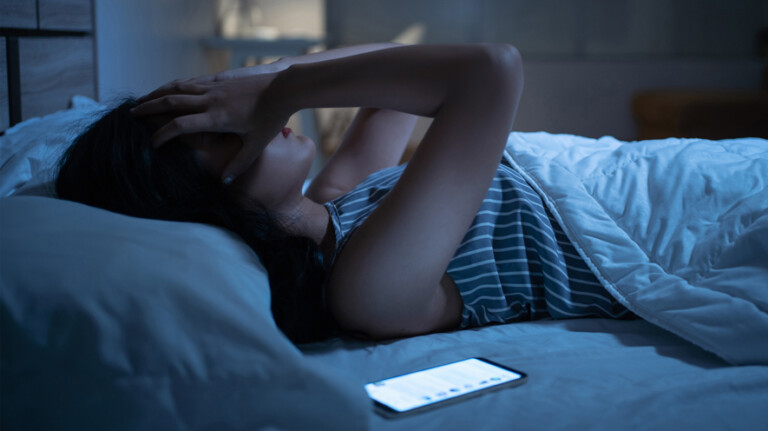
Natural and integrative approaches for relaxation and sleep.
In today’s fast-paced modern world, stress and anxiety have become a regular part of daily life for many Americans. The constant barrage of stressors—whether related to work, family or personal challenges—it can be difficult to wind down after a long day and get a healthy night’s sleep.
A May 2024 survey1 from the American Academy of Sleep Medicine (AASM) showed mental health conditions disrupt a majority of Americans’ sleep.
According to the survey, around three-quarters (74 percent) of Americans reported sometimes, always or often experiencing disrupted sleep due to stress. Around two-thirds (68 percent) reported sometimes, always or often losing sleep due to anxiety.
“Stress and anxiety can significantly disrupt sleep patterns by triggering the body’s fight-or-flight response, making it difficult to relax. When the mind is racing with worries, it becomes nearly impossible to achieve the deep, restorative sleep we need for overall health,” said Jennifer Martin, a licensed clinical psychologist and former president of AASM.
The survey also found more than half of Americans (55 percent) reported sometimes, always or often experiencing disrupted sleep due to depression.
“Many Americans find themselves caught in a loop: mental health conditions disrupt their sleep, and poor sleep worsens their mental health conditions,” Martin said. “This cycle can lead to a range of health issues, beyond just daytime sleepiness. Insufficient sleep can impair cognitive function, affect mood and diminish overall quality of life.”
Sleeplessness
According to Jacob Teitelbaum, MD, an author and fibromyalgia/fatigue expert based in Kailua-Kona, HI, the increased stress of modern life suppresses the hypothalamic sleep center, which is a major cause of insomnia.
“Sleep is critical for health. The average night’s sleep until light bulbs were invented was nine hours a night. We are now down to six-and-three-quarter hours on average and are a sleep-deprived nation. Inadequate sleep contributes to fatigue, brain fog, weight gain, immune suppression, increased cancer and metabolic syndrome and chronic pain. Making inadequate sleep a major, and easily treatable, cause of both death and disability,” he explained.
“Stress, whether it is from work, school, relationships or financial issues, is a primary underlying factor that leads to difficulty sleeping. Another disruptive factor impacting sleep is any disturbance in circadian rhythm, which may include traveling across time zones or staying up later than usual. Lack of activity and lack of sunlight also make it difficult to get restful sleep,” added Erin Stokes, ND, medical director at Colorado-based WishGarden Herbs.
Christophe Merville, DPharm, director of education and pharmacy development at Boiron USA (Newtown Square, PA) said sleepless nights can stem from a variety of factors, such as stress from demanding schedules, extended screen time and lingering effects from major global events.
“Other contributors include lifestyle habits, environmental factors and increased awareness of potential side effects or dependency risks from some conventional sleep aids, which leads many to seek more holistic approaches,” he said.
Thomas Dadant, national science educator at Host Defense Mushrooms (Olympia, WA), added some individuals may experience a lack of sleep and relaxation because their diets lack proper nutrition and lead sedentary lifestyles. Stress can also contribute to restless nights, and many people spend hours each day on computers, tablets, phones and other devices.
“Often referred to as ‘blue screen exposure,’ this habit can increase the likelihood that someone may experience a sleepless night, especially close to bedtime. Other factors may also interfere with healthy sleep, such as allergens like indoor air pollution, cigarette smoke, dust and animal dander, as well as stimulants like caffeine, nicotine or other drugs,” he said.
According to Marge Roberts, president and CEO of Newton Homeopathics (Conyers, GA), a wide range of factors can contribute to insomnia and disrupted sleep patterns. In many cases, individuals maintain schedules that leave inadequate time for restorative sleep, leading to chronic sleep deprivation.
“Others experience sleep-onset insomnia, characterized by difficulty falling asleep due to heightened cognitive arousal, stress or an inability to disengage from daily concerns,” she explained. “Some individuals fall asleep without difficulty but develop sleep-maintenance insomnia, waking during the night and being unable to return to sleep. Frequent early-morning awakenings, particularly around 3 a.m., may be associated with major depressive disorder and can indicate the need for further evaluation.”
Roberts added physiological and medical conditions often play a significant role. For example, nocturnal leg cramps, restless leg syndrome (RLS), and musculoskeletal pain can interrupt normal sleep cycles. Gastroesophageal reflux disease (GERD) may cause nighttime discomfort, incontinence and overactive bladder can lead to repeated awakenings, and benign prostatic hyperplasia (BPH) commonly causes nocturia that fragment sleep.
“Each of these factors can impair the body’s ability to achieve deep, consolidated sleep, contributing to daytime fatigue, reduced cognitive function, and overall diminished quality of life. Addressing the underlying causes—whether behavioral, psychological or medical—is essential for improving long-term sleep health,” she said.
Trends
According to a March 2023 article from the Sleep Foundation, it is estimated that sleep deprivation affects around one-third of Americans with increased prevalence in recent years. Roberts said there is also a growing public mistrust of pharmaceutical companies that has led many people to “quietly endure their symptoms rather than seek treatment.” They may be struggling to fall asleep, stay asleep or achieve restorative sleep. However, they often hesitate to use prescription medications “for fear of dependence or side effects.” Dr. Stokes noted there is a growing popularity of melatonin-free solutions.
“Many individuals try over-the-counter options, such as melatonin, only to find they cannot tolerate it or that it provides little benefit. As a result, people are increasingly searching for natural, non-pharmacologic approaches—methods they feel are safer, less habit-forming and more in line with their desire to avoid unnecessary chemicals in their bodies,” Roberts said.
According to Dadant, many people have turned to herbal and nutraceutical products often combined with melatonin. These products are effective short-term, and many are formulated to “force sleep.”
“They often lack more robust support for systems that help the mind and body fall asleep faster and stay asleep longer without side effects,” Dadant explained. “Others have turned to lifestyle-support activities like taking yoga classes focused on relaxation in the evening, participating in mindfulness meditation, or employing vagus-nerve-calming exercises and electrical-impulse devices used to ‘relax’ the vagus nerve.*”
According to Merville, there is a growing interest in holistic and individualized solutions that support the body’s natural ability to restore balance.
“Pharmacists in particular are seeing more customers who want non-habit-forming options and are asking detailed questions about ingredients and compatibility with their existing medications,” he said. “People are increasingly combining homeopathic medicines with mindfulness practices, lifestyle adjustments, and other wellness strategies to create a more comprehensive approach to improving sleep and relaxation.”
Products and Ingredients
There are many products and ingredients for natural practitioners to recommended to their patients.
Dr. Teitelbaum recommended using a 5-10 mg sustained-released melatonin, such as EuroMedica’s Melatonin Healthy Immune Function. He said melatonin needs to be sustained release otherwise people will wake in the middle of the night. He also recommended cannabinoids such as EuroMedica’s AnxioCalm.
“Unfortunately, these [cannabinoids] are expensive and have their own issues. A simple wonderful workaround? A unique echinacea extract is a potent cannabinoid, is as effective as Valium (without any of the side effects or addiction) and very reasonably priced. As a side benefit, it is very helpful for anxiety as well, but without sedation,” he explained.
WishGarden Herbs’ Sleepy Nights is a fast-acting herbal tincture blend of passionflower, skullcap and hops to support a deep and restful sleep.
“It was formulated without melatonin, kava or valerian on purpose to be effective sleep support without being sedating. One of the best features of Sleepy Nights is that it can be taken right before bedtime and then can be taken again upon unwanted wakefulness in the middle of the night,” Dr. Stokes explained.
Boiron’s SleepCalm is a melatonin-free homeopathic option that many practitioners use for patients experiencing occasional sleeplessness, middle-of-the-night waking or difficulty unwinding at bedtime. It contains plant-based active ingredients that are intended to calm mental restlessness that often contributes to disrupted sleep.
“For integrated health practitioners, SleepCalm can offer practical patient benefits: it is non-habit forming, compatible with a wide range of wellness programs, and easy for patients to take thanks to its meltaway format,” Merville explained. “This makes it particularly helpful for individuals who wake suddenly during the night and want a discreet, water-free option that aligns with a holistic approach to sleep support.”
Newton’s PRO I-Sleep is formulated for symptoms associated with sleeplessness such as frequent waking, restlessness and the inability to fall asleep or return to sleep after waking.
“According to traditional homeopathic practice, Gelsemium sempervirens, Kali bromatum and Cimicifuga racemosa are indicated for restless sleep. Chamomilla is indicated for those who are drowsy but cannot sleep,” Roberts explained. “Pulsatilla and Belladonna are indicated for frequent waking. Coffea cruda is indicated for nervous sleeplessness from a rush of ideas and mental activity and Argentum nitricum is indicated for sleeplessness from an overactive imagination. Calcarea carbonica is indicated for sleeplessness due to worry and nightmares. Additional single remedies are included for other symptoms related to the inability to sleep.”
Newton also has Leg Cramps-Swelling, a complex that is formulated for associated symptoms such as pain, cramping, swelling, inflammation and stiffness in the legs and feet, and Restless Leg is formulated for associated symptoms such as the constant need to move the legs and feet, cramping, jerking, twitching and trembling, Roberts added.
MycoBenefits Sleep is one of several products in the new Host Defense MycoBenefits line. The supplement contains vitamins, minerals, herbs and mushrooms, which have been shown through numerous studies to support multiple phases of sleep.
According to Dadant, the formula features lion’s mane and reishi mushroom mycelium, passionflower, GABA, L-theanine, magnesium and vitamin B6.* This combination is designed to help support the body’s own sleep architecture and promote deep and restful sleep.*
“Mushrooms and herbs, in combination, have been used in traditional practices for centuries. It’s extremely exciting that, in many cases, modern science is finding validation for formulas that have been trusted for literally thousands of years,”* he said.
Lifestyle and Diet
Sleepless nights are often caused by a combination of physical and mental factors, so it is important to take note of lifestyle and dietary adjustments that support better rest.
“Eating a light, nutrient-dense snack before bed can reduce nighttime hunger without disrupting digestion. Foods such as nuts, seeds, whole-grain crackers or warm milk provide a balance of protein and complex carbohydrates. Bananas are also helpful because they contain magnesium and potassium, which may relax muscles and reduce leg cramps that can interfere with sleep,” Merville said.
Merville added techniques, such as controlled breathing similar to exercises used in yoga, can help the body relax and prepare for sleep. Gentle self-soothing practices such as meditation or listening to calming music can also quiet an overactive mind and support deeper, more restorative sleep.
“By combining dietary strategies with intentional lifestyle changes and relaxation techniques, individuals can create an environment that encourages better sleep and helps reduce the frequency of sleepless nights,” he said.
“Turn off media, including social media, which leaves you feeling anxious, angry or hateful. This won’t leave you uninformed. Simply less misinformed. Then you can use that time for comfortable deep sleep,” Dr. Teitelbaum added.
Dadant recommended to eat dinner no later than three hours before going to sleep. Eating a light meal in the evening as opposed to heavy, fatty, spicy foods can help support sleep latency.
“Additionally, a brief period of gentle exercise like a leisurely walk in the evening can do wonders to promote restful sleep. Another good practice is to significantly reduce or turn off all sources of emanating blue light (computers, phones, TV’s, LED lightbulbs) at least two hours before bed,” he noted.
Dr. Stokes recommended going to bed and waking up at the same time every day because our bodies—especially the nervous system—respond well to routine.
“Do not consume any caffeine after 12 p.m. It can take up to 10 hours for caffeine to be fully eliminated from the body. Reduce (or eliminate) alcohol. Alcohol may help you fall asleep more quickly, but it prevents deeper stages of sleep and often leads to waking up in the middle of the night,” she said. “Include adequate amounts of protein in your evening meal to stabilize blood glucose levels. This blood glucose stabilization is one way to prevent waking up in the middle of the night.”
For a restorative night’s sleep, it is helpful to avoid stimulating foods and beverages especially anything high in sugar or containing caffeine. Ending food intake at least two hours before bedtime allows the digestive system to settle signal the body to transition toward sleep, according to Roberts.
“It’s equally important to quiet the mind. Avoid activities that keep the brain in a stimulated or alert state—such as watching the news, tackling work or creative projects, or scrolling on your phone. Instead, choose calming routines that support relaxation,” she said. “This may include listening to soft music, reading, meditating or taking the dog for a walk. Whatever helps your body unwind, practice it consistently so it becomes a nightly habit that cues your system for sleep.”
Integrative and Alternative Practitioners
Integrative health care practitioners focus on treating the whole person including physical, mental, emotional and spiritual aspects to achieve optimal health rather than solely addressing individual symptoms.
“They work with patients to identify lifestyle, dietary and environmental factors that may affect sleep. Homeopathic therapy can be individualized to support the body’s natural balance,” Merville explained. “Practitioners often recommend complementary strategies, such as mindfulness practices, breathing exercises and other relaxation techniques. This comprehensive approach provides patients with viable alternatives to conventional sleep aids while promoting long-term sleep health.”
Roberts said practitioners are uniquely positions to provide effective, individualized strategies for improving sleep. Her first-line therapy is often homeopathy because it is safe and carries no risk of drug interactions. Certain herbal remedies can promote relaxation and support healthy sleep cycles, and some individuals benefit form careful guidance on melatonin.
“Practitioners can also help clients identify the specific triggers contributing to their insomnia—whether behavioral, emotional, environmental or physiological. From there, they can recommend targeted lifestyle modifications that support better sleep hygiene and overall well-being,” she said. “In many cases, insomnia is a symptom of an underlying condition. An integrative practitioner can help uncover these contributing factors and develop an adjunctive treatment plan that works alongside the client’s primary medical care to restore more consistent, restorative sleep.”
Dadant said practitioners can enhance their patients’ sleep experiences in a few ways.
“They can do this by educating themselves and their patients on the benefits of carefully combined ingredients in supplement formulas that support sleep on multiple levels. Practitioners can also suggest lifestyle and dietary changes that support effective relaxation, and they can help their patients explore the benefits of meditation, tai chi, chi gong or yoga,*” he said.
According to Dr. Stokes, integrative and alternative health care practitioners are uniquely positioned to offer effective sleep solutions by focusing on treating the whole person and educating people about supporting high quality sleep. Truly optimizing sleep requires “a personalized combination of lifestyle, nutrition and supplement solutions.”
“Sleep is influenced by a combination of physical, mental and environmental factors, so no single approach works for everyone. Creating consistent bedtime routines, paying attention to nutrition, limiting digital distractions, and exploring holistic approaches can all contribute to more restful nights. Integrative strategies empower individuals to address both the root causes and symptoms of sleep disturbances, supporting overall wellness and sustainable sleep health,” Merville said.
*These statements have not been evaluated by the Food and Drug Administration. This product is not intended to diagnose, treat, cure or prevent any disease.
Reference
1 https://aasm.org/stress-anxiety-and-depression-survey-shows-mental-health-conditions-disrupt-a-majority-of-americans-sleep/.
Healthy Take Aways
• A survey from the American Academy of Sleep Medicine (AASM) showed mental health conditions disrupt a majority of Americans’ sleep.
• Among those surveyed by AASM, approximately three-quarters (74 percent) of Americans reported sometimes, always or often experiencing disrupted sleep due to stress.
• The AASM survey found that around two-thirds (68 percent) reported sometimes, always or often losing sleep due to anxiety.
• The AASM survey also found that more than half of Americans (55 percent) reported sometimes, always or often experiencing disrupted sleep due to depression.
• According to a March 2023 article from the Sleep Foundation, it is estimated that sleep deprivation affects around one-third of Americans with increased prevalence in recent years.
For More Information:
Boiron USA, www.boironusa.com
Host Defense Mushrooms, www.hostdefense.com
Newton Homeopathics, www.newtonlabs.net
WishGarden Herbs, www.wishgardenherbs.com