For many patients, menopause can feel like a test of endurance. But support can extend beyond managing symptoms to helping women maintain their energy, vitality, and everyday well-being. Time-tested, clinically studied nutrients offer options for practitioners seeking to address these interconnected needs.
Many of these natural medicines also have applications beyond menopause, offering support through perimenopause and other stages of a woman’s life.
Menopause relief plus daily energy: black cohosh and rhodiola
Black cohosh (Cimicifuga or Actaea racemosa) has repeatedly been recommended for women experiencing night sweats, irritability, hot flashes, and mood swings. Additionally, although black cohosh doesn’t appear to have phytoestrogen content (at one time researchers thought that it did), it does appear to have effects as a selective estrogen receptor modulator (SERM). And this lack of phytoestrogens makes it safe to use for women who have had breast cancer.1,2
But the effects aren’t always consistent. That’s because with dosage levels of black cohosh, more doesn’t always equal better. In fact, it seems that lower doses of quality, concentrated black cohosh provide more effective, consistent, and ongoing symptom relief than might have been previously supposed.3
In one 12-week German clinical study, researchers noted that the dosage levels of black cohosh in previous trials had been inconsistent and that the preparations of black cohosh, including milligram amounts and types of extraction, had varied greatly. This is one of the reasons that in both trials and real-world use, black cohosh can seem to have results for some, but not for others.3
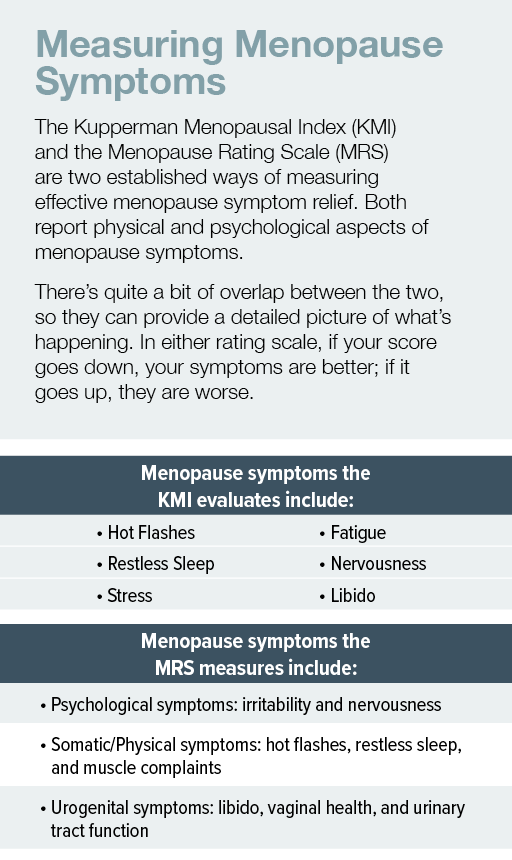
They tested two dosage levels of verified black cohosh with the same attributes versus a placebo. Both doses were what many would consider very low: 6.5 mg and 13 mg. They found that the 13 mg dosage level (referred to in the study as the “high level”) showed the best response in the Kupperman Menopausal Index (KMI), a diagnostic tool that records a participant’s menopause symptoms, including insomnia, hot flashes, night sweats, anxiety, irritability, and so forth, along with their severity. The highest score (that is, the worst compilation of symptoms) is 51.3
By the end of the study, scores for participants with mild or moderate symptoms (KMI average of 20 or 35, respectively) decreased by 10.5 points in the low-dose group and 17.8 in the high-dose group. (Those in the placebo group saw an increase from their baseline scores by as much as 12.2 points.)3
For those with severe symptoms, the 13 mg dose was most effective, reducing the average score by 20.9 points. Additionally, patients with perimenopause saw a much greater change with the 13 mg dose, 20.9 points, versus 1.1 points in the placebo group.3
Overall, the total reduction in KMI was 69 percent for the 13 mg group, 40 percent for the 6.5 mg group, and 7 percent for the placebo group. The researchers concluded that the 13 mg amount was the only dose that significantly reduced the symptoms in patients in all stages of menopause.3
A Swiss observational study found essentially the same results. The 13 mg dose of black cohosh significantly relieved menopause symptoms and lowered the KMI score. Here again, the 13 mg dose produced better results than the 6.5 mg dosage level.4
Other reviews of black cohosh reflect this understanding of the effectiveness of lower dosages, like the 13 mg dose used in these clinical trials. And one review stated that some black cohosh preparations didn’t work was for two reasons: one was “due to the too high doses” and the second “due to the adulteration with Asian Cimicifuga preparations,” illustrating the great importance of recommending supplements from trusted sources.5
 For more than menopause symptoms
Black cohosh may also protect against the development of breast cancer and other conditions due to its role as a selective estrogen receptor modulator. For example, in one scientific study, black cohosh inhibited the growth of breast cancer cells (MCF-7). And in a year-long clinical study, black cohosh produced no thickening of the uterine lining, a condition associated with too much estrogen and too little progesterone.6This condition, endometrial hyperplasia, can cause heavy menstrual bleeding, bleeding after menopause, and anemia. And cases of atypical endometrial hyperplasia can lead to uterine cancer.7
Additionally, a German scientific study found that black cohosh can slow down the accumulation of abdominal fat, the development of metabolic syndrome, and joint damage that can cause osteoarthritis—a common concern for many women during and after menopause.8
MEASURING MENOPAUSE SYMPTOMS
Managing bladder strength with Icelandic angelica
While menopause symptoms and lack of energy may be two of your patients’ top concerns, bladder issues are likely not far behind. With less estrogen, muscle mass degrades, including the smooth muscle of the bladder. This weakness can cause more urinary urgency, less control, and often, interrupted sleep.¹⁰
Conventional practice has a few prescription drugs available for treating overactive bladder, but all of them carry risks—some of them severe. In fact, anticholinergic drugs like Ditropan®, Vesicare®, and Detrol®, often used to treat overactive bladder, have been found to cause cognitive impairment after only two months of use. Worse yet, the potential for dementia is magnified when a person also takes other anticholinergic medications. These include Benadryl (diphenhydramine) for allergies and nighttime pain relievers such as Advil PM and Tylenol PM. There is ample opportunity for practitioners to steer patients to something better.¹¹
One option to consider is a clinically studied extract of Angelica archangelica. The plant has been used as a natural remedy in Iceland for over 1,100 years and shows excellent potential for people suffering from overactive bladder and the sleep loss it frequently causes.
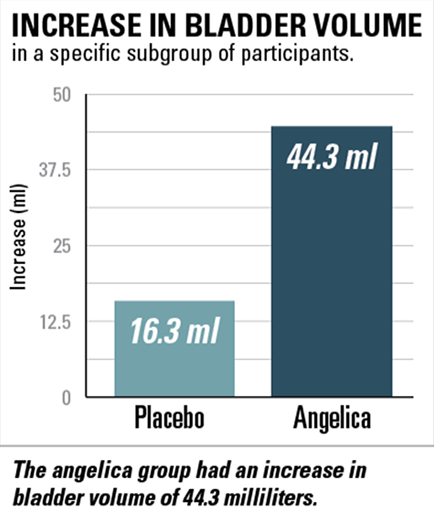
In a published study, researchers found that Angelica archangelica significantly improved the ability to hold urine in a subgroup of participants with reduced bladder capacity. In fact, it improved bladder volume compared to placebo, tripled the time before the first nighttime bathroom visit, and reduced nighttime awakenings for urination by about 50 percent.¹²
Icelandic angelica appears to prevent the overproduction of leukotrienes that damage nerves involved in signaling the urge to urinate. When these nerves are compromised, bladder sensations can be disrupted, causing signals to occur too soon or too late. The herb’s natural antioxidant and anti-inflammatory actions can also preserve bladder muscle strength and capacity. For patients struggling with urinary issues, Angelica archangelica may be a natural option to consider before prescription medications.
Black cohosh plus rhodiola = synergy and energy
As positive as the studies on black cohosh as a natural medicine can be, your patients may still feel a lack of vigor in their daily lives. In these cases, recommending black cohosh plus rhodiola (Rhodiola rosea) may help as a clinical study suggests.
Rhodiola is an herbal adaptogen with a well-established record of promoting daily energy and mental and physical resilience in the face of stress.
In a 12-week clinical study, a combination of black cohosh and rhodiola was compared to two single-ingredient black cohosh formulations, one at 6.25 mg, twice daily for a total of 13 mg, one high dose 500 mg at two capsules daily for total of 1000 mg and a placebo, also two capsules daily.9
There were no statistically significant differences between the two single-ingredient black cohosh regimens, but the combination of black cohosh and rhodiola easily surpassed the single-herb dosages across a broad range of menopause symptoms. It reduced KMI scores by over 71 percent and Menopause Relief Score (MRS) scores by over 67 percent, mostly due to the combined mood and symptom benefits of the two botanicals.9
Balancing estrogen metabolism with DIM
Estrogen in its major forms, estrone (E1), estradiol (E2), and estriol (E3), and their subtypes, have an impact on women’s health that can’t be overstated.
When these estrogens are metabolized along good pathways, there’s little risk. But when estrogens are metabolized down problematic pathways, they can cause a multitude of health issues and increase the risk for hormonally related cancers. Additionally, estrogen mimics—xenoestrogens commonly found in pesticides, herbicides, and the BPA in plastics—linger in the body, masquerading as estrogen. Dysfunctional estrogen metabolism can also lead to endometriosis, uterine fibroids, menstrual migraines, and PMS or perimenopause symptoms.13-17 So, it is critically important for practitioners to address estrogen-related concerns with patients who may be experiencing an imbalance.
DIM vs I3C for consistent benefits
Diindolylmethane (DIM) is the most potent natural compound for keeping estrogen in its safest form and guiding it to the best metabolic pathways. DIM does not increase or decrease overall estrogen; it merely ensures that it is metabolized properly.
 DIM is a naturally occurring compound found in broccoli, cabbage, and cauliflower. Because compounds from these vegetables have long been associated with hormone balance and cancer prevention, researchers have tried to determine how they work in the body.18,19
DIM is formed from the combination of another closely related component, indole-3-carbinol (I3C), and enzymes in these plants. But it’s important to remember that DIM and I3C are not the same thing.
The healthy glucosinolates from broccoli, cabbage, and other cruciferous foods include sulforaphanes and I3C, but they aren’t concentrated enough to provide therapeutic benefits. In fact, DIM is a metabolite of I3C, formed when I3C is broken down in the stomach or through other enzymatic processes. Unfortunately, I3C is not particularly stable; the very process by which it forms beneficial metabolites like DIM means that it can also be unreliable and inconsistent for your patients.
Conversely, when DIM is combined with a stabilizing nutrient, it reaches target tissues in greater concentrations than it would from food sources or as a byproduct of I3C.20
Another study compared the effects of I3C and DIM on the liver. I3C increased liver weight and boosted cytochrome P450 levels. This may show that the liver works harder to process I3C, where DIM showed none of these effects.21
In a scientific study of glandular thyroid disease, DIM showed powerful anti-proliferative effects. It had a stronger effect on goiter cells than I3C and inhibited their growth by 70 percent compared to controls.22
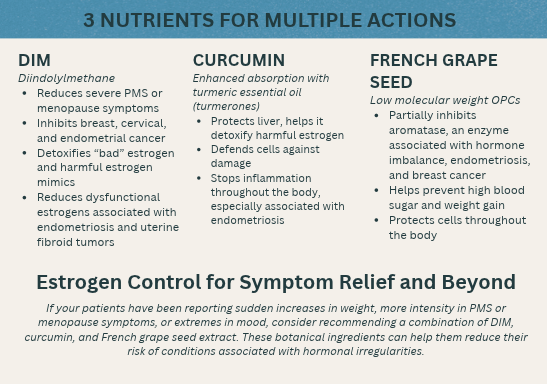
Clinically studied supplemental DIM can direct estrogen toward a beneficial pathway and help balance the ratio of good estrogen metabolites (2-hydroxyestrone) to bad estrogen metabolites (16-hydroxyestrone). This can help shuttle xenoestrogens and spent estrogen out of the body more efficiently. And that can have incredibly positive effects.23-25
For example, some women are at greater risk of breast cancer because they lack required levels of one of the body’s tumor-fighting defenses—a gene and its protein called BRCA1. A Canadian clinical study found that women in the supplemental DIM group saw a 34 percent increase in BRCA1 expression. The researchers consider this to be a potentially major shift in the way we think about treating breast cancer.26
Other research has pointed to DIM as a potential therapeutic ingredient in fighting endometrial cancer, a serious risk for women who have had increased estrogen exposure, whether through hormone replacement therapy or from other sources, including estrogen mimics like pesticides, plastics, and other chemicals. Research at the University of California, Berkley showed that DIM had a definite anti-tumor effect on endometrial cancer cells.27
DIM may also prevent cervical cancer associated with the human papilloma virus (HPV). While more research still needs to be done, supplemental DIM may be a real step forward in preventing the cervical changes associated with HPV infection from progressing.23,28
Curcumin and liver health: critical for detoxification
Curcumin has been well studied for its role in tumor reduction and supporting tissues that have estrogen receptors. And its anti-inflammatory, antioxidant, and liver-protecting abilities make it a valuable partner nutrient for DIM. Curcumin assists in phase I liver detoxification, prevents fat deposits in the liver, and increases detoxification enzymes, including superoxide dismutase and glutathione peroxidase. This, in turn, makes it easier for the body to rid itself of estrogen mimics and other unhealthy compounds that interfere with hormone balance.29-36
Curcumin blended with turmeric essential oil for enhanced absorption has shown consistent positive effects in over 90 published studies and has been a first choice by researchers, practitioners, and patients because it makes a noticeable difference.
Grape seed extract: hormones, blood sugar, and weight
While grape seed extract may be familiar to your patients for its cardiovascular applications, it (and red wine) inhibits aromatase, an enzyme that converts androgen into estrogen.
Breast tissue typically has higher levels of aromatase. In a study published in the journal Cancer Research, researchers highlighted the potential of grape seed extract after finding that it inhibited aromatase activity and reduced the growth of MCF-7 breast cancer cells. They concluded, “We believe that these results are exciting in that they show grape seed extract to be potentially useful in the prevention/treatment of hormone-dependent breast cancer through the inhibition of aromatase activity as well as its expression.” This is good news for women who are concerned about their family histories of breast cancer.37,38
Other laboratory research shows that this same ability to inhibit aromatase may also make it an alternative for preventing or treating endometriosis, which is typically very resistant to conventional therapy.³⁹
Additionally, a clinical study found that grape seed extract reduced menopause symptoms, including hot flashes, anxiety, and insomnia, in women ages 40 to 60. It also improved lean muscle mass and lowered blood pressure levels.⁴⁰
And finally, grape seed can improve blood sugar levels and stop the accumulation of fat cells. That’s helpful for maintaining a healthy weight and hormone balance as well, since fat cells are known harbors of unhealthy forms of estrogen and other hormones. Overall, grape seed is an excellent partner nutrient for DIM and curcumin, with all three working in overlapping and synergistic ways for your patients.⁴¹–⁴⁷
For supplementation alongside DIM and curcumin, a French grape seed extract with well-absorbed, low-molecular-weight oligomeric proanthocyanins (OPCs) is a good choice. As with other nutrients, the better the absorption, the more consistent the benefits.
References:
- Wuttke W, Jarry H, Haunschild J, Stecher G, Schuh M, Seidlova-Wuttke D. The non-estrogenic alternative for the treatment of climacteric complaints: Black cohosh (Cimicifuga or Actaea racemosa). J Steroid Biochem Mol Biol. 2014 Jan;139:302-10. doi: 10.1016/j.jsbmb.2013.02.007. Epub 2013 Feb 28.
- Wuttke W, Jarry H, Becker T, Schultens A, Christoffel V, Gorkow C, Seidlová-Wuttke D. Phytoestrogens: endocrine disrupters or replacement for hormone replacement therapy? Maturitas. 2008 Sep-Oct;61(1-2):159-70.
- Schellenberg R, Saller R, Hess L, Melzer J, Zimmermann C, Drewe J, Zahner C. Dose-Dependent Effects of the Cimicifuga racemosa Extract Ze 450 in the Treatment of Climacteric Complaints: A Randomized, Placebo-Controlled Study. Evid Based Complement Alternat Med. 2012;2012:260301. doi: 10.1155/2012/260301. Epub 2012 Dec 23.
- Drewe J, Zimmermann C, Zahner C. The effect of a Cimicifuga racemosa extracts Ze 450 in the treatment of climacteric complaints–an observational study. Phytomedicine. 2013 Jun 15;20(8-9):659-66.
- Wuttke W, Jarry H, Haunschild J, Stecher G, Schuh M, Seidlova-Wuttke D. The non-estrogenic alternative for the treatment of climacteric complaints: Black cohosh (Cimicifuga or Actaea racemosa). J Steroid Biochem Mol Biol. 2014 Jan;139:302-10.
- Raus K, Brucker C, Gorkow C, Wuttke W. First-time proof of endometrial safety of the special black cohosh extract (Actaea or Cimicifuga racemosa extract) CR BNO 1055. Menopause. 2006 Jul-Aug;13(4):678-91.
- “Endometrial Hyperplasia.” Cleveland Clinic. Available at: https://my.clevelandclinic.org/health/diseases/16569-atypical-endometrial-hyperplasia. Accessed: October 16, 2026.
- Seidlova-Wuttke D, Eder N, Stahnke V, Kammann M, Stecher G, Haunschild J, Wessels JT, Wuttke W. Cimicifuga racemosa and its triterpene-saponins prevent the Metabolic Syndrome and deterioration of cartilage in the knee joint of ovariectomized rats by similar mechanisms. Phytomedicine. 2012 Jun 15;19(8-9):846-53.
- Pkhaladze L, Davidova N, Khomasuridze A, Shengelia R, Panossian AG. Actaea racemosa Is More Effective in Combination with Rhodiola roseaL. for Relief of Menopausal Symptoms: A Randomized, Double-Blind, Placebo-Controlled Study. Pharmaceuticals(Basel). 2020;13(5):E102.
- “Menopause & Urinary Symptoms.” University of Colorado Anschutz Urogynecology Department web site. Available at: https://medschool.cuanschutz.edu/womens-health/clinics/urogynecology/for-patients/pelvic-floor-health-conditions/menopause-urinary-symptoms. Accessed: October 16, 2026.
- Cai X, Campbell N, Khan B, Callahan C, Boustani M. Long-term anticholinergic use and the aging brain. Alzheimers Dement. 2012 Nov 22. doi:pii: S1552-5260(12)00081-7. 10.1016/j.jalz.2012.02.005.Affiliations
- Sigurdsson S, Geirsson G, Gudmundsdottir H, Egilsdottir PB, Gudbjarnason S. A parallel, randomized, double-blind, placebo-controlled study to investigate the effect of a proprietary Angelica archangelica extract on nocturia in men. Scand J Urol. 2013 Feb;47(1):26-32.
- Sepkovic DW, Bradlow HL, Ho G, et al. Estrogen metabolite ratios and risk assessment of hormone‑related cancers: Assay validation and prediction of cervical cancer risk. Ann NY Acad Sci. 1995;768:312-316.
- Eliassen AH, Missmer SA, Tworoger SS, et al. Endogenous steroid hormone concentrations and risk of breast cancer among premenopausal women. J Natl Cancer Inst. 2006 Oct 4;98(19):1406-15.
- Rizner TL. Estrogen metabolism and action in endometriosis. Mol Cell Endocrinol. 2009 Aug 13;307(1-2):8-18.
- Brown SB, Hankinson SE. Endogenous estrogens and the risk of breast, endometrial, and ovarian cancers. Steroids. 2015 Jul;99(Pt A):8-10.
- Brinton LA, Trabert B, Anderson GL, et al. Serum Estrogens and Estrogen Metabolites and Endometrial Cancer Risk among Postmenopausal Women. Cancer Epidemiol Biomarkers Prev. 2016;25(7):1081–1089.
- Zeligs MA. Diet and estrogen status: the cruciferous connection. J Med Foods. 1998;1:67‑82.
- Cover CM, Hsieh SJ, Tran SH. Indole‑3‑carbinol inhibits the expression of cyclin‑dependent kinase‑6 and induces a G1 cell cycle arrest of human breast cancer cells independent of estrogen receptor signaling. J Biol Chem. 1998;273:3838‑
- Reed GA, Sunega JM, Sullivan DK, Gray JC, Mayo MS, Crowell JA, Hurwitz A. Single-dose pharmacokinetics and tolerability of absorption-enhanced 3,3′-diindolylmethane in healthy subjects. Cancer Epidemiol Biomarkers Prev. 2008 Oct;17(10):2619-24. doi: 10.1158/1055-9965.EPI-08-0520. PMID: 18843002; PMCID: PMC2602858.
- Crowell JA, Page JG, Levine BS, Tomlinson MJ, Herbert CD. Indole-3-carbinol, but not its major digestive product, 3,3’-diindolylmethane, induces reversible hepatocyte hypertrophy and cytochromes P450. Toxicol Appl Pharmacol. 2005 Jul 22; [epub ahead of print]
- Tadi K, Chang Y, Ashok BT, Chen Y, Moscatello A, Schaefer SD, Schantz SP, Policastro AJ, Geleibter J, Tiwari RK. 3,3’-Diindolylmethane, a cruciferous vegetable derived synthetic anti-proliferative compound in thyroid disease. Biochem Biophys Res Commun. 2005;337(3):1019-25.
- Sepkovic DW, Stein J, Carlisle AD, Ksieski HB, Auborn K, Bradlow HL. Diindolylmethane inhibits cervical dysplasia, alters estrogen metabolism, and enhances immune response in the K14-HPV16 transgenic mouse model. Cancer Epidemiol Biomarkers Prev. 2009 Nov;18(11):2957-64.
- Dalessandri KM, Firestone GL, Fitch MD, Bradlow HL, Bjeldanes LF. Pilot study: effect of 3,3’diindolylmethane supplements on urinary hormone metabolites in postmenopausal women with a history of early-stage breast cancer. Nutr Cancer. 2004;50(2):161-7.
- Rajoria S, Suriano R, Parmar PS, et al. 3,3′-diindolylmethane modulates estrogen metabolism in patients with thyroid proliferative disease: a pilot study. Thyroid. 2011;21(3):299–304.
- Kotsopoulos J, Zhang S, Akbari M, et al. BRCA1 mRNA levels following a 4-6-week intervention with oral 3,3′-diindolylmethane. Br J Cancer. 2014 Sep 23;111(7):1269-74. doi: 10.1038/bjc.2014.391. Epub 2014 Jul 15.
- Leong H, Firestone GL, Bjeldanes LF. Cytostatic effects of 3,3′-diindolylmethane in human endometrial cancer cells result from an estrogen receptor-mediated increase in transforming growth factor-alpha expression. Carcinogenesis. 2001 Nov;22(11):1809-17.
- Sepkovic DW, Raucci L, Stein J, et al. 3,3′-Diindolylmethane increases serum interferon-γ levels in the K14-HPV16 transgenic mouse model for cervical cancer. In Vivo. 2012 Mar-Apr;26(2):207-11.
- Rodríguez Castaño P, Parween S, Pandey AV. Bioactivity of Curcumin on the Cytochrome P450 Enzymes of the Steroidogenic Pathway. Int J Mol Sci. 2019;20(18):4606. Published 2019 Sep 17. doi:10.3390/ijms20184606. https://pmc.ncbi.nlm.nih.gov/articles/PMC6770025/
- Gupta SC, Patchva S, Koh W, Aggarwal BB. Discovery of Curcumin, a Component of the Golden Spice, and Its Miraculous Biological Activities. Clin Exp Pharmacol Physiol. 2011. [link to complete article: http://www.ncbi.nlm.nih.gov/pmc/articles/PMC3288651/
- Ejaz A, Wu D, Kwan P, Meydani M. Curcumin inhibits adipogenesis in 3T3-L1 adipocytes and angiogenesis and obesity in C57/BL mice. J Nutr. 2009 May;139(5):919-25.
- Kim SB, Cho SS, Cho HJ, Yoon IS. Modulation of Hepatic Cytochrome P450 Enzymes by Curcumin and its Pharmacokinetic Consequences in Sprague-dawley Rats. Pharmacogn Mag. 2015 Oct;11(Suppl 4):S580-4.
- Pulido-Moran M, Moreno-Fernandez J, Ramirez-Tortosa C, Ramirez-Tortosa M. Curcumin and Health. Molecules. 2016 Feb 25;21(3). pii: E264.
- Iqbal M, Sharma SD, Okazaki Y, Fujisawa M, Okada S. Dietary supplementation of curcumin enhances antioxidant and phase II metabolizing enzymes in ddY male mice: possible role in protection against chemical carcinogenesis and toxicity. Pharmacol Toxicol. 2003 Jan;92(1):33-8.
- Liu Y, Wu YM, Zhang PY. Protective effects of curcumin and quercetin during benzo(a)pyrene induced lung carcinogenesis in mice. Eur Rev Med Pharmacol Sci. 2015;19(9):1736-43.
- Straub RH. The complex role of estrogens in inflammation. Endocr Rev. 2007 Aug;28(5):521-74. Epub 2007 Jul 19.
- Kijima I, et al. Grape seed extract is an aromatase inhibitor and a suppressor of aromatase expression. Cancer Res. 2006;66(11):5960-7.
- Eng ET, Ye J, Williams D, Phung S, et al. Suppression of estrogen biosynthesis by procyanidin dimers in red wine and grape seeds. Cancer Res. 2003 Dec 1;63(23):8516-22.
- Kakaiy A, Ayen E, Sadrkhanlou R, Sarrafzadeh Rezaei F. Comparing protective effect of grape seed extract versus atorvastatin on endometriosis in rat model: Evidence for immunohistochemical and biochemical alterations. Vet Res Forum. 2015 Spring;6(2):101-10. Epub 2015 Jun 15.
- Terauchi M, Horiguchi N, Kajiyama A, et al. Effects of grape seed proanthocyanidin extract on menopausal symptoms, body composition, and cardiovascular parameters in middle-aged women: a randomized, double-blind, placebo-controlled pilot study. Menopause. 2014 Sep;21(9):990-6.
- Sapwarobol S, et al. Postprandial blood glucose response to grape seed extract in healthy participants: A pilot study. Pharmacogn Mag. 2012;8(31):192-6.
- Décordé K, et al. Chardonnay grape seed procyanidin extract supplementation prevents high-fat diet-induced obesity in hamsters by improving adipokine imbalance and oxidative stress markers. Mol Nutr Food Res. 2009;53(5):659-66.
- Fontana L, et al. Visceral fat adipokine secretion is associated with systemic inflammation in obese humans. Diabetes. 2007;56(4):1010-3.
- Caimari A, et al. Low doses of grape seed procyanidins reduce adiposity and improve the plasma lipid profile in hamsters. Int J Obes(Lond). 2013;37(4):576-83.
- Chacón MR, et al. Grape-seed procyanidins modulate inflammation on human differentiated adipocytes in vitro. Cytokine. 2009;47(2):137-42.
- Coelho M, Oliveira T, Fernandes R. Biochemistry of adipose tissue: an endocrine organ. Arch Med Sci. 2013 Apr 20;9(2):191-200. [link to complete article: http://www.ncbi.nlm.nih.gov/pmc/articles/PMC3648822/
- Gao P, Fang L, Pan Y, Jiang L. Effect of Grape Seed Proanthocyanidins on Fat Metabolism and Adipocytokines in Obese Rats. Metabolites. 2023 Apr 17;13(4):568. doi: 10.3390/metabo13040568. PMID: 37110226; PMCID: PMC10142576.
These statements have not been evaluated by the Food and Drug Administration. This product is not intended to diagnose, treat, cure or prevent any disease.
Any information provided or opinions made in email advertisements are not necessarily those of VRM Media or its owners. Publisher is not liable for advertiser product claims or representations. Advertisers assume total responsibility for the contents of their advertisements.