The Institute for Natural Medicine (INM) is launching a Corporate Council to foster mutually beneficial relationships among the public, practitioners, and the natural products industry. As a trusted educational leader with deep roots across the Traditional and Comprehensive Integrative Health (TCIH) sector, INM is uniquely positioned to curate content, host events and foster dialogue that elevates quality standards for both manufacturers and clinicians, educate the public and practitioners, and advance the mutual goals of whole-person health. Our core mission remains clear: bringing whole-person health into the mainstream for the ultimate benefit of public health.
Why the Natural Products Industry and Whole-person Health Practitioners Need Each Other
The natural products industry (NPI) stands at an inflection point. After decades of pursuing direct-to-consumer strategies that sidelined health care practitioners, leading companies are rediscovering what the evidence increasingly confirms: the practitioner-patient relationship remains the most powerful driver of appropriate supplement use, treatment adherence and positive health outcomes.
The NPI is coming full circle. In its early decades, supplement manufacturers relied heavily on health care practitioners—particularly chiropractors, naturopathic physicians and other integrative providers—to recommend products to patients. These practitioners served as trusted advisors, matching specific supplements to individual patient needs based on clinical assessment.
The explosion of direct-to-consumer (DTC) marketing in the 1990s and 2000s dramatically changed this dynamic. Companies discovered they could reach consumers directly through retail channels, television advertising, and eventually, digital marketing and social media influencers. The $209 billion global dietary supplements market grew exponentially, with U.S. sales alone reaching $67 billion annually.1 Practitioner channels now became just one sales avenue among many—and not even the most lucrative.
However, this DTC shift created unintended consequences. Consumers faced overwhelming choices without clinical guidance, leading to inappropriate product selection, unsafe pharmaceutical interactions, and wasted spending on unnecessary supplements. Meanwhile, practitioners of all types grew frustrated with patients arriving with bags of self-selected products that contradicted evidence-based recommendations or presented safety concerns.
The Trust Advantage
There is a reason why companies are pivoting back toward practitioner partnerships. Research from the World Health Organization suggests that patients engaged in a collaborative provider-patient relationship are three times more likely to adhere to their health protocols than those navigating care independently.2
While influencer marketing and celebrity endorsements generate awareness, they can’t replace the credibility of a recommendation from an engaged and caring health care provider who knows the patient’s complete medical history, current medications, and specific health goals. A therapeutic relationship is itself therapy. A 2023 survey found that 68 percent of consumers trust their health care provider’s supplement recommendations “completely,” compared to just 12 percent for social media influencers and 23 percent for online advertising.
This influencer-versus-expert gap is significant. Consumer skepticism toward influencers and paid digital advertising is much higher than with knowledgeable practitioners. This trust translates into better outcomes. When practitioners guide supplement use as part of comprehensive treatment plans, patients get better outcomes.
The Cleveland Clinic’s Center for Functional Medicine, which integrates targeted supplementation into personalized treatment protocols, reports a 65 percent improvement in functional status scores among patients with complex chronic conditions3—outcomes that build loyalty to both the practitioner and the recommended products.
Whole-person Health: The Economic and Clinical Case
The convergence of practitioner-industry partnership with the evolution toward whole-person health creates great opportunities. As health care systems grapple with unsustainable costs—in 2023, U.S. health care spending was $4.9 trillion, with 90 percent attributed to chronic disease management4—evidence-based lifestyle and nutritional interventions offer powerful alternatives.
Consider the economic modeling study by Herman et al5 that projected health care costs for a 40-year-old female receiving conventional care vs whole-person care through her lifespan to age 80. Since conventional care tends to separate treatment of diseases rather than a whole-person approach that seeks to solve the often interrelated root causes with behavioral and lifestyle approaches, the costs are very different. Even if the whole-person care cost was doubled, it would still be about one-third of the conventional care estimate.
Similarly, the Veterans Health Administration’s Whole Health System, which systematically integrates nutrition, lifestyle interventions and appropriate supplementation, has achieved a 38 percent reduction in opioid prescriptions and a 41 percent improvement in patient-reported well-being among 650,000 veterans. These outcomes reflect what is possible when practitioners guide the use of evidence-based supplements within comprehensive patient centered health strategies.6
The diabetes prevention data is equally striking. Programs using intensive nutrition counseling and targeted supplementation demonstrate up to 58 percent reduction in progression from prediabetes to type 2 diabetes—outcomes superior to pharmaceutical intervention alone and at a fraction of the long-term cost.7
Models for Partnership
Forward-thinking companies are developing practitioner partnership models that go beyond simple wholesale pricing. Fullscript has created a digital dispensary model connecting more than 100,000 practitioners with patients, streamlining the recommendation and fulfillment process while providing practitioners with educational resources and clinical decision support.
Professional education represents another crucial avenue for partnership. Companies investing in evidence-based continuing education for practitioners—without branded product promotion—build credibility and ensure their products are recommended appropriately based on clinical need rather than marketing pressure.
Educating the public is another opportunity. By anchoring consumer health journeys in clinical research and verified quality standards, we move beyond marketing—transforming public health literacy and driving meaningful policy reform.
The Path Forward: How INM Is Driving the Re-alignment
The Natural Products Industry (NPI) and integrative practitioners are interdependent pillars of a whole person health economy. Practitioners require access to high-quality formulations, transparent safety data and the clinical tools necessary to build effective protocols. Conversely, the industry relies on practitioners for clinical expertise, deep patient relationships, and the “real-world” insights that drive product innovation.
As health care shifts toward a prevention-focused, whole-person model, this partnership is no longer just advantageous—it is essential.
An Invitation to Lead
Our first Corporate Council member is Sabinsa, a global ingredient supplier with an emphasis on innovation, quality and research. INM is currently seeking a few additional select inaugural member companies to join this mission. We believe that:
• For Industry: Companies that treat practitioners as true partners in education and care—rather than just a sales channel—will build a sustainable competitive advantage.
• For Practitioners: Those who engage thoughtfully with industry partners ensure their patients have access to verified, high-quality products while cementing their role as the most trusted guides in a complex health landscape.
The bridge between the lab and the clinic is being rebuilt. By joining forces, both sides stand to benefit—along with the patients and consumers who matter most.
If you are interested in learning more, please contact me at [email protected].
References:
1 www.grandviewresearch.com/industry-analysis/us-dietary-supplements-market-report.
2 www.paho.org/en/documents/who-adherence-long-term-therapies-evidence-action-2003.
3 https://jamanetwork.com/journals/jamanetworkopen/fullarticle/2753520.
4 www.cms.gov/data-research/statistics-trends-and-reports/national-health-expenditure-data/historical.
5 Herman PM, Pitcher MH, Langevin HM. Making a Case for Whole Person Health. Glob Adv Integr Med Health. 2024;13:27536130241293642. Published 2024 Oct 18. doi:10.1177/27536130241293642.
6 https://news.va.gov/87384/veterans-chronic-pain-replacing-opioid-pain-medications/.
7 www.nejm.org/doi/10.1056/NEJMoa012512?url_ver=Z39.88-2003&rfr_id=ori:rid:crossref.org&rfr_dat=cr_pub%20%200www.ncbi.nlm.nih.gov.
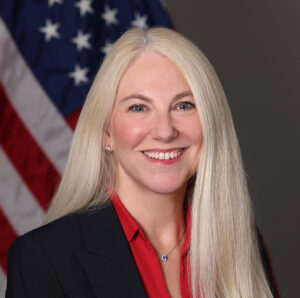
Michelle Simon, PhD, ND, President & CEO, Institute for Natural Medicine
In 1992, the leadership core of naturopathic doctors established the Institute for Natural Medicine (INM) as a not for profit organization dedicated to advancing natural medicine. The purpose of the INM is to increase awareness of, broaden public access to, and encourage research about natural medicine and therapies. Among its milestones the INM counts the launch of the Association of Accredited Naturopathic Medical Colleges (AANMC) as an independent organization, leading California’s efforts to obtain licensure, developing an interactive childhood education program focused on healthy eating and lifestyles called Naturally Well in 2017, and expanding residency access by establishing and funding a residency program in 2018. INM has joined forces with the American Association of Naturopathic Physicians (AANP), serving as the charitable arm, to deepen access to naturopathic care, public education and research. Dr. Michelle Simon serves as president and CEO of INM, is a licensed naturopathic physician, clinician, educator and leader in many organizations dedicated to improving the quality and delivery of health care. In addition to holding a naturopathic doctorate from Bastyr University, she also holds a PhD in Biomedical Engineering from the University of North Carolina at Chapel Hill. Dr. Simon has served on the boards for the Integrative Healthcare Policy Consortium (IHPC), the AANP and the Naturopathic Physicians Research Institute (NPRI). Dr. Simon also served nine years on the Washington State Health Technology Clinical Committee which is part of the Health Technology Assessment program that examines the scientific evidentiary basis for efficacy, safety and cost effectiveness of health care technologies. She was also an invited participant for health care economics at “Summit on Integrative Medicine and the Health of the Public” at the Institute for Medicine (IOM) in 2009. Dr. Simon was recognized as the 2018 Physician of the Year by the AANP. Twitter: #inaturemed Facebook: @INMWeAreNaturalMedicine