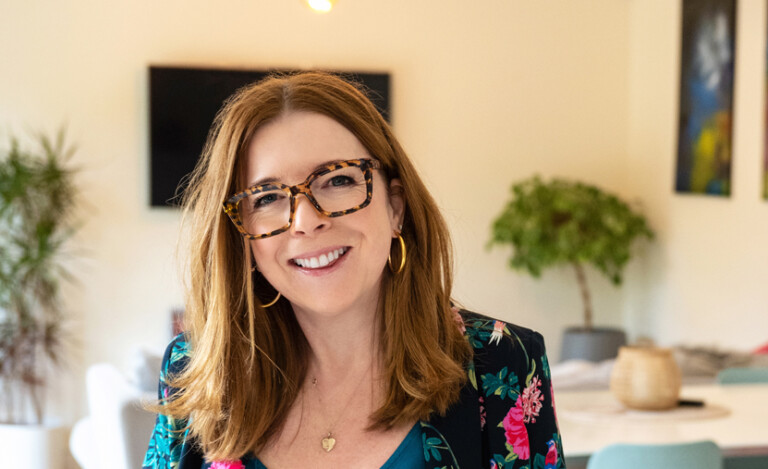
Ailsa Hichens is a registered nutritionist and coach based in the United Kingdom with more than 10 years working in women’s health education. Her specialist area is in menopause and midlife health and her mission is to inspire real women living sometimes messy lives to create a life they love by eating and living well. She is also a blogger and copywriter. Everything They Told You About Menopause Weight Loss Is Wrong is available now in e-book and paperback from Amazon, Barnes & Noble and Apple Books.
Q: What was your motivation behind writing Everything You Know About Menopause Weight Loss Is Wrong?
A: Before retraining as a nutritionist, I spent 20 years as a journalist and magazine editor, and I always knew there was a book in me somewhere. I’d always thought it would be a murder mystery, but here we are. I’ve been practicing as a nutritionist for 10 years now and, once I hit perimenopause, I realized that everything that is being said about menopause weight loss is wrong. I see so many women (and I experienced this myself) distressed because all the things they used to do to lose weight no longer work and—worse still—the medical profession, personal trainers and even younger nutrition practitioners keep insisting they must be getting it wrong because it’s all about eating less and moving more. It’s significantly more nuanced than that for many women. So the motivation was helping regular women feel better and lose the weight they want to in midlife.
Q: What effects does menopause have on metabolism?
A: All sorts of things come together in your menopause era. It’s like the planets aligning but in a way that disadvantages you. Some of the most important are that hormonal changes impact where you store your fat, so women tend to get more of a tummy than they used to. Estrogen levels also affect how your body responds to different foods—insulin resistance becomes very real for so many women, and this means you can no longer eat the same quantities of potatoes, rice, pasta, bread, pastries and anything with sugar—even high sugar fruits like bananas and mango. Then we’ve got sleep getting worse, in part due to blood sugar imbalances (that wake you up in the middle of the night), or stress (which stops you getting to sleep in the first place), and low mood or energy. These elements mean you’re more likely to search out the starchy foods like potato chips or sweet foods or even more caffeine to keep yourself awake.
Your midlife body is likely to be less resilient to the effects of stress (again, this is to do with changes in hormones). Increased stress shows up as a contributing factor to weight gain time and time again. And as if all this weren’t bad enough, muscle mass has been on the slide since your 30s due to age and oftentimes you have less time to exercise due to children, aging parents and so on. Muscle is metabolic gold—it affects how your body responds to carbohydrates like starches and sugars (this time in a more positive way—more muscle, the more carbs your body can tolerate) plus you’ll use up more energy even at rest, which means you’ll burn more calories even while you watch Netflix.
Q: In the book, you write about “metabolism wreckers.” Please explain what they are and the things that can be done to combat them.
A: Two of the biggest are sleep and stress. One of the biggest things I see is women not prioritizing getting good sleep every night or managing stress every day. Both are needed, and it almost feels like it’s a selfish act to take yourself off to bed or to rest and do nice things for yourself, aka. self-care. It feels like it couldn’t possibly be the answer but focusing on these two aspects is a real win for women because, trust me, you will feel so much better in yourself. Life will look better, you will show up better and happier and you will have more fun. These things are much more likely to make you feel like moving (maybe to lift weights and gain muscle) or prep that healthy breakfast instead of skipping it altogether or grabbing a croissant on the way to work. These two are the access to having a transformed life. Even if the voice in your head says that the answer is only in the food you eat.
Because sleeping more and doing more self-care don’t have deadlines and you could start at any time, but often women won’t. When things get busy, these two are the first things to fall away and there is always a cost. Putting these as events in your diary works. Set an alarm for bedtime (says Dr. Matt Walker, the sleep guy at the University of California, Berkeley) and this is good practice, just like you would to wake up. And put self-care activities in your diary every day, however small they are. Make them just as important as your husband’s golf game (I’ve said on many occasions).
Q: What advice do you have for people that struggle with sleep?
A: It sounds basic, but actually prioritizing sleep is essential and not just do that on one day. You cannot fix a chronic sleep deficit with one early night or a lie-in at the weekend. If you’ve already done that, I would make it a rule not to go on your phone after 9 p.m. unless there is an emergency call that needs to be made. It’s likely just to be mindless scrolling, and this is sabotaging your sleep because it creates little dopamine hits, which keeps you scrolling longer (so your sleep window shrinks) plus dopamine is a daytime hormone, which is no good for getting to sleep. I would have a caffeine curfew after 2 p.m. even if you think caffeine doesn’t affect your sleep. It doesn’t necessarily stop you getting to sleep but it will kill the quality of your sleep and the deep sleep is already on the slide as we get older. I would work on my sleep in the morning—get outside even for 10 minutes first thing. Our bodies run on the light-dark cycle and they like a predictable pattern. This cycle regulates our hormones—cortisol (the stress hormone, and it’s normal for this to be highest in the morning), and melatonin (the ‘sleep’ hormone). Modern living (lightbulbs, eating late in the evening) upsets this diurnal pattern but morning daylight and keeping lights dim in the evenings can help reset. These are the basics, and they are astonishingly effective. Magnesium (especially magnesium glycinate) can also be helpful, along with lemon balm.
If these don’t work, that would be an opportunity to work with a practitioner to maybe get some nervous system genetic testing done or get an adrenal stress profile or to explore further what else might be afoot.
Q: How does stress effect the metabolism?
A: One of the many side effects of stress is that blood sugars usually stay high to provide you with the energy you need to run away from the threat (we haven’t moved on much since caveman days when the threat was usually a saber-toothed tiger and physical exercise was always needed to get out of the situation). It’s the exact opposite of what you want to lose weight—you want sugars low so you’re not craving foods, and so your energy level is stable. Stress can also lead to compromised sleep, and everything looks bad when you’ve not slept. Importantly, I see so many women not recognizing stress because they’re assuming it needs to be a death or a divorce or a house move. The relentlessness of daily living can be enough!
Q: There is a long-standing debate between cardio and weight training when it comes to exercise. Which do you think is more important for menopausal women? Why?
A: Cardiovascular health is important so you will want to do some cardio work, but, in midlife you want to be working on the current you and the future you simultaneously. When you lift weights you create more muscle (without having to get big and bulky) and this puts you at a metabolic advantage, not just for looking great in tank tops but for burning through energy even when at rest. Lifting weights means you’ll be strong and this will mean many more years of independence. If you develop strength, you are less likely to fall (and a fall followed by a long spell in hospital is frequently followed by pneumonia in elderly women). While this might not be your No. 1 priority today, it needs to be something to consider. When you lift weights, your body will be happier with a higher carbohydrate load. When you see fitness influencers talking about eating all the carbs, really they’re talking to the women who lift weights regularly and are less likely to have problems relating to insulin resistance. So, lift weights and stop focusing on the types of exercise that burn calories. Calories matter a little bit in losing weight in midlife, but they are far less important than you’ve been led to believe.
The other thing to focus on is some kind of work to stay flexible—again for now and your older years. For me (and I’m not an exercise professional), that looks like making sure I get 10,000 steps in as many days as I can to stay moving since my job is ironically very sedentary. It also means doing a stretch class or yoga or Pilates. I do some cardio—cycling on a static bike is what does it for me—but this is No. 3 on my priority list. I move to stay strong, bendy(ish) and fit.
Q: You talk about the importance of setting goals in the book. How does one go about this?
A: “A goal without a plan is just a wish.” You’ve probably seen that as a quote, and many of you might coach people already so I’m sure you will know, conceptually at least, the value of proper goals that are realistic (but don’t set the bar too too low), measurable (nothing too vague because how will you know when you’ve reached the goal?), and timed (say, for three months in the future—you’ll need a date when you check in with how you’re doing and what progress you are making). If they can be exciting for you (hopefully working out why a goal is important and what’s in it for you to do the work should do it—otherwise it might not be the right goal) and rewarded (without that reward being food). Treat yourself using the exact same technologies you would use with your clients. One of my favorite things to do is to have a morning affirmation that I tell myself each day. Rather than it just be a nice message, I make it like I’m setting my internal GPS for the day. I remind myself what I want (my goal) and what I will do to get there. It keeps me focused on my goals and moving forward.
Q: Is there anything else you would like to add?
A: Although it sounds as though there’s a lot of work to do, much of it is fun work (like sleeping and self-care), some of it requires a little adjustment of what you thought you knew about how to eat in midlife, but my strategy also involves far less restriction and much more “normal food” than most weight-loss programs that leave you feeling miserable. Getting to where you want to be can take longer in menopause and, yes it can also be frustrating but it is possible.