Top Headlines

FoodScience Corporation Places Charitable Program Into Employee Hands
Vermont-based FoodScience Corporation has supported local non-profits, but this year employees will lead the social mission on their own. The company recently announced that, due to health and safety concerns surrounding the COVID-19 pandemic, it would not host a Good Neighbor Day this year, an event where their nearly 200 employees would dedicate one day ...
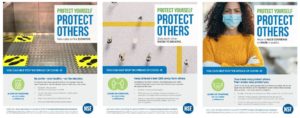
NSF Educational Posters Available to Help Prevent the Spread of COVID-19
Global public health organization NSF International is offering small businesses, community centers, apartment complexes and other facilities free posters to encourage personal behaviors that may prevent the spread of the novel coronavirus (SARS-Cov-2). The educational posters were developed by NSF International based on guidance from the U.S. Centers for Disease Control and Prevention (CDC) and the World ...
Meditation Linked to Lower Cardiovascular Risk
Meditation was linked to lower cardiovascular risk in a data analysis by Veterans Affairs (VA) researchers and colleagues. The results appeared online June 30 in the American Journal of Cardiology. Previous studies have suggested that meditation may have beneficial effects on a number of conditions. A 2017 American Heart Association scientific statement suggests that meditation may be ...
RAND Establishes Center to Advance Complementary and Integrative Health Research
The RAND Corporation (Santa Monica, CA) has launched the Center for Collaborative Research in Complementary and Integrative Health, a first-of-its-kind effort intended to bolster research expertise and participation at colleges that train practitioners in complementary and integrative health. The effort initially will involve 10 chiropractic and naturopathic medicine colleges, but eventually open to all other ...
MUIH Natural Care Center Providing Telehealth Services Amid COVID-19 Pandemic
Maryland University of Integrative Health’s (MUIH) Natural Care Center (NCC) is now offering some free telehealth services amid the COVID-19 pandemic. The NCC is equipped with wellness practitioners and supervised student practitioners all of whom are focused on holistic, relationship-focused health and wellness. With digital communication becoming the new normal, MUIH is prepared to provide ...

People With High Cholesterol Should Eliminate Carbs, Not Saturated Fat, Study Suggests
For decades, people diagnosed with familial hypercholesterolemia have been instructed to minimize their consumption of saturated fats to lower cholesterol and reduce their risks of heart disease. But a new study published in the journal BMJ Evidence-Based Medicine found no evidence to support those claims. Familial hypercholesterolemia is a genetic disorder that causes people to have cholesterol ...
Exercise Can Slow Or Prevent Vision Loss, Study Finds
Exercise can slow or prevent the development of macular degeneration and may benefit other common causes of vision loss, such as glaucoma and diabetic retinopathy, new research suggests. The new study from the University of Virginia School (UVA) of Medicine found that exercise reduced the harmful overgrowth of blood vessels in the eyes of lab mice ...
CRN Says “60 Minutes” Probiotic Segment Was Right on Safety, but Wrongly Dismissed Their Benefits
In response to a “60 Minutes” segment on probiotics released June 28, 2020 titled, “Do Probiotics Actually Do Anything?” Andrea Wong, PhD, senior vice president, scientific & regulatory affairs, Council for Responsible Nutrition (CRN) noted that “The vigorous body of scientific research exploring the benefits of probiotics is providing increased understanding of the role probiotics ...
IFM and ANA Release New Online Nutrition Course
The Institute for Functional Medicine (IFM) and the American Nutrition Association (ANA) have announced a new online course, “Therapeutic Food Plans: A Component of Personalized Nutrition.” The course, offered through IFM, with the first cohort scheduled for October 12–November 26, is designed to educate and support nutrition professionals and other clinicians on the functional medicine collaborative care team about ...
MUIH Announces Educational Partnership With MNDA
Maryland University of Integrative Health (MUIH) has entered a new educational partnership with the Maryland Naturopathic Doctors Association (MNDA). MUIH and MNDA share the joint goal of promoting the use of holistic and natural approaches to promote well-being for our clients. This partnership expands MUIH’s role in supporting the health and wellness of Maryland’s residents ...
Don't Miss Out!

Industry Professionals
Stay Informed!
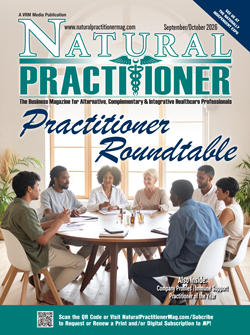
Stay informed about the latest health, nutrition, and wellness developments by signing up for a FREE subscription to Natural Practitioner magazine and digital newsletter.
Once subscribed, you will receive industry insights, product trends, and important news directly to your doorstep and inbox.